Monthly
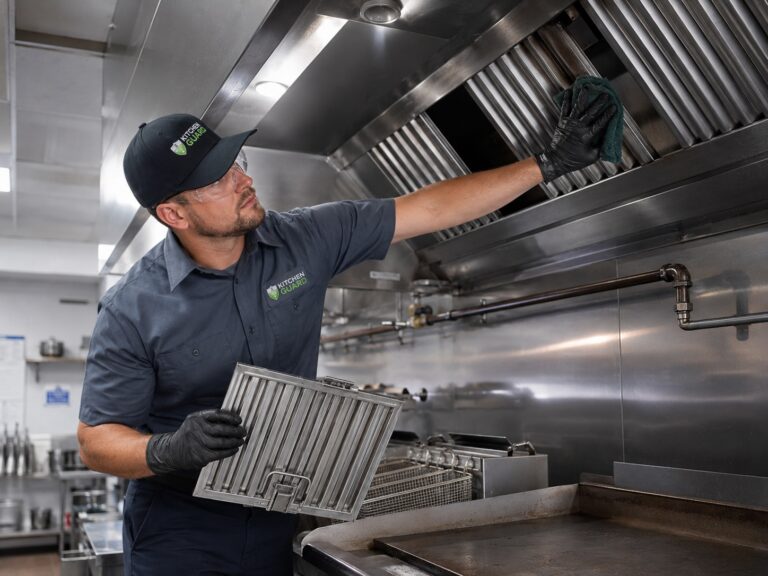
Kitchen Guard is a compliance-driven exhaust hood cleaning company built around fire prevention. We are not a janitorial cleaning vendor.
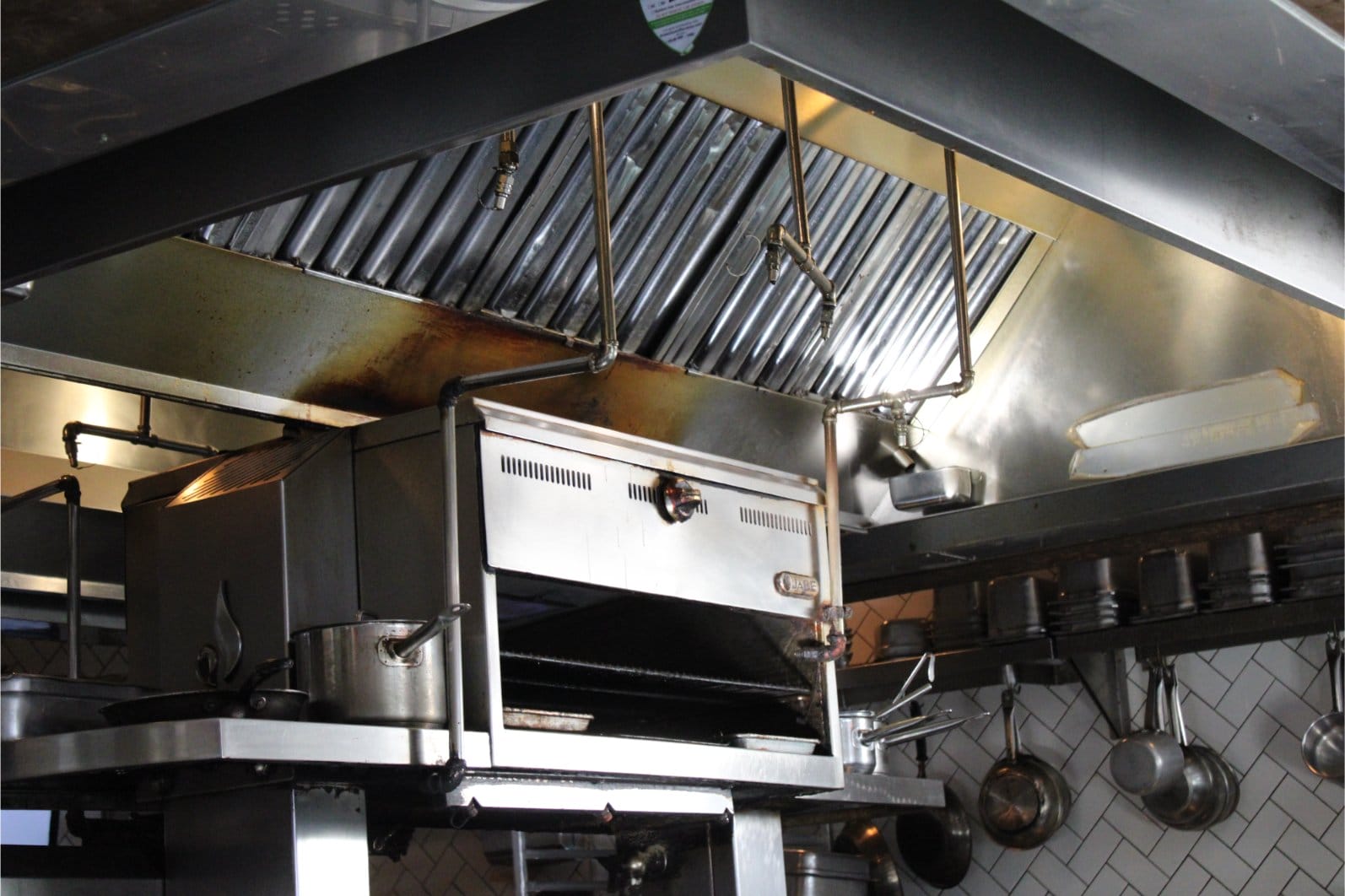
A hood that looks clean on the surface does not mean the system is safe. Grease accumulation inside ductwork, plenums, and exhaust fans is where most fire risk and compliance failures begin. A properly cleaned kitchen exhaust system requires access, containment, and trained execution across the full air path.
Kitchen Guard cleans the entire exhaust system from the hood canopy through the ductwork and up to the rooftop exhaust fan using certified technicians and documented processes.
Exhaust hood cleaning is the professional cleaning and maintenance of a commercial kitchen ventilation and(delete) exhaust system to reduce grease buildup throughout your commercial kitchen space and support compliance with fire safety requirements with the NFPA (National Fire Protection Association) and local Fire Codes.
Complete exhaust hood cleaning includes (but is not limited to):
Kitchen Guard ensures your entire system is cleaned thoroughly — not just the visible areas. It’s our core competency performed by highly trained and certified technicians.
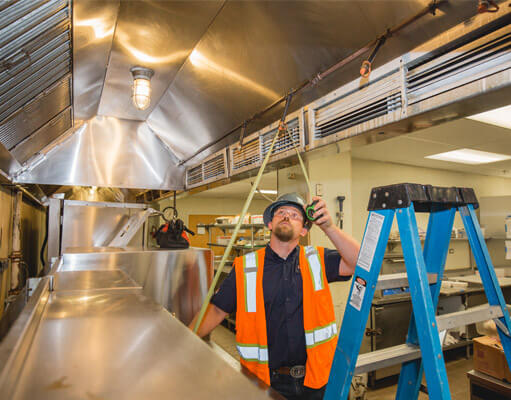
Exhaust hood cleaning isn’t just about appearance — it’s about safety and compliance. The NFPA estimates U.S. fire departments respond to about ~7,000 restaurant and bar fires per year. Kitchen Guard is here to protect your commercial kitchen and keep your staff and customers safe.
Commercial kitchen exhaust systems are typically governed by fire safety standards and local inspection requirements, and cleaning frequency is often based on cooking volume and grease production. Under NFPA 96 guidelines, exhaust hoods should be inspected anywhere from once a month to once a year, depending on how heavily the kitchen is used.
Kitchen Guard follows recognized best practices (including industry standards like NFPA 96) and provides photo documentation after every service to help support inspections and insurance compliance.
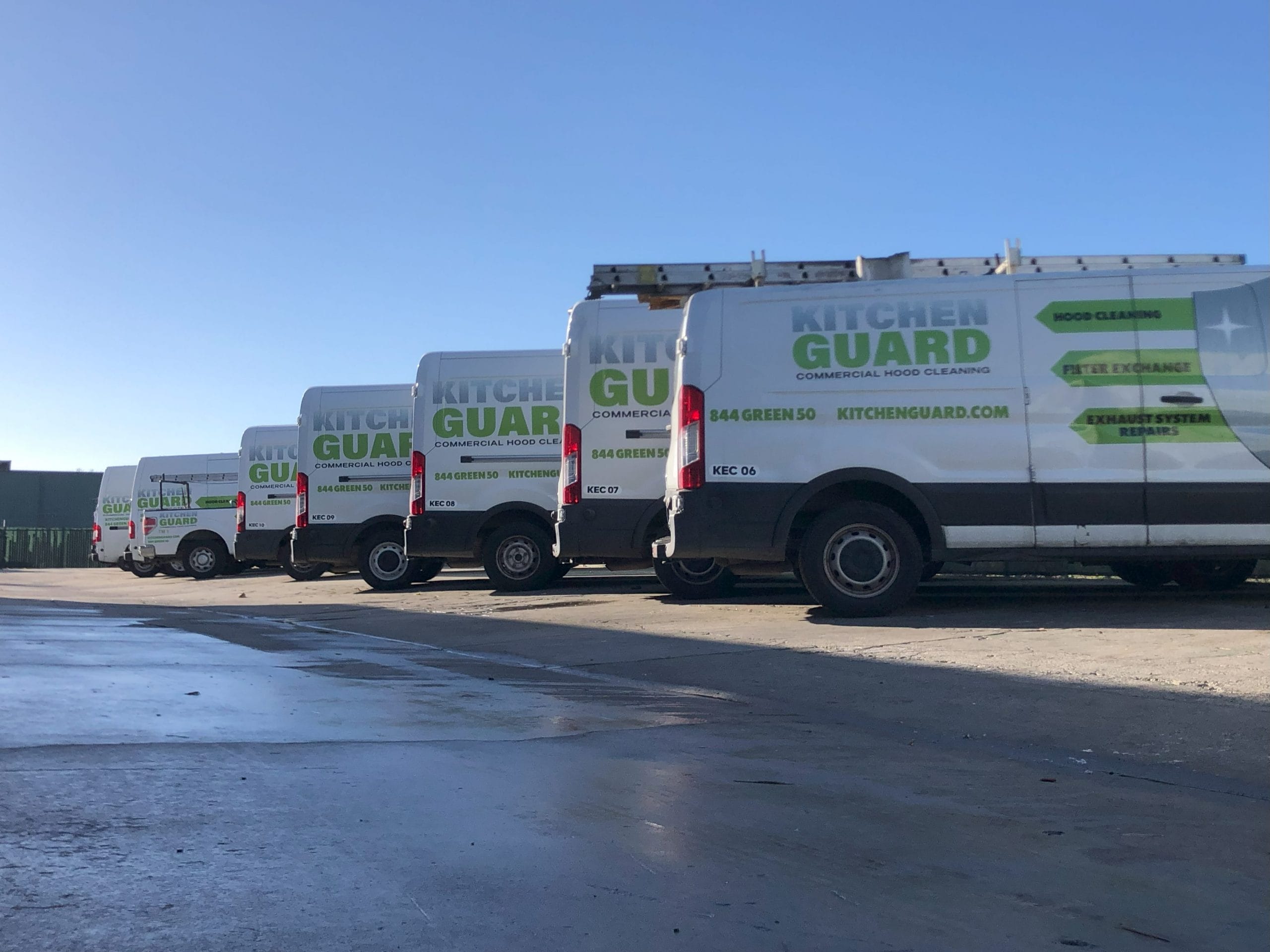
Most commercial kitchen exhaust hoods should be cleaned every 1 to 3 months, depending on cooking volume, grease production, and local requirements. Kitchens with heavy grease output typically need more frequent cleaning.
If you’re asking, “How often do commercial kitchen hoods need to be cleaned?” the answer depends on your cooking style, volume, and local rules — but most restaurant kitchens fall into quarterly or semi-annual schedules.
Kitchen Guard can help evaluate your system and recommend a cleaning program that keeps you on track. Think of Kitchen Guard as an extension of your team. We will keep you on a schedule so you don’t have to worry about reaching out to us for your next cleaning, resulting in a safe and compliant commercial kitchen.
Hood cleaning is the service most often sold on a photograph and a handshake. Kitchen Guard is a corporate member of the International Kitchen Exhaust Cleaning Association, and our crews work to ANSI/IKECA C10-2021 — the consensus standard for how commercial kitchen exhaust systems are actually cleaned.
C10 establishes how cleaning frequency and necessity are determined through inspection, which cleaning methods are acceptable, and the level of cleanliness a system has to reach when the work is finished. That is the difference between a hood that looks clean at eye level and a system that is clean where a fire would start.
Our technicians are trained by instructors who hold the Certified Exhaust Cleaning Specialist (CECS) credential from IKECA. Every visit leaves you with dated documentation and photographs you can hand to an inspector or an insurer.
NFPA 96 says what has to be clean. C10 says how it gets clean. See how the two fit together.
Service frequency depends on cooking volume, grease production, fuel type, and operating hours. High-grease kitchens, solid-fuel cooking, charbroiling, and wok-heavy operations usually need more frequent cleaning than lower-grease facilities. The right schedule should reflect actual system conditions and compliance requirements, not only a generic minimum interval.
For related compliance context, review
NFPA 96 Standards
and general
kitchen fire safety guidelines.
A full-system cleaning should address the hood canopy, filters, plenum, ductwork, rooftop fan components, and accessible grease-bearing surfaces throughout the exhaust path. Cleaning only visible surfaces leaves hidden grease in place and does not solve the underlying fire, compliance, or inspection risk.
No. A clean-looking hood face does not mean the full system has been properly serviced. Inspectors, insurers, and facility teams may evaluate the plenum, ducts, access panels, and fan area, not just the visible canopy. Grease left deeper in the system still creates risk.
For compliance support, reference NFPA 96 Standards.
When grease builds up, fire exposure increases, airflow can be affected, and kitchens may face inspection issues, emergency service needs, and operational disruption. Inconsistent maintenance also creates gaps in documentation that can become a problem during audits, inspections, or insurance review. Buildup and poor ventilation can also affect indoor air conditions. Operators can explore EPA indoor air quality resources and ventilation and airflow guidance for broader environmental considerations.
Service time varies based on hood count, grease load, duct configuration, rooftop fan access, and the overall condition of the system. Heavier buildup and longer intervals between service typically increase labor time because more degreasing and more detailed access work are required.
Yes. A professional service record should include a written report, technician details, service labeling, and before-and-after documentation where applicable. This helps support inspection readiness, internal maintenance tracking, and proof of service across locations.
To learn more, review the compliance guidance under
NFPA 96 Standards.
The best verification method is a combination of service documentation, site labeling, and visual proof for areas operators cannot easily inspect themselves. That includes plenums, duct sections, access points, and rooftop fan components beyond the hood opening.
Most facilities schedule service during off-hours to reduce disruption. Depending on layout, production demands, and safety requirements, there may still need to be a temporary pause in cooking while work is performed
Professional exhaust cleaning should account for suppression nozzles, surrounding hardware, and other sensitive system components. The goal is to clean thoroughly while protecting the integrity of the equipment and maintaining safe working conditions.
High-volume restaurants, BBQ concepts, charbroiler-driven kitchens, wok-heavy operations, 24-hour locations, and facilities using solid fuel typically accumulate grease faster than lower-output kitchens. These sites often require tighter service intervals and more disciplined maintenance tracking.
To learn more, review the compliance guidance under
NFPA 96 Standards.