Parking Lot & Drive-Thru Pressure Washing: A Restaurant Operator’s Guide
Your parking lot is the first part of your restaurant a guest touches. Before they read the menu or smell the kitchen, they have walked across your asphalt, stepped over the oil stain in stall three and waited behind the drive-thru speaker. If that ground is stained, sticky or slick, the guest has already formed an opinion.
Restaurant lots also get dirtier than most. Cars leak oil while customers eat. Grease rides out of the kitchen on shoes and delivery carts. Drive-thru lanes collect a daily layer of dropped food, spilled drinks and tire grime in one narrow strip. Sweeping removes the loose debris. It does not remove what has bonded to the surface. That takes hot water and pressure.
This guide covers what professional parking lot pressure washing includes, how often a restaurant lot needs it, and what to ask a contractor before you hire one.
Why restaurant parking lots need more than sweeping
Slip and fall exposure. Falls on the same level caused 264,920 workplace injuries with days away from work in 2023–2024, according to National Safety Council data drawn from the Bureau of Labor Statistics. Oil and grease films on concrete are a classic cause, and they get worse when it rains. A parking lot is not a kitchen floor, but the same physics applies to your guests and your staff walking out to the dumpster.
Your obligations as an employer. OSHA’s general walking-working surfaces rule, 29 CFR 1910.22, requires that walking-working surfaces be “maintained free of hazards such as… spills.” The areas your crew walks every shift, like the back door, the dumpster path and the delivery entrance, fall under that rule.
Stormwater. The U.S. EPA lists “oil, grease and toxic chemicals from motor vehicles” among the main pollutants in urban runoff. Pavement keeps rain from soaking in, so whatever sits on your lot washes toward the storm drain. Cleaning it up properly, with the wash water recovered, keeps it out of local waterways.
First impressions. Guests read the outside of a restaurant as a preview of the kitchen. A clean lot and drive-thru tell them you sweat the details they cannot see.
What professional parking lot pressure washing covers
| Area | What builds up | How it’s cleaned |
|---|---|---|
| Parking stalls | Motor oil, transmission fluid, tire marks | Degreaser pre-treatment, hot water, rotary surface cleaner |
| Drive-thru lane | Dropped food, drink spills, grease, tire grime | Hot water and surface cleaner, spot treatment at the window and speaker |
| Curbs and wheel stops | Grime, gum, bird droppings | Hand wand detail work |
| Entrance aprons | Tracked-in grease, gum, food | Hot water, gum removal, surface cleaner |
| Back door and service path | Kitchen grease tracked from inside, spilled trash liquids | Degreaser, hot water, recovered wash water |
| Delivery and loading zone | Hydraulic fluid, cardboard residue, spills from deliveries | Degreaser, hot water, surface cleaner |
| Dumpster pad | Food waste, grease, odor-causing bacteria | See our dumpster pad cleaning guide |
A few things separate a professional job from a rental-unit job:
- Hot water. Cold water moves dirt. It does not break down oil and grease. Commercial hot-water units do.
- Rotary surface cleaners. These spinning attachments clean flat concrete evenly. A bare wand leaves the “zebra stripes” you see on poorly washed lots.
- Pre-treatment. Oil stains get a degreaser before the wash, with dwell time to lift the oil out of the pores of the concrete.
- Wash-water control. The dirty water is captured, not hosed into the storm drain. More on that below.
The drive-thru lane: your highest-traffic strip of pavement
For many quick-service restaurants, the drive-thru lane does more volume than the dining room. Every car idles in the same two tire tracks. Drinks get dropped at the window. Food falls from bags. Oil drips while cars wait.
Because it is one narrow strip, buildup shows fast and stains concentrate at the order point and the pickup window. Treat the drive-thru as its own line item when you schedule cleaning. Many operators clean it more often than the rest of the lot.
How often should a restaurant parking lot be pressure washed?
Frequency depends on traffic, menu, climate and whether you run a drive-thru. Use this as a starting point, then adjust after the first cleaning shows you how fast your lot gets dirty.
| Area | Lower-traffic sit-down | Busy full-service | Quick-service with drive-thru |
|---|---|---|---|
| Drive-thru lane | — | — | Monthly to quarterly |
| Entrance aprons and walkways | Quarterly | Monthly to quarterly | Monthly |
| Back door, service and delivery areas | Quarterly | Monthly to quarterly | Monthly to quarterly |
| Parking stalls | Twice a year | Quarterly | Quarterly |
| Dumpster pad | Quarterly | Monthly to quarterly | Monthly |
The right schedule for your site comes out of a walk-through. A Kitchen Guard technician can set it up when you book your first service.
Removing oil stains from parking lot concrete
Fresh oil is the easiest to remove. Old oil soaks deep into the concrete and needs more work. Here is the order professionals follow:
- Dry clean-up first. Absorb any standing oil with an absorbent and sweep it up. This is also what most stormwater programs require before washing (see the WSSC Water mobile power washing guidance).
- Apply a degreaser and let it dwell so it can pull oil out of the surface.
- Wash with hot water using a surface cleaner, working the stain from the edges inward.
- Recover the wash water rather than letting it run into a storm drain.
- Re-treat stubborn stains. Deep, years-old stains may lighten rather than disappear in one pass.
A one-time stain treatment helps. Regular cleaning keeps new oil from setting in at all.
Where does the wash water go?
This is the question to ask any pressure washing contractor. Storm drains in parking lots usually lead straight to creeks and rivers with no treatment. That is why local stormwater rules typically prohibit washing dirty water into them. WSSC Water’s guidance, for example, states that “virtually all outdoor drains in streets, parking lots, and elsewhere are storm drains which may not be used for wastewater disposal.”
A responsible contractor will:
- Block or cover storm drains near the work area
- Capture wash water with a vacuum recovery system or berms
- Discharge it to the sanitary sewer with permission, or haul it off for proper disposal
- Follow your city’s rules, which vary, so check with your local stormwater office
If a contractor cannot explain where the water goes, the liability for that runoff can land on the property.
Parking lot cleaning checklist
Walk your lot once a month with this list. Anything you check means it is time to schedule.
- Dark oil stains in more than a few parking stalls
- Visible buildup or sticky film in the drive-thru lane
- Gum spots at the entrance or along the walkway
- Grease or dark staining on the path from the back door to the dumpster
- Slick spots that feel slippery after rain
- Odor near the dumpster pad or delivery area
- Staining at the drive-thru window or speaker post
- Curbs and wheel stops discolored or tagged
What to ask before hiring a parking lot pressure washing company
- Do you use hot water and surface cleaners on flat concrete?
- How do you capture and dispose of the wash water?
- Can you work after we close so the lot is never blocked during service?
- Are you insured, and will you send a certificate of insurance to our landlord?
- Do you also clean dumpster pads, back docks and sidewalks in the same visit?
- Will you set a recurring schedule so we don’t have to remember to call?
Keep your lot as clean as your kitchen
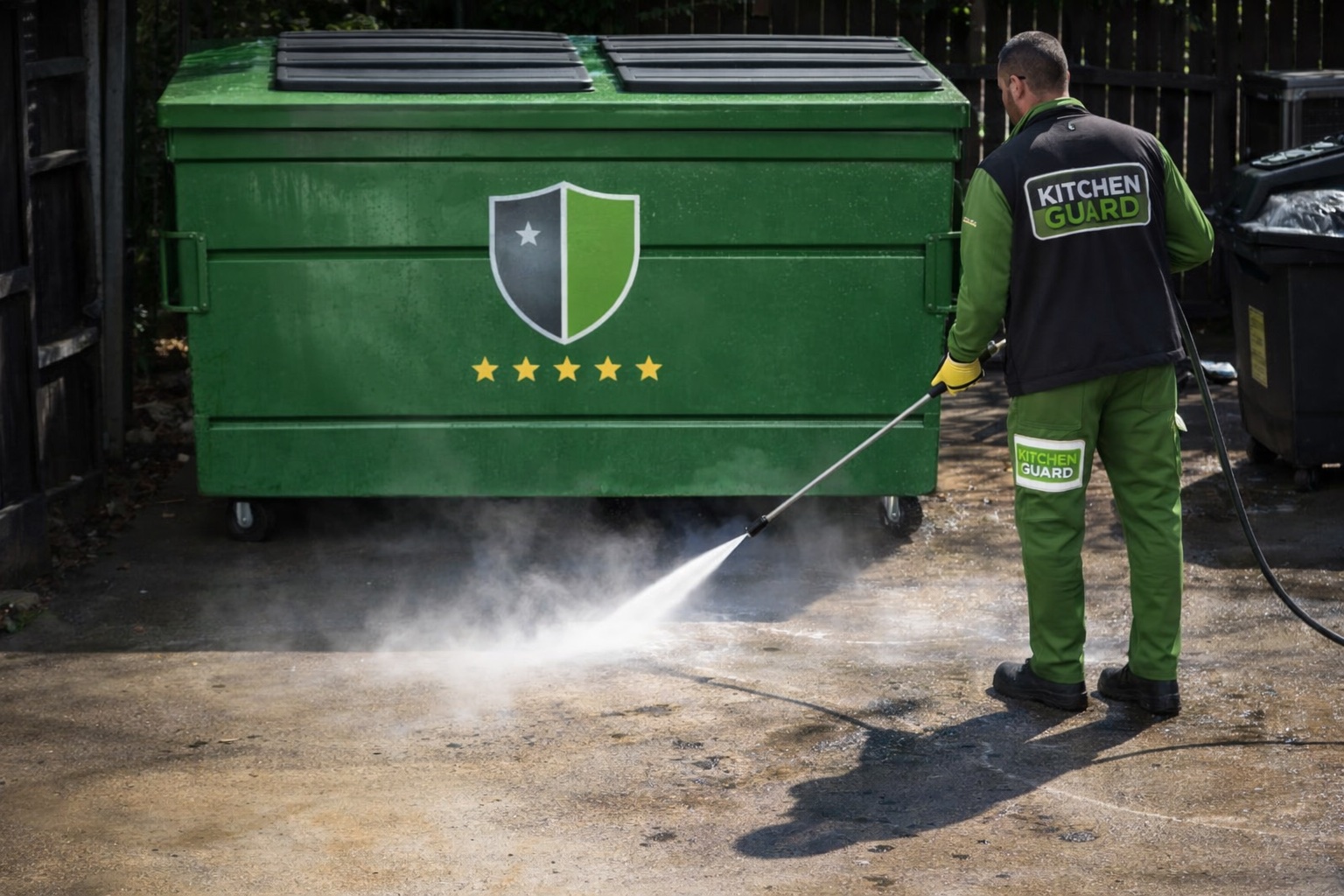
Kitchen Guard already cleans the inside of commercial kitchens, from exhaust hoods to fans. Our commercial pressure washing service applies the same standards outside: parking lots, drive-thru lanes, dumpster pads, sidewalks and storefronts, back docks and patios. Crews work around your hours, usually after close.
Frequently asked questions
How much does parking lot pressure washing cost?
Pricing depends on square footage, how heavily stained the lot is, whether a drive-thru is included and how often you schedule. Recurring service usually costs less per visit than a one-time deep clean. Your local Kitchen Guard will quote after a walk-through.
Can pressure washing damage asphalt or concrete?
Too much pressure held too close can etch concrete or loosen asphalt aggregate. Professionals match pressure, nozzle and water temperature to the surface and use surface cleaners for even results.
Can you clean the lot while we’re open?
It is possible, but most restaurants schedule after close or before opening. That keeps the lot open for guests and lets the surface dry.
Will pressure washing remove every oil stain?
Fresh and moderate stains usually come out. Old stains that have soaked deep into concrete often lighten significantly but may leave a shadow. Regular cleaning prevents that buildup.
Is it legal to pressure wash a parking lot into the storm drain?
In most places, no. Local stormwater rules typically prohibit discharging wash water to storm drains. Ask your contractor how they recover and dispose of it.
How often should a drive-thru lane be cleaned?
Busy drive-thru lanes are often cleaned monthly to quarterly, more often than the rest of the lot, because traffic and spills concentrate in one strip.