Commercial Sidewalk & Storefront Cleaning: Gum, Grease and Slip Risk
The 20 feet of concrete in front of your door does a lot of work. It is where guests decide whether to come in, where they wait for a table, and where staff carry trash and deliveries in and out. It is also where gum, spilled drinks, cigarette butts and kitchen grease pile up fastest.
A restaurant sidewalk gets dirty in a way a retail sidewalk does not. Grease leaves the kitchen on the soles of every shoe that walks out the back door. Food and drinks spill at the entrance and on the patio. Those films do more than look bad. They make concrete slick, and they make it slick right where the most people walk.
This guide covers why restaurant walkways need professional cleaning, what commercial sidewalk cleaning includes, and how often to schedule it.
The slip-and-fall problem starts outside
Falls on the same level caused 264,920 workplace injuries with days away from work in 2023–2024. The typical case cost 11 days off the job, according to National Safety Council figures from the Bureau of Labor Statistics. Those numbers count only employees. Guests who slip at your entrance show up as liability claims instead.
Three things make restaurant walkways especially slippery:
- Tracked grease. Kitchen grease rides out on shoes, mats and carts, then bakes onto the concrete at the back door and the path to the dumpster.
- Food and drink spills. Sugary drinks and food residue leave a sticky film that turns slick once it’s wet.
- Rain on top of both. Water sitting on a grease film is one of the slipperiest conditions a walking surface can have.
What the rules say about walking surfaces
You don’t need a law degree to see the pattern. The standards that govern walking surfaces all ask for clean, slip-resistant ground.
| Standard | What it says | Who it applies to |
|---|---|---|
| OSHA 29 CFR 1910.22 | Walking-working surfaces are “maintained free of hazards such as… spills” and kept “in a clean, orderly, and sanitary condition” | Employers, for areas employees use: back doors, service paths, delivery entrances |
| ADA Standards, Chapter 3 | Accessible routes must be “stable, firm, and slip resistant” | Public accessible routes, including entrance walkways |
| Local sidewalk ordinances | Many cities make the adjacent property owner or tenant responsible for keeping the sidewalk clean and safe | Check your city and your lease |
The U.S. Access Board notes that slip resistance is judged “under the conditions likely to be found on the surface.” At a restaurant entrance, those conditions include spilled drinks and tracked grease.
What commercial sidewalk cleaning covers
| Area | Common problems | How it’s cleaned |
|---|---|---|
| Entrance walkway | Gum, drink spills, tracked grease, cigarette butts | Hot water, rotary surface cleaner, gum removal |
| Storefront and windows base | Splash marks, grime, cobwebs, bird droppings | Low-pressure rinse, hand detail work |
| Outdoor patio | Food and drink spills, grease, bird droppings, table-leg rings | Hot water, surface cleaner, low pressure around furniture and finishes |
| Back door and service path | Kitchen grease, trash leakage | Degreaser pre-treatment, hot water, recovered wash water |
| Smoking and waiting areas | Butts, ash, gum | Sweep, then hot water and surface cleaner |
| Grease spill zones | Fryer oil transfer spots, grease bin areas | Absorbent dry clean-up, degreaser, hot water |
Gum removal: why it keeps coming back
Gum is the most visible problem on a restaurant sidewalk, and it is the hardest for staff to fix. Scraping leaves a dark ring. Cold water does almost nothing.
Professionals use hot water or steam, which softens the gum so pressure can lift it without damaging the concrete. Black gum spots that have been ground in for months may need several passes. Regular cleaning keeps new gum from building into the dark-spotted look you see outside busy entrances.
Patios: clean them without damaging them
Patios are where pressure washing goes wrong most often. Pavers, stamped concrete, stained concrete and wood all react differently to pressure. Too much pressure can etch concrete, wash out paver joint sand, or raise the grain on wood.
A good contractor adjusts pressure and temperature to each surface, moves furniture rather than washing around it, and avoids spraying straight into door seals and window frames.
How often should restaurant sidewalks be cleaned?
| Area | Low foot traffic | Moderate | High traffic or urban storefront |
|---|---|---|---|
| Entrance walkway | Quarterly | Monthly to quarterly | Weekly to monthly |
| Back door and service path | Quarterly | Monthly to quarterly | Monthly |
| Outdoor patio (in season) | Quarterly | Monthly | Every 2–4 weeks |
| Storefront and building base | Twice a year | Quarterly | Quarterly |
Use this as a starting point. A walk-through will tell you how fast your site gets dirty. Many operators also book a deep clean before patio season and after winter.
Keeping wash water out of the storm drain
Sidewalk wash water carries grease, food and cigarette residue. Storm drains usually lead straight to local waterways with no treatment, so most stormwater programs prohibit sending wash water into them. WSSC Water’s mobile power washing guidance is a typical example. It requires a dry clean-up first, then recovered water discharged to the sanitary sewer with permission, or hauled away. Rules vary by city, so ask your contractor how they handle it.
Monthly sidewalk inspection checklist
Print this and walk your entrance once a month.
- More than a handful of black gum spots at the entrance
- Sticky or dark film where guests wait or line up
- Grease staining from the back door toward the dumpster
- Slick spots after rain
- Cigarette butts or ash ground into the concrete
- Patio stains under tables, or rings from furniture legs
- Dirt and splash marks along the base of the storefront
- Odor near trash or grease bin areas
Questions to ask a commercial sidewalk cleaning company
- Do you use hot water? Cold water won’t move grease or gum.
- How do you protect patios, pavers and storefront finishes?
- Where does the wash water go?
- Will you work before we open or after we close?
- Can you clean the parking lot, dumpster pad and back dock in the same visit?
- Will you put us on a recurring schedule?
A clean entrance tells guests what to expect inside
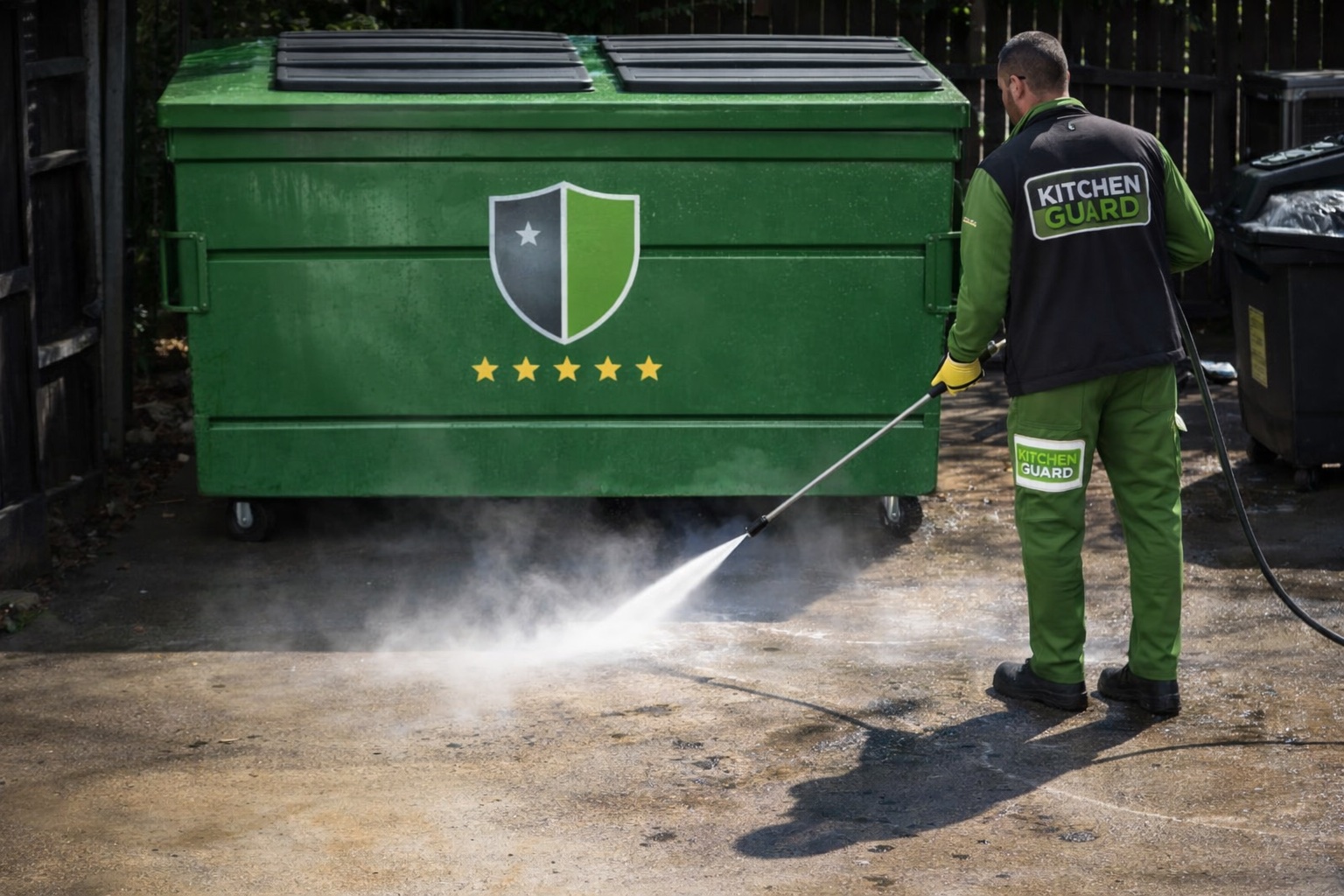
Kitchen Guard cleans commercial kitchens from the exhaust hood to the rooftop fan. Our commercial pressure washing service takes the same standards outside: sidewalks, storefronts, patios, parking lots and drive-thru lanes, dumpster pads and back docks. Crews work around your hours, usually after close.
Frequently asked questions
Who is responsible for cleaning the sidewalk in front of a restaurant?
In many cities, the adjacent property owner or business is responsible for keeping the sidewalk clean and safe. Your lease may also assign it to the tenant. Check your local code and your lease.
Can pressure washing remove gum from sidewalks?
Yes. Hot water or steam softens gum so it lifts without damaging the concrete. Old, ground-in gum may need more than one pass.
Will pressure washing damage my patio?
It can if the pressure is wrong for the surface. Professionals adjust pressure and temperature for pavers, stamped or stained concrete, and wood.
How often should a restaurant entrance be pressure washed?
Busy entrances are often cleaned weekly to monthly. Quieter sites may need quarterly service. A walk-through sets the right schedule.
Does pressure washing make sidewalks less slippery?
Removing grease, food film and algae restores the concrete’s natural texture, which improves traction. It is one part of a slip-prevention plan, alongside mats and quick spill clean-up.
Can you clean while the restaurant is open?
Most restaurants schedule before opening or after close so guests never walk through a wet work area.