NFPA 96 Compliant Hood Cleaning

Dedicated NFPA 96 Expertise & Guilford County Compliance Reporting

We bridge the gap between your Greensboro kitchen operations and local fire authorities. Our service goes beyond the cleaning itself — every visit produces the inspection and cleaning records the North Carolina Fire Code requires you to keep, formatted for the Greensboro Fire Department’s Fire and Life Safety Division, Guilford County health inspectors, and your insurer.

We understand that for Greensboro restaurateurs, compliance isn’t just about a clean hood — it’s about passing inspections and protecting your business from catastrophic fire risks on Battleground Avenue, Elm Street, and every Greensboro corridor.

Learn More About Us
Commercial kitchen equipment repairs by Kitchen Guard technician
What Sets Us Apart

Why Greensboro Restaurants Trust Kitchen Guard

From the hood filters to the rooftop fan, our technicians, trained to NFPA 96 and ANSI/IKECA C10, deliver full-system cleaning with every visit — plus the documentation the Greensboro Fire Department and your insurer expect to see.

Kitchen Guard is the Greensboro area’s dedicated commercial kitchen exhaust cleaning specialist. We’re not a national chain that sends whoever is available — we’re local technicians who know Greensboro, know Greensboro’s fire code requirements, and show up prepared to do the job right.

  • We Know the Code — Fully versed in NFPA 96 requirements enforced by the Greensboro Fire Department’s Fire and Life Safety Division
  • Inspection Reports with Digital Photos — Comprehensive before-and-after documentation for your compliance file, ready for any AHJ inspection
  • Local Response — Based at 1112 Warren St, Greensboro — we respond fast to Triad-area emergencies
  • 24/7 Support — Available around the clock for questions about compliance, scheduling, and NFPA 96 requirements
What Sets Us Apart

What Every Kitchen Guard Service Includes

From the hood filters to the rooftop fan, our technicians, trained to NFPA 96 and ANSI/IKECA C10, deliver full-system cleaning with every visit — plus the documentation the Greensboro Fire Department and your insurer expect to see.

  • NFPA 96 compliance — Kitchen Guard
    We Know the Code
    Our team knows the NFPA 96 kitchen hood requirements cold as enforced by the Greensboro Fire Department’s Fire and Life Safety Division — ensuring fire suppression standards are met with every service.
    We Know the Code

    Our team knows the NFPA 96 kitchen hood requirements cold as enforced by the Greensboro Fire Department’s Fire and Life Safety Division — ensuring fire suppression standards are met with every service.

  • Inspection Reports with Digital Photos
    We provide thorough reports with detailed before-and-after photos of your Greensboro kitchen exhaust systems and duct cleaning progress for full compliance transparency — ready for any AHJ inspection.
    Inspection Reports with Digital Photos

    We provide thorough reports with detailed before-and-after photos of your Greensboro kitchen exhaust systems and duct cleaning progress for full compliance transparency — ready for any AHJ inspection.

  • Local Greensboro Response
    Based at 1112 Warren St, Greensboro, NC — our Triad-based crews respond fast to service calls and emergencies across the full Guilford County area.
    Local Greensboro Response

    Based at 1112 Warren St, Greensboro, NC — our Triad-based crews respond fast to service calls and emergencies across the full Guilford County area.

  • 24/7 Support
    We’re available around the clock for questions about NFPA 96 compliance, scheduling, or urgent exhaust system issues at your Greensboro-area location.
    24/7 Support

    We’re available around the clock for questions about NFPA 96 compliance, scheduling, or urgent exhaust system issues at your Greensboro-area location.

  • Professional & Reliable Technicians
    Our experienced team specializes in commercial kitchen cleaning and ensures your exhaust hood and air vent cleaning are handled with precision.
    Professional & Reliable Technicians

    Our experienced team specializes in commercial kitchen cleaning and ensures your exhaust hood and air vent cleaning are handled with precision.

  • Emergency SMS Alerts
    You stay informed with instant alerts about hood NFPA compliance, scheduled services, or emergency maintenance needs.
    Emergency SMS Alerts

    You stay informed with instant alerts about hood NFPA compliance, scheduled services, or emergency maintenance needs.

Commercial hood cleaning service in progress
NFPA 96 COMPLIANT HOOD CLEANING

Greensboro Hood Cleaning Services

Hood Cleaning
GREENSBORO’S HOOD CLEANING SPECIALISTS

Full-System Kitchen Exhaust Cleaning That Meets NFPA 96

Serving Greensboro, Guilford County, and all surrounding Triad communities

What’s Included in Every Greensboro Hood Cleaning Service

Our technicians, trained to NFPA 96 and ANSI/IKECA C10, clean the full exhaust system from top to bottom — hood canopy, filters, ductwork, and rooftop exhaust fan. First, we degrease the entire system using professional-grade cleaning agents. Next, we perform a thorough inspection to identify any buildup or compliance concerns. After that, we document every step with photos for your compliance file.

Why Greensboro Kitchens Need Expert NFPA 96 Service

The Greensboro Fire Department and Guilford County health inspectors strictly enforce NFPA 96. Violations result in written notices, fines, or kitchen shutdown orders — regardless of your restaurant’s size or reputation. Kitchen Guard keeps your exhaust system clean, documented, and ready for any inspection on Elm Street, Battleground Avenue, Wendover Ave, or anywhere in Guilford County.

Kitchen Guard’s certified technicians clean every inch of your exhaust system — from the hood canopy and grease filters to the ductwork and rooftop fan — using commercial-grade equipment that meets NFPA 96 standards enforced by the Greensboro Fire Department’s Fire and Life Safety Division.

aKitchen Guard technician pressure-washing a commercial kitchen exhaust hood behind containment sheeting
Greensboro Hood Cleaning

Commercial Kitchen Exhaust Cleaning for Every Type of Greensboro Kitchen

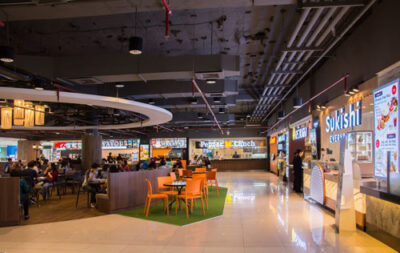
From a single-location restaurant on Elm Street to a high-capacity venue like First National Bank Field, every commercial kitchen in Greensboro and Guilford County is required to meet the North Carolina Fire Code’s commercial kitchen exhaust requirements. Failure to maintain your exhaust system puts your health permit, your fire insurance, and your ability to stay open at risk.

we cover it all.

Restaurant

Restaurants

From Elm Street gastropubs to Battleground Avenue chains and Friendly Center casual dining, Kitchen Guard keeps Greensboro restaurants fire-safe, NFPA 96 compliant, and fully operational — because flexible overnight scheduling that never disrupts your service is our priority.

Corporate-Cafeteria

Corporate Cafeterias

Greensboro and Guilford County corporate campuses trust Kitchen Guard to keep employee cafeterias NFPA 96 compliant and grease-free. We work around your business hours so your team never notices the cleaning.

Sports-Venues

Sports & Event Venues

From First National Bank Field concession stands to event center kitchens across Greensboro, Kitchen Guard provides NFPA 96-compliant hood cleaning that keeps high-volume event kitchens safe and inspection-ready.

Hospital-Kitchen

Hospitals & Assisted Living

Cone Health, Moses Cone Medical Center, Wesley Long Hospital, and Greensboro-area assisted living facilities rely on Kitchen Guard to keep commercial kitchens grease-free, fire safe, and NFPA 96 compliant — protecting patients, staff, and families.

School campus commercial kitchen — Kitchen Guard cleaning services

Educational
Institutions

K-12 schools, colleges, and universities across the Greensboro area trust Kitchen Guard to maintain clean, fire-safe commercial kitchens that meet NFPA 96 standards and protect students and staff.

Hotel-Kitchen

Hotel Chains

From downtown Greensboro boutique hotels to extended-stay properties throughout Guilford County, Kitchen Guard delivers professional hood cleaning that keeps your kitchen pristine, NFPA 96 compliant, and ready for every guest.

Greensboro Compliance Schedule

How Often Does a Greensboro Kitchen Have to Be Cleaned?

North Carolina enforces the 2018 NC Fire Code — the 2015 International Fire Code with North Carolina amendments. Section 609 sets the minimum inspection intervals for commercial kitchen exhaust systems, and where an inspection finds grease accumulation the system has to be cleaned in accordance with ANSI/IKECA C10.

Your cooking operation Minimum interval Typical Greensboro examples
Solid fuel — wood, charcoal, mesquiteEvery monthWood-fired pizza ovens, smokehouses, live-fire kitchens
High volume — 24-hour cooking, charbroiling, wok cookingEvery 3 monthsLate-night diners, burger and wing kitchens, hibachi and wok lines
All other cooking operationsEvery 6 monthsMost full-service restaurants, hotel kitchens, corporate cafeterias
Low volume — seasonal, places of worship, senior centersEvery 12 monthsFellowship halls, seasonal concessions, assisted-living dining

These are inspection minimums, not a cleaning ceiling. If the inspection finds grease, the system gets cleaned then — which in the top two tiers means cleaning at effectively every visit. A Greensboro fire inspector can also require more frequent service if your system warrants it.

A note on the 2024 code. North Carolina has adopted a 2024 Fire Code based on the 2021 IFC, but its effective date has been postponed and the 2018 code remains in force. When the new edition takes effect, these same requirements move from Section 609 to Section 606 — the intervals themselves do not change.

Know Your AHJ

Who Actually Inspects Your Hood in Greensboro

Operators inside the city are often told the county fire marshal is their authority having jurisdiction. For a Greensboro kitchen, that is not who shows up.

Fire code — Greensboro Fire Department

Inside Greensboro city limits, fire code inspections are handled by the Greensboro Fire Department’s Fire and Life Safety Division. The Guilford County Fire Marshal’s Office covers the rest of the county and expressly excludes areas inside the Greensboro and High Point city limits — with one carve-out: the County inspects Guilford County Schools and charter schools wherever they sit, including inside the city.

Health and your posted grade — Guilford County

Guilford County Environmental Health permits and grades food establishments countywide. Under 15A NCAC 18A .2662, a score of 90 or above earns an A, 80 to 89.5 a B, and 70 to 79.5 a C; below 70 the permit is revoked. The grade card has to be posted where customers can readily see it on the way in — which makes a greasy hood a storefront problem, not just a back-of-house one.

What you have to keep — and what actually gets filed

North Carolina does not require your hood cleaning contractor to file cleaning reports with the fire marshal. Several companies in this market say otherwise. What the fire code actually requires is:

  • A record of each inspection and cleaning stating who performed the work, what was done, and when — completed after each service and maintained (NC Fire Code 609.3.3.3).
  • A service tag left in a conspicuous location on the system showing the provider’s name, address, telephone number and date of service, with prior tags covered or removed (609.3.3.3.1).
  • Both available to the inspector on request.

The document that does get forwarded is a different one. Your wet-chemical fire suppression system over the cook line must be serviced at least every six months, and a certificate of that inspection must be forwarded to the fire code official (NC Fire Code 904.12.6.2). That is the suppression system, not the hood cleaning — and the two get blurred constantly.

Every Kitchen Guard visit leaves you with the record and the tag the code asks for, plus dated before-and-after photos your insurer will accept.
Straight Answer on Price

What Hood Cleaning Costs in Greensboro

Most Greensboro hood cleanings run $150 to $500+ per visit.

Where you land inside that range comes down to five things:

  • How many hood sections you have.
  • The length and complexity of the duct run.
  • Whether the exhaust fan is roof-mounted, and how accessible the roof is.
  • How long it has been since the last full cleaning.
  • Whether you are on a maintenance schedule or calling us in cold.

A system that has gone a year or more without service takes longer and costs more the first time. Once you are on a quarterly or semiannual schedule, the price settles and stays predictable.

What the price covers

Hood canopy, grease filters, plenum, the accessible duct run and the rooftop exhaust fan degreased to bare metal — plus the inspection and cleaning record, the dated service tag, and before-and-after photos for your compliance file.

Call (336) 690-5527 with your kitchen type, number of hoods and cooking volume. Most Greensboro restaurants have a written proposal within 24 hours.

The Other Grease Rule

Grease Traps and Greensboro’s FOG Rules

Your hood keeps the fire marshal satisfied. Your grease interceptor is a separate obligation, enforced by a different department — City of Greensboro Water Resources — and the penalties are steeper than most operators expect.

  • 1,000 gallons minimum for new kitchens. New food service establishments in Greensboro must install at least a 1,000-gallon outdoor grease interceptor, unless the City’s FOG Coordinator grants a variance.
  • Pumped at least quarterly. Under the City’s FOG Policy (revised March 2025), interceptors of 1,000 gallons or more — which covers the outdoor interceptors required at Greensboro food service establishments — must be cleaned and pumped at least quarterly by a North Carolina licensed grease hauler or recycler. The City’s code enforcement supervisor can set a different frequency by written notice to the owner.
  • More often if the 25% rule says so. Quarterly is the floor, not the answer. Cleaning frequency has to increase if accumulated FOG and solids exceed 25% of the trap’s depth, and the City recommends scheduling so accumulation stays under 20%.
  • Three years of records, on site and uploaded. Cleaning records must show the date and time, the quantity removed and who performed the work. They have to be kept on site for three years and submitted to the City’s online FOG data management system — an obligation that catches a lot of operators out.
  • Enforcement bites. Violations run through the City’s Sewer Use Ordinance, which authorizes civil penalties of up to $25,000 per day per violation and termination of sewer service.

Kitchen Guard services grease traps and interceptors for Greensboro kitchens and can put them on the same schedule as your hood cleaning, so both sets of records stay current together.

What North Carolina Restaurant Owners Say About Our Hood Cleaning Services

We use Kitchen Guard for all our restaurants for one simple reason – they’re easy to do business with.

David Jones
Director of Operations, Verant Group

Kitchen Guard keeps our restaurant (and our wood-burning oven) clean, safe and to the necessary standards required by law.

Ivan Derezin
Owner, The Bellows Restaurant

Set it and forget it.

Adam Rinella
VP of Real Esate & Development, Ike's Love and Sandwiches
David Jones, Kitchen Guard Piedmont Triad team member
The Visionary Behind Kitchen Guard

Meet The Founder

Nathan Leathers

Founder

Kitchen Guard of Piedmont Triad, NC was founded with one mission: make certified, professional hood cleaning accessible to every restaurant and commercial kitchen in North Carolina. Under the leadership of founder Nathan Leathers, Kitchen Guard has grown into the Piedmont Triad’s most trusted commercial hood cleaning company, serving restaurants, hotels, hospitals, schools, and facilities from Greensboro, High Point and Winston-Salem to the wider Piedmont Triad.

Nathan Leathers, founder of Kitchen Guard
Our Work Speaks for Itself

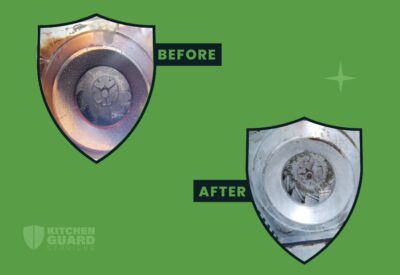
See the Results: Before & After Restaurant Hood Cleaning in Greensboro

Artboard-8beforeandafter

Stadiums

Hood canopy and plenum on a high-volume concession line — carbonized grease removed and the interior degreased back to bare metal.

Screenshot 2024-05-21 234132
BandA_Web_1
Screenshot 2024-05-21 234132

Explore More Kitchen Guard Services:

Hood Cleaning Services → All Services → Filter Exchange → Get a Quote →

GREENSBORO HOOD CLEANING FAQ

Frequently Asked Questions

Below are common questions from Greensboro restaurant owners and food service operators about NFPA 96 hood cleaning compliance.

Our team, trained to NFPA 96 and ANSI/IKECA C10, brings extensive expertise to every job. We use commercial-grade cleaning solutions approved for kitchen exhaust systems. Our technicians document every service with before-and-after photos. You have proof of compliance ready for any inspection. We schedule cleanings around your business hours to minimize disruption. Our service reports are formatted to meet insurance and fire marshal requirements. Our clients consistently pass fire department inspections on the first review.

How often does the fire department inspect a Greensboro restaurant?

Greensboro follows the North Carolina Fire Code’s periodic inspection schedule, and a restaurant is normally an assembly occupancy. That means an annual inspection if your occupant load is 100 or greater, and once every three years if it is under 100 — the same tier that covers business, mercantile and storage occupancies. Industrial and educational occupancies sit at two years. The Fire and Life Safety Division ran more than 10,700 periodic inspections in a recent year, so the cycle is real rather than nominal. It is a separate thing from your exhaust cleaning interval, which follows what you cook.

We cook barbecue over hardwood coals. What does that mean for us?

Monthly inspection — solid fuel carries the strictest interval in the code, ahead of charbroiling and 24-hour cooking at quarterly. Greensboro has a genuine pit tradition rather than a nominal one; the city’s best-known barbecue house still slow cooks over hardwood hickory coals with pitmasters lighting the fire before dawn for a cook that runs eight to ten hours. Wood leaves creosote and soot alongside grease, a harder deposit than a fryer produces, and it needs scraping back to metal rather than degreasing.

We run campus dining. Can you cover that many outlets?

Yes, and Greensboro has more of it than most cities its size. UNC Greensboro passed 19,000 students in autumn 2026 with roughly nineteen campus dining locations, and North Carolina A&T — the largest public HBCU in the nation, at 15,275 students as of its 2025 census — runs twelve venues between two all-you-care-to-eat halls and ten retail outlets. Those range from full production kitchens to coffee counters, so each gets its own interval, grouped into as few campus visits as possible.

We run concessions at the Greensboro Complex. How is that scheduled?

Around the calendar, which is a demanding one. The Complex spans nine venues including the 22,000-seat First Horizon Coliseum and hosts more than 1,100 events a year, with concessions running everything from burger bars and grilled cheese to slow-smoked barbecue. Event kitchens sit idle then run flat out for a few hours, which concentrates grease and leaves narrow windows between bookings. We work to the event schedule rather than to a standing date.

Do you work with school cafeterias?

Yes, and at scale. Guilford County Schools operates 121 schools serving nearly 68,000 students, which is a hood in almost every building and a service window defined by the academic calendar. Those kitchens are typically moderate-volume under the code, but they feed vulnerable populations and sit under procurement scrutiny, so the documentation matters as much as the clean.

Our hospital kitchen never closes. When can you work?

Overnight, in the quiet window, section by section. Cone Health runs Moses H. Cone Memorial Hospital at 628 beds and Wesley Long at 175 in Greensboro, part of a system with more than 14,000 employees. A kitchen producing meals continuously falls in the code’s quarterly row rather than the six-month one, and the constraint on scheduling is meal service rather than anything else.

Can you service festival and food truck operations?

Yes — a hood falls under the same code whether or not it has wheels. Greensboro’s downtown festival calendar puts large temporary food operations on the street several times a year, with the North Carolina Folk Festival alone bringing more than forty food vendors into downtown over a September weekend, alongside the food truck festivals and the Fun Fourth events. Mobile units carry hoods and suppression systems, and the obligation does not lapse because the kitchen is temporary.

Do you work around downtown’s social district and late trading?

Yes. The BORO Social District runs from noon to 9pm with 31 participating restaurants and bars selling into it, and downtown’s dining and brewery scene — more than twenty locally owned breweries and tap houses by Downtown Greensboro Inc’s count, several of them with kitchens, including wood-fired pizza and house-smoked barbecue — trades well beyond that. We schedule after last service or early morning rather than taking an evening out of your week.

How much does hood cleaning cost in Greensboro?

+

Most hood cleanings here run $150 to $500+ per visit. Where you land depends on how many hood sections you have, the length and complexity of the duct run, whether the exhaust fan is roof-mounted, and how long it has been since the last full cleaning. A first cleaning on a neglected system costs more than the same system does once it is on a quarterly schedule. Call (336) 690-5527 with your kitchen type, hood count and cooking volume and you will have a written proposal within 24 hours.

Who inspects commercial kitchen hoods inside Greensboro city limits?

+

The Greensboro Fire Department’s Fire and Life Safety Division. The Guilford County Fire Marshal’s Office handles the rest of Guilford County and expressly excludes areas inside the Greensboro and High Point city limits — the exception being Guilford County Schools and charter schools, which the County inspects wherever they are located. Guilford County Environmental Health separately permits and grades food establishments countywide.

Do you file the hood cleaning report with the Greensboro fire marshal?

+

North Carolina does not require kitchen exhaust cleaning reports to be filed with the fire marshal, and a contractor telling you otherwise is describing a different requirement. The code requires you to keep a record of each inspection and cleaning and to have a dated service tag on the system, both available to the inspector on request (NC Fire Code 609.3.3.3 and 609.3.3.3.1). Kitchen Guard leaves you both, plus before-and-after photos. The certificate that does get forwarded to the fire code official is for your fire suppression system, which must be serviced at least every six months (904.12.6.2).

What is the difference between hood cleaning and a fire suppression inspection?

+

Hood cleaning removes grease from the canopy, filters, plenum, ductwork and exhaust fan so a fire has nothing to feed on. A fire suppression inspection tests the wet-chemical system that discharges over your cook line — nozzles, fusible links, cylinder charge and the interconnection with your fire alarm. They are separate services on separate schedules: exhaust cleaning follows the inspection intervals in Section 609, while suppression systems are serviced at least every six months with a certificate forwarded to the fire code official.

Does Kitchen Guard clean grease traps in Greensboro?

+

Yes. Grease interceptors fall under City of Greensboro Water Resources rather than the fire code. New food service establishments must install at least a 1,000-gallon outdoor interceptor, and under the City’s FOG Policy (revised March 2025) interceptors of 1,000 gallons or more must be pumped at least quarterly by a North Carolina licensed grease hauler — more often if accumulated grease and solids exceed 25% of the trap’s depth. Cleaning records must be kept on site for three years and uploaded to the City’s online FOG data management system. Enforcement runs through the City’s Sewer Use Ordinance, which authorizes civil penalties of up to $25,000 per day per violation and termination of sewer service. We can put your interceptor on the same schedule as your hood.

Which fire code does Greensboro enforce for kitchen exhaust?

+

The 2018 North Carolina Fire Code, which is the 2015 International Fire Code with North Carolina amendments. Section 609 covers commercial kitchen hoods: inspection intervals in Table 609.3.3.1, cleaning in accordance with ANSI/IKECA C10, and the record and service-tag requirements. North Carolina has adopted a 2024 Fire Code based on the 2021 IFC, but its effective date has been postponed; when it takes effect these requirements move to Section 606.