



Restaurants
From Dixie Drive chains to independent restaurants in downtown Asheboro, Kitchen Guard keeps Asheboro restaurants fire-safe and NFPA 96 compliant for Randolph County fire marshal inspections year-round.
Kitchen Guard delivers detailed compliance reports accepted by the Asheboro Fire Department and Randolph County fire marshal. Our certified technicians provide thorough exhaust system cleaning — covering hood canopy, grease filters, ductwork, exhaust fan, and grease traps — to the exact NFPA 96 standards. Restaurants throughout Asheboro and Randolph County pass fire safety inspections because Kitchen Guard does the job right.

Asheboro’s restaurant scene serves both the year-round local community and the millions of visitors attracted to the NC Zoo, Asheboro’s major events, and the Uwharrie Mountains recreational area. Kitchen Guard keeps Randolph County kitchens NFPA 96-compliant all year with flexible scheduling, thorough cleaning, and the compliance documentation your fire inspector needs — whether you operate on Dixie Drive or deep in the Randolph County countryside.
Asheboro runs its own fire inspections bureau rather than relying on the county, and that bureau issues permits for fire protection equipment including hood suppression systems. Cleaning and suppression are separate trades — we work alongside yours so the two records agree.

Full-system cleaning to NFPA 96 and to the ANSI/IKECA C10 standard the North Carolina fire code names by reference.

Dated reports and photographs at each access point, in the format the Inspections Bureau expects to see on a walkthrough.

Smokehouse and steakhouse kitchens sit in the code’s quarterly row; solid fuel goes monthly; most others are six months.

Concession and seasonal operations scheduled around the season rather than through it.

Access panels fitted where a duct run has none, because a system that cannot be opened cannot be certified.

Hood cleaning, Filter Exchange, fan hinge kits, grease containment, grease trap service and pressure washing on one account.

Every visit covers the canopy, the filters, the plenum, the horizontal duct and the fan on the roof, degreased and photographed at each access point so the file shows what was actually reached.
The Asheboro Fire Department runs its own Fire Inspections Bureau from 146 N. Church Street, and it is one of the few authorities in the region that names commercial kitchens directly: the bureau issues permits for fire protection equipment including hood suppression systems, alongside sprinklers, alarms and standpipes, as required by the North Carolina Fire Prevention Code. Randolph County Public Health’s Environmental Health division sets your sanitation grade on a separate schedule.
Grease is the city’s too. Asheboro Water Resources runs its own pretreatment and FOG programme through its Technical Services division, covering more than 180 food service establishments and carwashes across the city. Your interceptor maintenance and records answer to Asheboro, not to Randolph County.
The North Carolina Zoo is the largest food service operation in Randolph County and nothing else in the area looks like it — twelve separate outlets spread across roughly 500 developed acres, from sit-down cafes to fried chicken and burger counters, serving more than a million visitors a year. Those are not one kitchen with one hood; they are a dozen independent systems on a campus where walking between them is measured in miles, several of them seasonal, several of them fryer-heavy.
Multi-outlet sites like that fail compliance in the gaps rather than at the busy end — the seasonal counter that gets skipped because it was closed on the last visit, the kiosk that is not on anyone’s list. We inventory every system on a site and schedule them together.
After every service you keep digital photographs, a dated report and the service tag on the hood, ready for the Asheboro Fire Inspections Bureau without anyone going looking — so there is nothing to dig up when an inspector arrives.
The interval comes from cooking volume rather than a fixed calendar. Table 11.4 sets how often the system must be inspected, based on the type and volume of cooking, and the system must be cleaned whenever that inspection finds grease deposits:
The grease that starts fires is in the duct run and around the fan, not on the canopy — which is why we open the system rather than polish it.

Kitchen Guard cleans every type of commercial kitchen exhaust system in Asheboro. NFPA 96-compliant, locally operated, and fully insured.
From Dixie Drive chains to independent restaurants in downtown Asheboro, Kitchen Guard keeps Asheboro restaurants fire-safe and NFPA 96 compliant for Randolph County fire marshal inspections year-round.
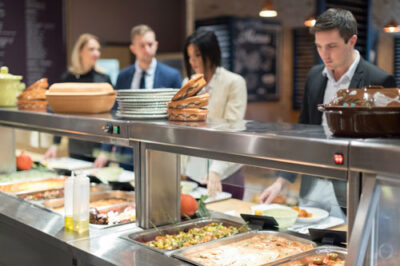
Randolph Community College, Randolph County Schools food service operations, and corporate cafeterias throughout Asheboro rely on Kitchen Guard for NFPA 96-compliant hood cleaning and compliance documentation.
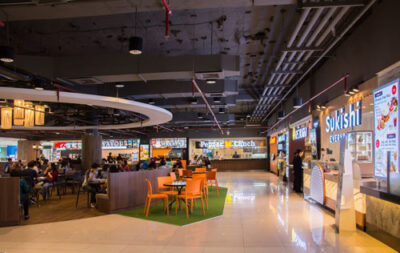
The NC Zoo concession operations and recreational facilities across Randolph County rely on Kitchen Guard for certified hood cleaning to maintain NFPA 96 compliance during peak visitation seasons.

Randolph Health and assisted living communities throughout Asheboro and Randolph County trust Kitchen Guard to maintain NFPA 96 compliance in their food service kitchens.

Attraction and event food service — the zoo alone runs four restaurants and seven snack bars, several of them fryer and griddle operations feeding a million visitors a year.

From downtown Asheboro boutique hotels to extended-stay properties throughout Randolph County, Kitchen Guard delivers professional hood cleaning that keeps your kitchen pristine, NFPA 96 compliant, and ready for every guest.



Explore More Kitchen Guard Services:
ASHEBORO HOOD CLEANING FAQ
Below are common questions from Asheboro restaurant owners and food service operators about NFPA 96 hood cleaning compliance.
Our team, trained to NFPA 96 and ANSI/IKECA C10, brings extensive expertise to every job. We use commercial-grade cleaning solutions approved for kitchen exhaust systems. Our technicians document every service with before-and-after photos. You have proof of compliance ready for any inspection. We schedule cleanings around your business hours to minimize disruption. Our service reports are formatted to meet insurance and fire marshal requirements. Our clients consistently pass fire department inspections on the first review.
The Asheboro Fire Inspections Bureau, part of Asheboro Fire Department, at 146 N. Church Street — phone 336-626-1201. The bureau enforces the North Carolina State Fire Prevention Code across commercial occupancies in the city, and it is also the office that issues permits for fire protection equipment.
Yes. The Asheboro Fire Inspections Bureau issues permits for fire protection equipment including hood suppression systems, alongside sprinklers, fire alarms and standpipes. Suppression is a separate trade from exhaust cleaning — we clean the system and work around your suppression contractor’s inspection, so the two records line up rather than contradict each other.
The North Carolina Zoo passed a million visitors in 2023, and its food service runs to four restaurants and seven snack bars, several of them fryer and griddle operations — hand-dipped chicken tenders, burgers, fried pickles. Concentrated visitor volume means concentrated grease. Where an outlet is genuinely running at high volume it falls in the code’s quarterly row rather than the six-month one.
Most jobs land between $150 and $500 or more. A concession stand with a short hood and no rooftop fan sits at the bottom of that range; a full kitchen with a long canopy, a shared duct run and a fan on the roof sits at the top. Hood length, fan access and how long it has been since the last service are what move the number.
Yes, and downtown is where it matters most — fourteen restaurants and five bars and breweries sit inside the Zoo City Social District, several of them running late. We schedule around service rather than through it.
Materially, yes. Downtown Asheboro carries two barbecue and smokehouse operations and a steakhouse, and charbroiling is named in the code’s high-volume row — quarterly inspection rather than six-monthly. Solid fuel goes further still, to monthly. Heavy char also loads the horizontal duct and the fan far faster than a fryer-only kitchen does.
Under the state food rules they look at whether your ventilation hood system is preventing grease and condensation from collecting on equipment, walls and ceilings — the visible, in-kitchen side. They are at 204 East Academy Street, 336-318-6262. What they do not do is set your exhaust cleaning interval, inspect the inside of your ductwork or look at the rooftop fan. That is the fire code’s side of the line.
Yes. Randolph County’s largest employers include Toyota Battery Manufacturing at around 2,500 people and Technimark at roughly 1,250, and an employee cafeteria at that scale cooks more covers a day than most restaurants in town. Those sites usually want service scheduled between shifts and documentation that satisfies a procurement file rather than a manager on shift.