NFPA 96 Certified Hood Cleaning

What Durham’s Fire Inspectors Actually Ask For

Which office inspects you depends on which side of the city line your kitchen sits on. Inside Durham city limits, that is the Fire Prevention Division of the Durham Fire Department, whose inspections ensure enforcement of the NC Fire Prevention Code and City Code ordinances. Outside the city, it is Durham County Fire Prevention & Life Safety, enforcing the State of North Carolina Building Codes Fire Code.

Durham County publishes its inspection cycle by occupancy type, which is more than most jurisdictions do. Assembly occupancies — the category most restaurants fall into — are inspected once every year, alongside institutional, high-rise and multi-family residential. Public and private schools are inspected twice a year. Business, mercantile and storage occupancies go on a three-year cycle.

But the line worth pinning above your office desk is this one. For facilities with fire protection systems such as fire alarms, sprinkler systems and kitchen hood suppression systems, the county asks operators to be prepared to have three years’ worth of recent inspections on site.

Three years. Not the last certificate, not a photo on somebody’s phone — a file. That is the part that catches kitchens out, because the cleaning itself takes a night and reconstructing three years of paperwork does not. NFPA 96 already requires a certificate be kept on the premises showing the servicing company, the person who performed the work, and the date. Every Kitchen Guard visit leaves that certificate on site, and we keep your service history on our end, so when an inspector asks for the folder, the folder exists.
Learn More About Us
Commercial kitchen equipment repairs by Kitchen Guard technician
What Sets Us Apart

Why Durham Kitchens Call Kitchen Guard

From the hood filters to the rooftop fan, we clean the whole system and document it the way Durham County asks you to.

Kitchen Guard is a Piedmont Triad company that runs Durham on a scheduled route, and we would rather say that plainly than imply a storefront on Ninth Street. What the model gives you is predictability: a booked slot after close, a crew carrying the access panels and hinge kit the job needs, and a documented result waiting in the morning.

We clean the complete system — canopy, filters, plenum, the full duct run and the rooftop fan — and photograph it before and after. The certificate goes on the wall and the record goes in your file, because Durham County asks operators to be ready to produce three years of it.

What Sets Us Apart

Why Durham Kitchens Call Kitchen Guard

From the hood filters to the rooftop fan, we clean the whole system and document it the way Durham County asks you to.

  • NFPA 96 compliance — Kitchen Guard
    We Know the Code
    Our technicians work to NFPA 96 as it is enforced here — by the Durham Fire Department’s Fire Prevention Division inside the city, and Durham County Fire Prevention & Life Safety outside it. That includes the six-month servicing of the hood and its suppression system that North Carolina fire marshals cite most often.
    We Know the Code

    Our technicians work to NFPA 96 as it is enforced here — by the Durham Fire Department’s Fire Prevention Division inside the city, and Durham County Fire Prevention & Life Safety outside it. That includes the six-month servicing of the hood and its suppression system that North Carolina fire marshals cite most often.

  • Inspection Reports with Digital Photos
    Every visit produces before-and-after photographs of the canopy, plenum, duct run and rooftop fan, plus a dated certificate naming the servicing company, the technician and the date — the record NFPA 96 requires you to keep on the premises.
    Inspection Reports with Digital Photos

    Every visit produces before-and-after photographs of the canopy, plenum, duct run and rooftop fan, plus a dated certificate naming the servicing company, the technician and the date — the record NFPA 96 requires you to keep on the premises.

  • A Scheduled Durham Route
    We are based in the Piedmont Triad and serve Durham on a scheduled route — 54 miles down I-40, a little over an hour. Routed work is what makes overnight service practical, and it is how a Durham job gets priced and documented the same way a Durham one does.
    A Scheduled Durham Route

    We are based in the Piedmont Triad and serve Durham on a scheduled route — 54 miles down I-40, a little over an hour. Routed work is what makes overnight service practical, and it is how a Durham job gets priced and documented the same way a Durham one does.

  • 24/7 Support
    We are available around the clock for questions about NFPA 96 compliance, scheduling, or an exhaust problem that cannot wait until morning.
    24/7 Support

    We are available around the clock for questions about NFPA 96 compliance, scheduling, or an exhaust problem that cannot wait until morning.

  • Professional & Reliable Technicians
    Additionally, our experienced team specializes in commercial kitchen cleaning and ensures your exhaust hood and air vent cleaning are handled with precision.
    Professional & Reliable Technicians

    Additionally, our experienced team specializes in commercial kitchen cleaning and ensures your exhaust hood and air vent cleaning are handled with precision.

  • Emergency SMS Alerts
    Consequently, you stay informed with instant alerts about hood NFPA compliance, scheduled services, or emergency maintenance needs.
    Emergency SMS Alerts

    Consequently, you stay informed with instant alerts about hood NFPA compliance, scheduled services, or emergency maintenance needs.

Commercial hood cleaning service in progress
NFPA 96 CERTIFIED HOOD CLEANING

Durham Hood Cleaning Service Details

Hood Cleaning
DURHAM’S HOOD CLEANING SPECIALISTS

What a Full-System Clean Includes

Serving Durham, Durham County and the I-40 corridor

Every Kitchen Guard service covers the complete exhaust path:

  • Hood canopy, interior and exterior surfaces
  • Grease removal filters — cleaned, inspected for damage, and reseated with proper overlap
  • Plenum chamber behind the filters
  • The full horizontal and vertical duct run, through every access panel
  • Rooftop exhaust fan — lifted on its hinge kit, degreased, with belt and bearing condition checked
  • Grease containment at the fan, and roof surfaces protected during the work

“Cleaned to bare metal” is the phrase the trade uses. What the standard actually requires is that surfaces be cleaned to remove combustible contaminants to a minimum of 0.002 in. — fifty microns. That is the number behind the phrase, and it is measurable.

You get before-and-after photographs and a dated compliance certificate. If there is something we could not reach — a duct run with no access panel, a section that needs a panel cut in — it goes in the report rather than quietly being left out of it.

Every Kitchen Guard service covers the complete exhaust path, not only the parts that are easy to reach.

aKitchen Guard technician pressure-washing a commercial kitchen exhaust hood behind containment sheeting
Every Kitchen, Every Compliance Standard

Commercial Kitchen Exhaust Cleaning for Every Type of Durham Kitchen

Durham’s kitchens are unusually varied for a city its size — a major university, two hospital systems, a biotech corridor, two venues and a dense independent restaurant scene. Each keeps a different schedule, and the right cleaning interval follows the cooking rather than the square footage.

we cover it all.

Restaurant

Restaurants

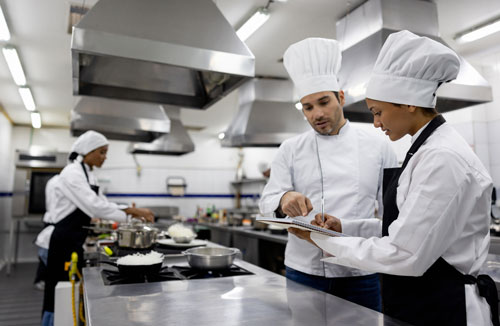
From Ninth Street cafes to the dining rooms around Main Street and Five Points, Durham’s independents run tight kitchens with narrow service windows. We schedule after close, clean the full system, and leave the certificate and photographs before the morning shift arrives.

Corporate-Cafeteria

Corporate Cafeterias

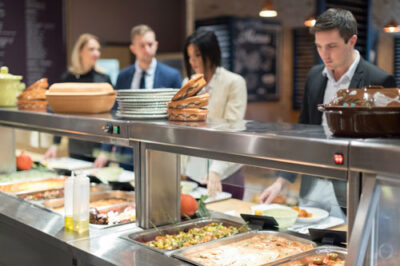
Life science and healthcare employ close to 30% of Durham County’s workforce, and the campuses along the research corridor run contract-managed dining rooms. Those accounts need scheduled service, standardized reporting, and intervals that hold across every site.

Sports-Venues

Sports & Event Venues

Concession kitchens at DPAC and Durham Bulls Athletic Park cook hard in short bursts on a schedule published a season ahead. We work the gaps between runs and show nights so the fryers and grills are ready for the next gate.

Hospital-Kitchen

Hospitals & Assisted Living

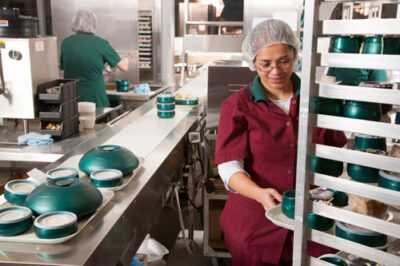
Duke University Hospital and Duke Regional run production kitchens that cannot close. Phased overnight work keeps service running, and the documentation requirements in healthcare are the strictest of any category we handle.

School campus commercial kitchen — Kitchen Guard cleaning services

Educational Institutions

Durham County inspects public and private schools twice a year — double the restaurant cadence. Cafeteria exhaust systems at Durham Public Schools, Duke and North Carolina Central sit under a tighter rhythm than most operators expect, and academic calendars make the service windows predictable.

Hotel-Kitchen

Hotel Chains

Hotels around downtown, the I-85 corridor and Southpoint host conference and campus visitors year-round. Whether the kitchen supports a breakfast bar or a full banquet operation, Durham inspectors expect the same clean hoods and compliant exhaust as any restaurant.

The Visionary Behind Kitchen Guard

Meet The Founder

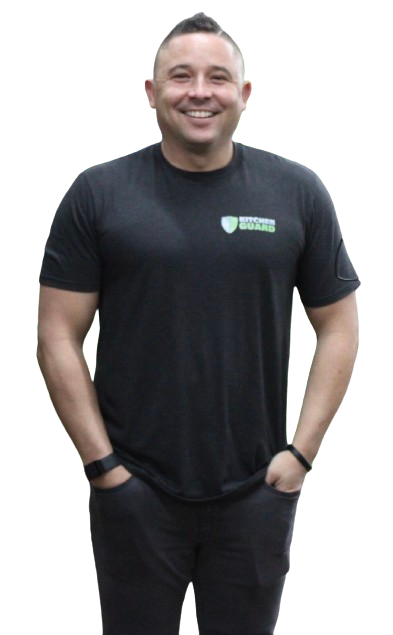
Nathan Leathers founded Kitchen Guard of the Piedmont Triad to make certified, professional hood cleaning accessible to every restaurant and commercial kitchen in North Carolina — from single-location independents to hospitals, schools and multi-site restaurant groups.

Nathan Leathers, founder of Kitchen Guard

Explore More Kitchen Guard Services:

Hood Cleaning Services → All Services → Filter Exchange → Get a Quote →

GREENSBORO HOOD CLEANING FAQ

Frequently Asked Questions

Below are common questions from Durham restaurant owners and food service operators about NFPA 96 hood cleaning compliance.

Our NFPA 96 certified team brings extensive expertise to every job. Additionally, we use commercial-grade cleaning solutions approved for kitchen exhaust systems. Furthermore, our technicians document every service with before-and-after photos. As a result, you have proof of compliance ready for any inspection. In addition, we schedule cleanings around your business hours to minimize disruption. Moreover, our service reports are formatted to meet insurance and fire marshal requirements. Consequently, our clients consistently pass fire department inspections on the first review.

Is my Durham kitchen inspected by the city or the county?

The address decides, and Durham County publishes a jurisdiction lookup for exactly this reason. Inside the city limits it is the City of Durham Fire Department’s Fire Prevention Division, 101 City Hall Plaza, 919-560-4233, enforcing the North Carolina Fire Prevention Code and city ordinances. Outside the city it is Durham County Fire Prevention and Life Safety, the fire marshal’s office within County Emergency Services, on 919-560-0660.

So is sanitation handled by the city too?

No, and this is the part that catches operators out. Fire code inside Durham is a city function, but restaurant sanitation is a county one — the Environmental Health Division of the Durham County Department of Public Health, at 414 E. Main Street, 919-560-7800. Two authorities, two files, one kitchen. Small portions of the city limits also reach into Orange and Wake counties, and a restaurant sitting in one of those slivers is inspected by that county’s environmental health office instead.

We’re a university dining operation. How does that work across so many outlets?

By outlet, not by campus. Duke serves around 17,325 students across more than 50 dining locations, 34 of them on campus, and they are not equivalent — a grill or a wok station sits in a different code tier from a coffee bar. We set each location’s interval by what it actually cooks, group the visits so campus is disrupted once rather than fifty times, and return one consolidated record with every outlet documented separately. Term breaks usually do the scheduling for us.

Our hospital kitchen never stops. When do you clean it?

Overnight and in sections. Duke University Hospital runs 1,106 licensed inpatient beds and more than 11,000 staff, which means a kitchen producing meals continuously. Twenty-four-hour cooking sits in the code’s quarterly row rather than the six-month one, and the practical constraint is not the code but the meal service — we work the quiet window and document each section as it is finished.

Can you work after close? Downtown gets busy late.

That is how most downtown work gets done here. Downtown Durham now carries around 110 restaurants and 53 bars among its merchants, up from 97 and 42 a couple of years earlier, and a good number trade well past midnight. Closing a kitchen in the evening to clean it is the most expensive possible time; we work after last service or early morning instead.

We’re one of several kitchens in a converted warehouse. Does that complicate things?

It changes who owns the problem. Durham has a lot of reclaimed tobacco and warehouse space with multiple food operations under one roof, and where kitchens share a duct run or a rooftop fan, the shared section is only as clean as the heaviest user feeding it. Each operator’s interval is still set by their own cooking, but the sensible arrangement is one coordinated visit on the shared run with separate documentation for each tenant.

We run live fire and charbroilers. Is that treated differently?

Yes — charbroiling is named in the code’s high-volume row, which means quarterly inspection rather than six-monthly, and solid fuel goes further still to monthly. It comes up a lot in a city with Durham’s cooking reputation; the market has produced a James Beard Best Chef: Southeast winner and repeat semifinalists in recent years, and chef-driven kitchens tend toward open flame and high heat. Char also leaves a harder, more adherent deposit in the duct than a fryer does.

Do you cover corporate and campus kitchens in the Research Triangle?

Yes. Research Triangle Park alone spans 7,000 acres with more than 385 companies and upwards of 55,000 people on site on a working day, which supports a lot of cafeterias, catering kitchens and campus food service. Those operations run on procurement schedules and compliance files rather than on a manager’s memory, so the documentation matters as much as the clean.