



Restaurants
From downtown seafood houses and Cargo District container kitchens to year-round rooms in Leland and Burgaw, cleaned to NFPA 96 and documented for the inspector.
From the hood canopy to the fan on the roof, our NFPA 96-trained technicians clean the whole exhaust system — canopy, filters, plenum, the horizontal duct run and the rooftop fan — degreased to bare metal where the standard requires it. Every access point is photographed before and after, including the roof, where coastal salt air works on fan housings, hinges and fasteners year-round. That report is the document a fire inspector, a New Hanover County environmental health specialist or an insurance adjuster will ask to see.

Kitchen Guard of the Piedmont Triad works to NFPA 96 and to the North Carolina Fire Prevention Code as currently adopted, and documents every visit the way an inspector or an underwriter needs it documented: dated, photographed, access point by access point, with the service tag the code requires left in a conspicuous place on the hood.
We also tell you plainly which agency governs what, because operators here routinely get it mixed up. The fire code side sets how often your exhaust system is inspected and cleaned. New Hanover County Environmental Health governs grease and condensation on hoods, walls and ceilings as part of your sanitation score. Your utility — CFPUA in Wilmington, H2GO in Leland, Brunswick County or Pender elsewhere — governs the grease interceptor. Three rulebooks, three different clocks, and only one of them is ours to keep.
Two different clocks run on a Wilmington kitchen, and they are easy to confuse. One decides how often somebody comes to look at you. The other decides how often the system actually has to be cleaned — and that one follows your cooking volume, which on this coast is a season.

Fire code in the city is enforced by the Wilmington Fire Department’s Fire and Life Safety Division, out of the Office of the Fire Marshal on North Front Street — a department carrying an ISO Class 1 rating and running better than 7,000 inspections a year. Outside the city it is New Hanover, Brunswick or Pender County, and Leland runs its own fire inspections rather than the county’s. Sanitation is separate: New Hanover County Environmental Health, under the state food rules.

Every visit produces a dated report with before-and-after photographs of each access point, including the fan on the roof. That is what satisfies an inspector who asks what was actually cleaned, and what an insurance carrier wants on file after a claim.

Wilmington’s visitor season now runs March through November, with only a couple of soft months a year. Your cleaning interval follows cooking volume, so a kitchen that sits comfortably at six months in February can move up a tier once the season starts. January and February are the natural window for deep cleans, fan work and hinge kit installs, before it matters.

Rooftop exhaust equipment on this coast lives in the same marine atmosphere that Kure Beach made the world’s reference standard for corrosion testing. We check fan housings, hinges, fasteners and welds on every visit, and we treat fan hinge kits and grease containment as two separate items — one gives you safe access to the fan, the other catches what comes off it.

Cleaning is performed to NFPA 96 and, where the fire code points to it, to the ANSI/IKECA C10 standard the code names by reference. Where ductwork has no access panels, we install them — a system that cannot be inspected cannot be certified.

Hood and exhaust cleaning, Filter Exchange, exhaust fan repair, fan hinge kits, grease containment, grease trap service and commercial pressure washing — one vendor, one set of records, one number to call when an inspector asks a question.

Our NFPA 96-trained technicians clean the full exhaust system — hood canopy, filters, plenum, horizontal ductwork and the rooftop exhaust fan — degreased to bare metal where the standard requires it. Where ductwork has no access panels we install them, because a system that cannot be inspected cannot be certified. Every visit ends with a dated report, before-and-after photographs of each access point including the roof, and a service tag placed in a conspicuous location on the hood.
The North Carolina Fire Prevention Code, as currently adopted, sets how often that system has to be inspected, by what you cook and how much of it:
| Type of cooking operation | Interval |
|---|---|
| Solid fuel-burning appliances — wood-fired ovens, charcoal, smokers | Monthly |
| High volume — 24-hour cooking, charbroiling or wok cooking | Quarterly |
| All other cooking operations | Every six months |
| Low volume — places of religious worship, seasonal businesses, senior centers | Annually |
The table above sets how often the system must be inspected. Cleaning is triggered by what that inspection finds: where grease has accumulated, the code requires the components to be cleaned to the ANSI/IKECA C10 standard. That is why a kitchen can be on a six-month inspection cycle and still need cleaning more often — and why a busy Wrightsville Beach kitchen in July is not the same operation it was in February.
Your file has to name the individual and the company that did the work, describe what was done and when, and the hood has to carry a tag in a conspicuous location with the service provider’s name, address, telephone number and date of service, with prior tags removed or covered. We leave all of it, every visit.
A hood cleaning is only worth what its documentation proves. Ours covers the full system, gets photographed access point by access point, and leaves the service tag the North Carolina Fire Prevention Code requires.

From a downtown wood-fired oven on a monthly solid-fuel cycle to a Wrightsville Beach kitchen that triples its covers in July, we set the interval to the cooking volume the code actually measures — and adjust it when the season does.
From downtown seafood houses and Cargo District container kitchens to year-round rooms in Leland and Burgaw, cleaned to NFPA 96 and documented for the inspector.

Banquet kitchens, breakfast lines and room service across a market adding hundreds of rooms — from the Riverwalk to Carolina Beach and the airport corridor.
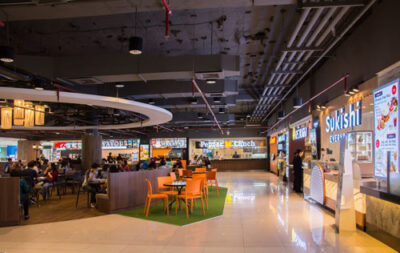
UNCW at a record 19,895 students and Cape Fear Community College, with dining halls and branded food courts running on the academic calendar.

Country Club of Landfall, Cape Fear and Porters Neck, plus the Brunswick County golf communities — clubhouse kitchens with event calendars to work around.

Novant Health NHRMC at 700 beds on its main campus, plus senior living communities across New Hanover, Brunswick and Pender counties.

New Hanover County Schools alone runs 42 schools and more than 25,000 students, with Brunswick and Pender cafeterias on the same academic scheduling.

Explore More Kitchen Guard Services:
WILMINGTON HOOD CLEANING FAQ
The North Carolina Fire Prevention Code sets the interval by cooking operation: monthly for solid fuel appliances like wood-fired ovens and smokers, quarterly for high-volume operations such as 24-hour cooking, charbroiling or wok cooking, every six months for all other cooking operations, and annually for low-volume operations. That interval governs inspection — cleaning is required wherever that inspection finds grease accumulation.
Both, for different things. Fire code inside the city is enforced by the Wilmington Fire Department’s Fire and Life Safety Division through the Office of the Fire Marshal on North Front Street. Outside the city it is the New Hanover, Brunswick or Pender county fire marshal, except in Leland, which runs its own fire inspections. Sanitation is New Hanover County Environmental Health, which covers grease and condensation collecting on hoods, walls and ceilings — but not the inside of your ductwork, your exhaust fan or your cleaning interval.
Under the periodic inspection schedule, an assembly occupancy with an occupant load of 100 or more is inspected annually. Assembly occupancies under 100, along with business and mercantile occupancies, fall to every three years. That is the general fire inspection and is separate from the exhaust system interval above.
Most jobs land between 150 and 500 dollars or more. The variables are hood length, how many hoods share a duct run, the rooftop fan and its access, how long it has been since the last cleaning, and whether access panels need to be installed.
On this coast, yes. Kure Beach is the site the corrosion industry has used for decades as its benchmark for marine atmospheric exposure — testing there is why the standards exist. Rooftop fan housings, hinges, fasteners and welds from Wrightsville Beach to Oak Island live in that environment year-round, which is why we inspect and photograph rooftop equipment on every visit rather than only the hood.
No. Kitchen Guard does not clean filters on site — our Filter Exchange program swaps your dirty filters for clean ones on a set schedule, so nothing is washed in your kitchen and the exchange is documented.
Yes, and the rules change depending on who your utility is. H2GO, which serves the Leland area, requires grease traps to be professionally serviced at least every 60 days with records kept on site for three years and submitted after each service. CFPUA, which serves Wilmington and New Hanover County, sets pumping frequency for each facility individually rather than by a blanket rule, and it does it through a variance study. The outline is worth knowing before you start: you can apply online once you have been operating at least 90 days, the study is charged according to the current fee schedule, and a compliance officer coordinates with you to observe a grease interceptor service at the start — the study does not begin until an officer has watched the interceptor being pumped. If that inspection turns up repairs or modifications that need doing, the study does not continue until they are done. From there an officer inspects the interceptor roughly monthly, and at the end CFPUA mails a certified letter stating your required pumping frequency. Brunswick County and Pender County have their own programs again.
The whole Cape Fear coast: Wilmington, Wrightsville Beach, Carolina Beach, Kure Beach, Ogden, Porters Neck, Castle Hayne and Monkey Junction in New Hanover County; Leland, Southport, Oak Island, St. James and Shallotte in Brunswick County; Hampstead, Surf City, Topsail Beach and Burgaw in Pender County.
A dated service report naming the technician and the company, a description of the work performed, before-and-after photographs of every access point including the rooftop fan, and a service tag placed in a conspicuous location on the hood carrying our name, address, telephone number and the date of service, with any prior tag removed or covered. That package is what a fire inspector or an insurance carrier asks to see.
We install them. A duct run that cannot be opened cannot be inspected or certified, so access panel installation is part of bringing a system into compliance rather than an optional extra.