NFPA 96 Compliant Hood Cleaning

NFPA 96 Exhaust Cleaning for Lexington’s High-Grease Kitchen Environments

Lexington’s barbecue restaurants create uniquely high grease loads — pit-smoked meats generate heavy, sticky grease that accumulates rapidly in exhaust hoods, ductwork, and fans. Kitchen Guard’s certified technicians are experienced with high-grease environments and provide the thorough NFPA 96-compliant cleaning that Lexington BBQ kitchens require. We deliver detailed compliance reports accepted by Davidson County fire marshal and the Lexington Fire Department.

Learn More About Us
Commercial kitchen equipment repairs by Kitchen Guard technician
Why Lexington Chooses Kitchen Guard

Expert Hood Cleaning for Lexington’s BBQ Capital Kitchen Environments

The Lexington Fire Department’s fire marshal handles the city; Davidson County’s office covers everything outside the limits.

Lexington BBQ restaurants are famous for producing the Piedmont-style pit-smoked barbecue that defines Carolina cooking — but that style of cooking also produces some of the highest grease loads in commercial kitchen exhaust systems. Kitchen Guard understands the unique cleaning demands of Lexington’s BBQ industry and provides the deep, thorough NFPA 96-compliant hood cleaning that prevents grease fires in these high-risk kitchen environments. Quarterly cleaning intervals are often required — we make it easy.

What Sets Us Apart

Why Lexington Restaurants Trust Kitchen Guard

Solid fuel carries the strictest interval in the fire code — monthly — and several of Lexington’s barbecue restaurants still cook over hardwood coals. If your pits burn wood or charcoal, that row is yours rather than the six-month one most kitchens sit on.

  • NFPA 96 compliance — Kitchen Guard
    We Know the Code
    Cleaning to NFPA 96 and to ANSI/IKECA C10, with pit and smoker systems treated as the solid-fuel work they are.
    We Know the Code

    Cleaning to NFPA 96 and to ANSI/IKECA C10, with pit and smoker systems treated as the solid-fuel work they are.

  • Inspection Reports with Digital Photos
    Dated reports and photographs at every access point, which matters more on a wood-fired system than anywhere else.
    Inspection Reports with Digital Photos

    Dated reports and photographs at every access point, which matters more on a wood-fired system than anywhere else.

  • 30-Minute Response Time
    Monthly for solid fuel, quarterly for charbroiling, six months for most other kitchens — your menu sets it, not your square footage.
    30-Minute Response Time

    Monthly for solid fuel, quarterly for charbroiling, six months for most other kitchens — your menu sets it, not your square footage.

  • 24/7 Support
    Festival scheduling: a clean before the October weekend and another after, rather than one visit somewhere in the middle.
    24/7 Support

    Festival scheduling: a clean before the October weekend and another after, rather than one visit somewhere in the middle.

  • Professional & Reliable Technicians
    Access panels fitted where a duct run has none, so the system can actually be inspected and certified.
    Professional & Reliable Technicians

    Access panels fitted where a duct run has none, so the system can actually be inspected and certified.

  • Emergency SMS Alerts
    Hood cleaning, Filter Exchange, fan hinge kits, grease containment, grease trap service and pressure washing on one account.
    Emergency SMS Alerts

    Hood cleaning, Filter Exchange, fan hinge kits, grease containment, grease trap service and pressure washing on one account.

Commercial hood cleaning service in progress
NFPA 96 COMPLIANT HOOD CLEANING

Lexington Hood Cleaning Services

Hood Cleaning
LEXINGTON’S HOOD CLEANING SPECIALISTS

Full-System Kitchen Exhaust Cleaning That Meets NFPA 96

Serving Lexington, Davidson County and surrounding communities& the entire Lexington area

What’s Included in Every Hood Cleaning Service

On a pit system we work the whole run — canopy, filters, plenum, duct and fan — scraping the hard creosote-and-grease layer wood leaves rather than relying on degreaser alone, with photographs at every access point.

Wood Smoke Changes the Math

Lexington cooks pork shoulders over oak and hickory coals, and roughly a dozen pit-cooked barbecue restaurants operate in and around the city. Under NFPA 96 that puts them in their own category: systems serving solid fuel are inspected monthly — the tightest interval in the standard, and twelve times as often as the annual schedule a low-volume kitchen runs on.

The reason is what wood leaves behind. A hickory pit lays down creosote as well as grease. It builds faster, sets harder, and does not lift with the chemistry that clears fryer vapour. A crew that treats a barbecue pit like a burger line leaves deposits in the duct and on the fan. We clean solid-fuel systems on their own schedule, with the documentation a monthly interval asks for.

Who Regulates a Lexington Kitchen

The Lexington Fire Department’s Life Safety Division runs field inspections, certificate-of-occupancy and change-of-occupancy inspections, compliance inspections and blueprint review inside the city, working from City Hall at 28 West Center Street. Davidson County Health Department’s Environmental Health section sets your sanitation grade on its own separate schedule. Grease heading into the sewer is the city’s business — Lexington runs its own pretreatment program out of the wastewater plant on Glendale Road.

Barbecue Festival Week

Every October, Uptown Lexington closes eight blocks of Main Street for the Barbecue Festival — 100,000 or more visitors and 400-plus exhibitors in a single day. The pits that supply it run at a volume they will not see again all year, and the restaurants around them do too. We service before the festival rather than after, so the systems going into that week start clean.

Proof of Compliance After Every Visit

After every service you keep dated photographs, a written report and the tag on the hood, so the Lexington fire marshal gets the record straight from your file — so there is nothing to dig up when an inspector arrives.

How Often NFPA 96 Requires Cleaning

The code sets intervals by cooking type, not by a fixed calendar. Table 11.4 sets how often the system must be inspected, based on the type and volume of cooking, and the system must be cleaned whenever that inspection finds grease deposits:

  • Solid fuel cooking: inspect monthly
  • High-volume operations — 24-hour kitchens, charbroiling, wok cooking: inspect quarterly
  • Moderate-volume operations: inspect semi-annually
  • Low-volume operations — churches, day camps, seasonal and senior centers: inspect annually

A pit system loads its duct differently from a fryer line — harder deposit, faster buildup, and a fan that has been running hot since before dawn.
aKitchen Guard technician pressure-washing a commercial kitchen exhaust hood behind containment sheeting
Lexington Hood Cleaning

Commercial Kitchen Exhaust Cleaning for Every Type of Lexington Establishment

Pit kitchens, the Depot District, Childress Vineyards, school cafeterias and the plant food service that came with Siemens.

Kitchen Guard cleans every type of commercial kitchen exhaust system in Lexington. NFPA 96-compliant, locally operated, and fully insured.

Restaurant

Restaurants

Lexington BBQ restaurants produce the highest grease loads in the region. Kitchen Guard’s technicians trained to NFPA 96 and ANSI/IKECA C10 specialize in deep cleaning of high-grease exhaust systems, ensuring Lexington’s pit operations stay fire-safe and compliant with Davidson County fire marshal requirements.

Corporate-Cafeteria

Corporate Cafeterias

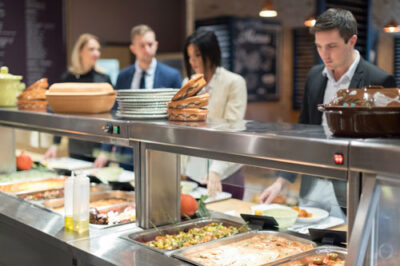
Davidson County manufacturing and industrial facilities operate employee cafeterias feeding hundreds of workers daily. Kitchen Guard provides NFPA 96-compliant hood cleaning that meets Davidson County fire code for all industrial food service environments in the Lexington area.

Sports-Venues

Sports Venues

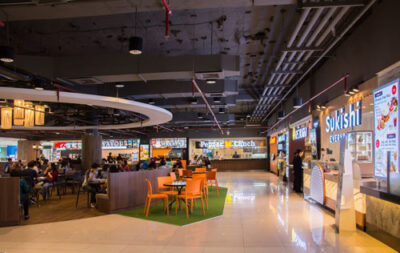
Recreation venues, event facilities, and community centers across Davidson County rely on Kitchen Guard for certified hood cleaning to maintain NFPA 96 compliance during their active operating seasons.

Hospital-Kitchen

Hospitals &
Assisted Living

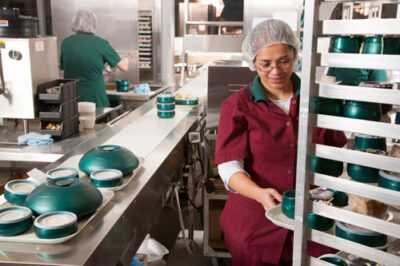
Healthcare facilities and assisted living communities in Lexington and Davidson County trust Kitchen Guard to maintain NFPA 96 compliance in their food service kitchens throughout the year.

School campus commercial kitchen — Kitchen Guard cleaning services

Educational
Institutions

Winery and event kitchens — the bistro at Childress Vineyards and the Depot District rooms run a different grease profile from the pits, and a different service calendar.

Hotel-Kitchen

Hotel Chains

From downtown Lexington boutique hotels to extended-stay properties throughout Davidson County, Kitchen Guard delivers professional hood cleaning that keeps your kitchen pristine, NFPA 96 compliant, and ready for every guest.

What North Carolina Restaurant Owners Say About Our Hood Cleaning Services

We use Kitchen Guard for all our restaurants for one simple reason – they’re easy to do business with.

David Jones
Director of Operations, Verant Group

Kitchen Guard keeps our restaurant (and our wood-burning oven) clean, safe and to the necessary standards required by law.

Ivan Derezin
Owner, The Bellows Restaurant

Set it and forget it.

Adam Rinella
VP of Real Esate & Development, Ike's Love and Sandwiches
David Jones, Kitchen Guard Piedmont Triad team member
The Visionary Behind Kitchen Guard

Meet The Founder

Nathan Leathers

Founder

Kitchen Guard of Piedmont Triad, NC was founded with one mission: make certified, professional hood cleaning accessible to every restaurant and commercial kitchen in North Carolina. Under the leadership of founder Nathan Leathers, Kitchen Guard has grown into the Piedmont Triad’s most trusted commercial hood cleaning company, serving restaurants, hotels, hospitals, schools, and facilities from Lexington and Lexington and the greater Piedmont Triad region.

Nathan Leathers, founder of Kitchen Guard

Explore More Kitchen Guard Services:

Hood Cleaning Services → All Services → Filter Exchange → Get a Quote →

LEXINGTON HOOD CLEANING FAQ

Frequently Asked Questions

Below are common questions from Lexington restaurant owners and food service operators about NFPA 96 hood cleaning compliance.

Our team, trained to NFPA 96 and ANSI/IKECA C10, brings extensive expertise to every job. We use commercial-grade cleaning solutions approved for kitchen exhaust systems. Our technicians document every service with before-and-after photos. You have proof of compliance ready for any inspection. We schedule cleanings around your business hours to minimize disruption. Our service reports are formatted to meet insurance and fire marshal requirements. Our clients consistently pass fire department inspections on the first review.

Who inspects commercial kitchens in Lexington?

The Lexington Fire Department’s fire marshal handles fire code compliance and inspections inside the city — the department is on 336-243-2489, based at City Hall, 28 West Center Street. If your kitchen is outside the city limits in unincorporated Davidson County, it is the Davidson County Fire Marshal’s Office at 935 North Main Street, 336-242-2270, instead.

We cook over hardwood coals. How often does the code want us inspected?

Monthly — the strictest interval in the table. The code puts cooking operations using solid fuel-burning appliances on a monthly inspection cycle, ahead of charbroiling and 24-hour cooking at quarterly. Several of Lexington’s barbecue restaurants still cook over hardwood coals, and the North Carolina Historic Barbecue Trail requires exactly that of its members: meat cooked on grates over pits with wood or charcoal. If your pits burn wood, that monthly row is yours.

Does wood smoke build up differently from gas?

Yes, and it is why solid fuel sits in its own row. A gas kitchen deposits mostly grease. A wood or charcoal pit deposits grease alongside soot and creosote, which bakes onto duct walls into a hard, adherent layer rather than the softer film a fryer leaves. It burns readily, it is harder to remove, and it will not come off with the methods that work on a fryer hood — it needs scraping back to bare metal.

What are the intervals for everyone else?
Set by cooking type rather than by size:
Cooking operationInspection interval
Solid fuel — wood or charcoal pits, smokers, wood-fired ovensMonthly
High volume — 24-hour cooking, charbroiling, wok cookingQuarterly
All other cooking operationsEvery six months
Low volume — seasonal businesses, senior centres, places of worshipAnnually
Cleaning follows where the inspection finds accumulation, to the ANSI/IKECA C10 standard.
Can you work around the Barbecue Festival?

We plan around it. The festival has run since 1984, lands in October, and now draws as many as 200,000 visitors to the streets of Lexington, with up to twenty area restaurants cooking alongside the visiting vendors. For a pit kitchen that is the heaviest week of the year. The pattern that works is a service shortly before and another shortly after, rather than one visit somewhere in the middle.

Do you handle grease traps too?

Yes. Note that they answer to a different authority than your hood does: Davidson County’s Food, Lodging and Institutional Sanitation programme on 336-242-2310 covers the sanitation side of your kitchen, but the grease interceptor itself is governed by whichever utility takes your wastewater, and your required pumping frequency comes from them.

What records do we have to keep after a cleaning?

The code requires a record naming the individual and the company that did the work, describing what was done, and carrying the dates. Keep it where you can produce it — a fire inspector asking about your exhaust system wants the file, not a recollection, and an insurer asking after an incident wants the same thing with photographs attached. We leave a dated report with before-and-after images of every access point, including the fan on the roof.

We’re not a barbecue restaurant. Do you work with us?

Very much so. Lexington’s dining has broadened well beyond the pits — the bistro at Childress Vineyards doing duck and seafood, Sophie’s Cork and Ale on wagyu and scallops, the Depot District kitchens, alongside the plant food service that comes with an employer like the Siemens Mobility railcar operation and its 506 jobs. A seared-protein kitchen has its own grease profile, and it is not the pit’s.