"*" indicates required fields
Commercial Pressure Washing Solutions for Restaurants & Food-Service Operations
Commercial Pressure Washing
Pressure Washing Overview
Kitchen Guard provides commercial pressure washing services designed specifically for restaurants and commercial kitchen environments. This service focuses on exterior surfaces that accumulate grease, food residue, odors, and organic buildup over time.
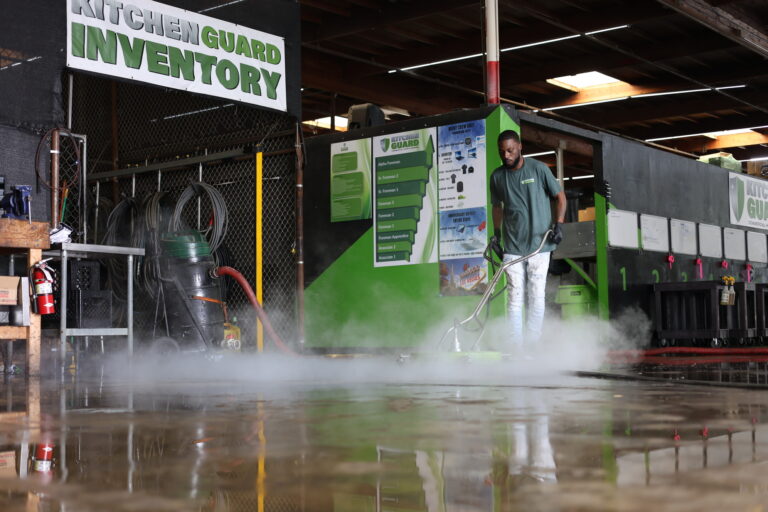
Our pressure washing process uses high heat and controlled pressure to break down contaminants that standard cold water washing often leaves behind. The result is a deeper clean that improves sanitation, reduces slip hazards, and supports food safety and inspection readiness.
This service is commonly used for building exteriors, walkways, dumpster pads, service areas, and other high traffic zones where grease and buildup pose operational and compliance risks.
Pressure Washing Quick Facts
What Is Commercial Pressure Washing & How Does It Work?
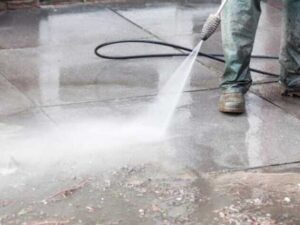
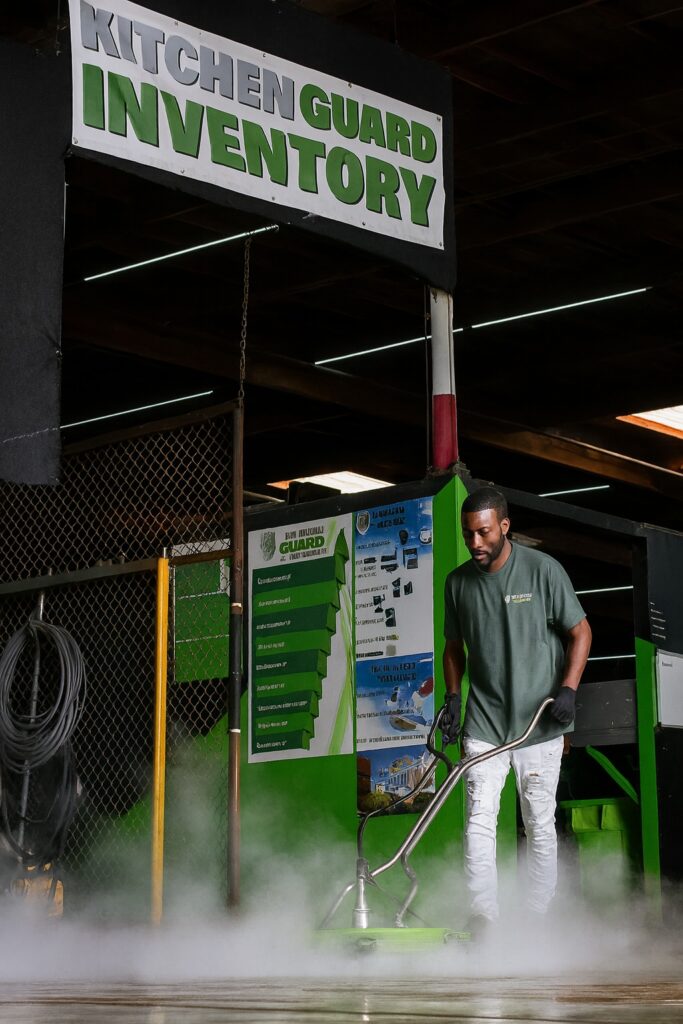
At Kitchen Guard, commercial pressure washing removes grease, organic buildup, and residue that create safety and compliance risks around your facility. Using high pressure water and high heat, it cleans deeper than standard cold water washing, reduces the need for harsh chemicals, and helps keep walkways and exterior areas clean, safe, and inspection ready.
Why It Works Better
- High heat softens and breaks down grease and food waste
- Pressure washing removes debris, stains, and buildup
- Responsible wastewater reclamation
- Safe for concrete, asphalt, pavers, and hardscapes
Commercial pressure washing is designed for high risk, high traffic exterior areas commonly found around restaurants and commercial kitchens.
Common Applications
- Dumpster pads
- Back dock & service entrances
- Outdoor patios
- Parking lots
- Walkways & sidewalks
- Outdoor grease spill zones
- Delivery areas
- Drive lanes
Traditional pressure washing relies on cold water, which struggles to break down grease, embedded food waste, and persistent odors. Kitchen Guard commercial pressure washing uses high heat and controlled pressure to deliver a deeper and more effective clean.
This approach provides stronger grease breakdown, improved odor removal, longer lasting results, and reduced reliance on heavy chemicals. It also supports safer exterior conditions and helps maintain compliance with health and safety inspections. Restaurants that upgrade to this method typically see cleaner, safer, and more inspection ready exterior environments.
Most restaurants schedule monthly or quarterly cleanings depending on volume, cuisine type, and inspection requirements.
Suggested Frequency
- High-volume kitchens: Every 4 weeks
- Moderate volume: Every 6–8 weeks
- Low-volume or seasonal: Quarterly
- Dumpster pads: Often require more frequent cleaning due to grease, spills, and odors
Dumpster Pad Cleaning uses high-pressure, high-heat washing to remove grease, food waste, stains, and odors from the concrete or asphalt pad beneath and around your dumpster.
Routine dumpster pad cleaning helps:
- Reduce pests
- Eliminate foul odors
- Remove grease buildup
- Prevent slip hazards
- Avoid sanitation violations
- Protect concrete from long-term damage
Back dock and receiving areas accumulate grease, food waste, and dirt faster than any other exterior zone.
Commercial Pressure Washing tackles this by:
- Using high heat to loosen and break down grease
- Pressure washing away debris and buildup
- Reducing slip hazards
- Preventing contaminants from being tracked into the kitchen
Yes — Commercial Pressure Washing safely restores patios and outdoor dining surfaces by cleaning:
- Grease
- Beverage spills
- Weather buildup
- Gum & stains
- Organic debris
This keeps outdoor dining areas clean, odor-free, and guest-ready.
Yes. High-heat pressure washing removes:
- Oil stains
- Tire marks
- Organic buildup
- Food waste
- Grease drips
- Beverage stains
Perfect for maintaining a clean and safe customer-facing exterior.
Stories from Our Clients


Have questions?
We Solve Problems & Answer Questions
Kitchen Guard provides an advanced exterior pressure washing service designed specifically for restaurants and commercial kitchens.
This service uses traditional pressure washing enhanced with high heat to break down grease, odors, organic buildup, and stains that cold water systems struggle to remove, resulting in a deeper, more effective clean that supports food safety and sanitation compliance.
Dumpster pads, service entrances, patios, walkways, parking lots, drive lanes, and exterior grease spill zones.
Yes. It is safe for concrete, brick, pavers, and most hardscapes, making it ideal for outdoor dining areas.
Most schedule monthly or quarterly depending on volume and inspection requirements.
Yes. By removing grease and food waste around dumpsters and back doors, it minimizes conditions that attract rodents and insects.
Absolutely. Cleaning dumpster pads, back doors, and service areas supports sanitation standards required for passing health inspections.