Rooftop Grease Containment Systems
Estimated reading time: 4 minutes
Why They Matter for Fire Safety, Roof Protection, and Compliance
When most restaurant owners think about hood cleaning, they focus on what happens inside the kitchen. But one of the most common and costly problem areas is actually on the roof.
Rooftop grease accumulation from commercial exhaust fans can lead to roof membrane damage, slip hazards for service technicians, structural deterioration, fire code violations, and insurance complications.
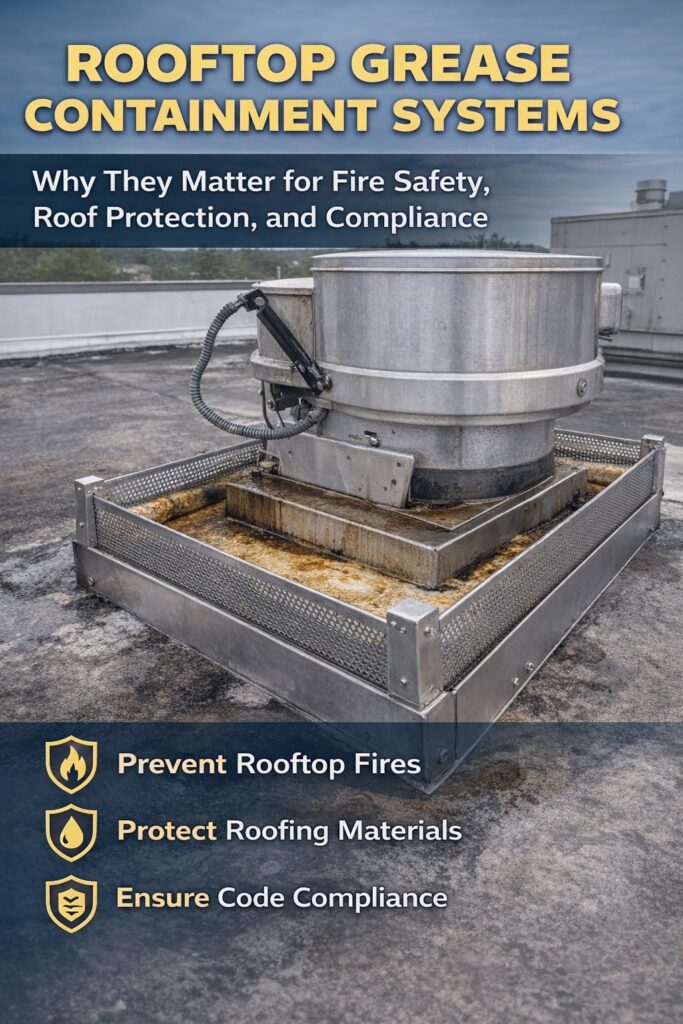
A rooftop grease containment system is designed to capture grease discharge from your exhaust fan before it spreads across your roof surface.
What Is a Rooftop Grease Containment System?
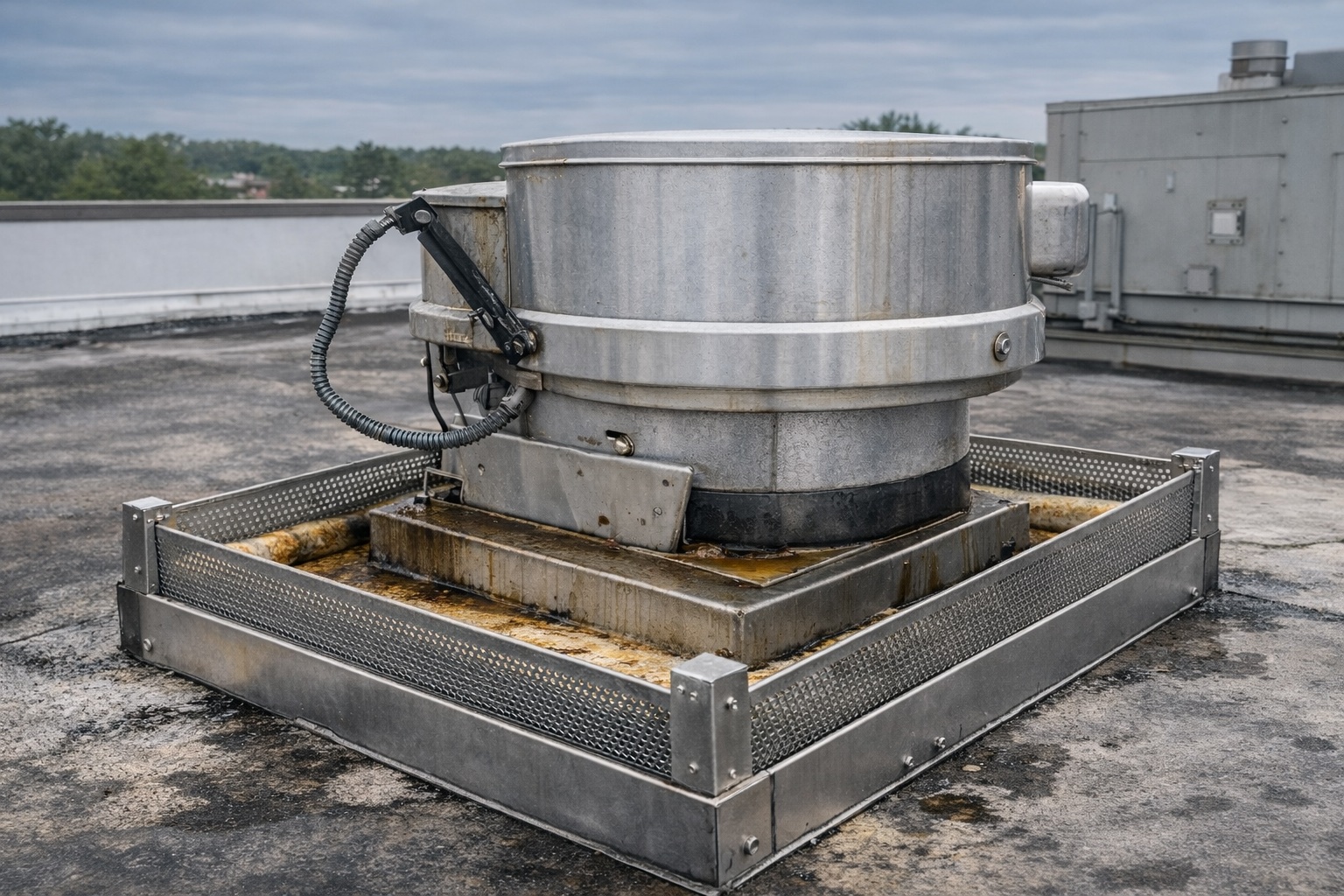
A rooftop grease containment system could be as simple as the standard Grease Catch as required by NFPA 96, or if there is excessive grease output, a barrier system installed around a commercial exhaust fan to capture grease that escapes during normal cooking operations to protect the roof.
Even properly cleaned exhaust systems discharge vaporized grease and aerosolized grease particles. While most of the grease will be captured by the filters in the hood, as well as getting caught up in the ducting and in the fan itself, sometimes it will make it past the fan. As these cool, they condense on the rooftop around the fan base.
Containment systems typically include aluminum or stainless steel support frames, absorbent grease containment media, and perimeter barriers around the fan curb.
Why Rooftop Grease Is a Serious Problem
1. Roof Membrane Damage
Grease deteriorates roofing materials over time, especially single-ply membranes like TPO, PVC, or EPDM. Compromised membranes can lead to water intrusion, insulation damage, and costly structural repairs. This can lead to an unpleasant conversation with the landlord or property management company if there is a lease in place.
2. Fire Risk
Grease accumulation around rooftop fans creates an additional fuel source. In the event of a flare-up inside the duct system, rooftop grease can contribute to fire spread.
3. Slip & Liability Hazard
Grease-coated rooftop surfaces increase slip-and-fall risk for technicians and inspectors, creating liability exposure for property owners.
4. Code & Insurance Issues
NFPA 96 requires that exhaust systems be maintained in a condition that does not pose a fire hazard. While it does not mandate a specific containment product, it requires grease accumulation to be controlled.
How Rooftop Grease Happens
Cooking produces grease-laden vapors that travel through ductwork and are discharged by exhaust fans. As the air cools, grease particles condense and settle on the roof surface.
Routine hood cleaning reduces buildup inside the system but does not eliminate rooftop grease discharge.
Signs You Need a Rooftop Grease Containment System
You may need containment if you notice grease staining around the fan curb, darkened roof membrane, slippery surfaces near access paths, grease dripping down the building, or repeated roof cleaning expenses.
Rooftop Grease Containment vs. Exhaust Fan Hinge Kits
Grease containment systems protect the roof surface and capture discharged grease. Exhaust fan hinge kits allow safe tilting of the fan to ensure proper duct access during inspection and cleaning.
How Often Should Containment Media Be Replaced?
Containment media should be inspected during each professional hood cleaning service and replaced when saturated. Oversaturated media is no longer effective at containing additional grease, leading back to the problem of grease on the rooftop.
Final Takeaway
Your commercial exhaust system does not end at the hood. Grease that exits through your rooftop fan can damage roofing systems, increase fire risk, create safety hazards, and lead to costly repairs.
A rooftop grease containment system is a proactive investment that protects your building, reduces liability, and supports overall exhaust system compliance.