Solid Fuel Hood Cleaning & Spark Arrestor Filters
Estimated reading time: 4 minutes
Fire Risk, NFPA 96 Requirements, and Maintenance Best Practices
Solid fuel cooking presents one of the highest fire risks in commercial kitchens. If your operation uses wood, charcoal, or any other solid fuel source, your exhaust system is subject to stricter cleaning requirements and additional safety considerations under NFPA 96.
This guide explains how solid fuel affects hood cleaning frequency, why spark arrestor filters are required, and what restaurant operators must do to remain compliant and protected.
What Qualifies as Solid Fuel Cooking?
Solid fuel cooking includes any cooking operation that uses wood, charcoal, pellets, or other combustible solid materials as a primary or supplemental heat source.
Common examples include wood-fired pizza ovens, charcoal grills, Argentine or churrasco grills, and open-hearth concepts.
Why Solid Fuel Systems Require Special Attention
Unlike gas or electric cooking, solid fuel produces soot, embers and sparks, creosote, and heavier grease-laden vapors. These byproducts travel through the hood and duct system and significantly increase ignition risk.
Creosote accumulation is particularly dangerous because it is highly combustible and can ignite at lower temperatures than standard grease deposits.
Cleaning Frequency for Solid Fuel Systems
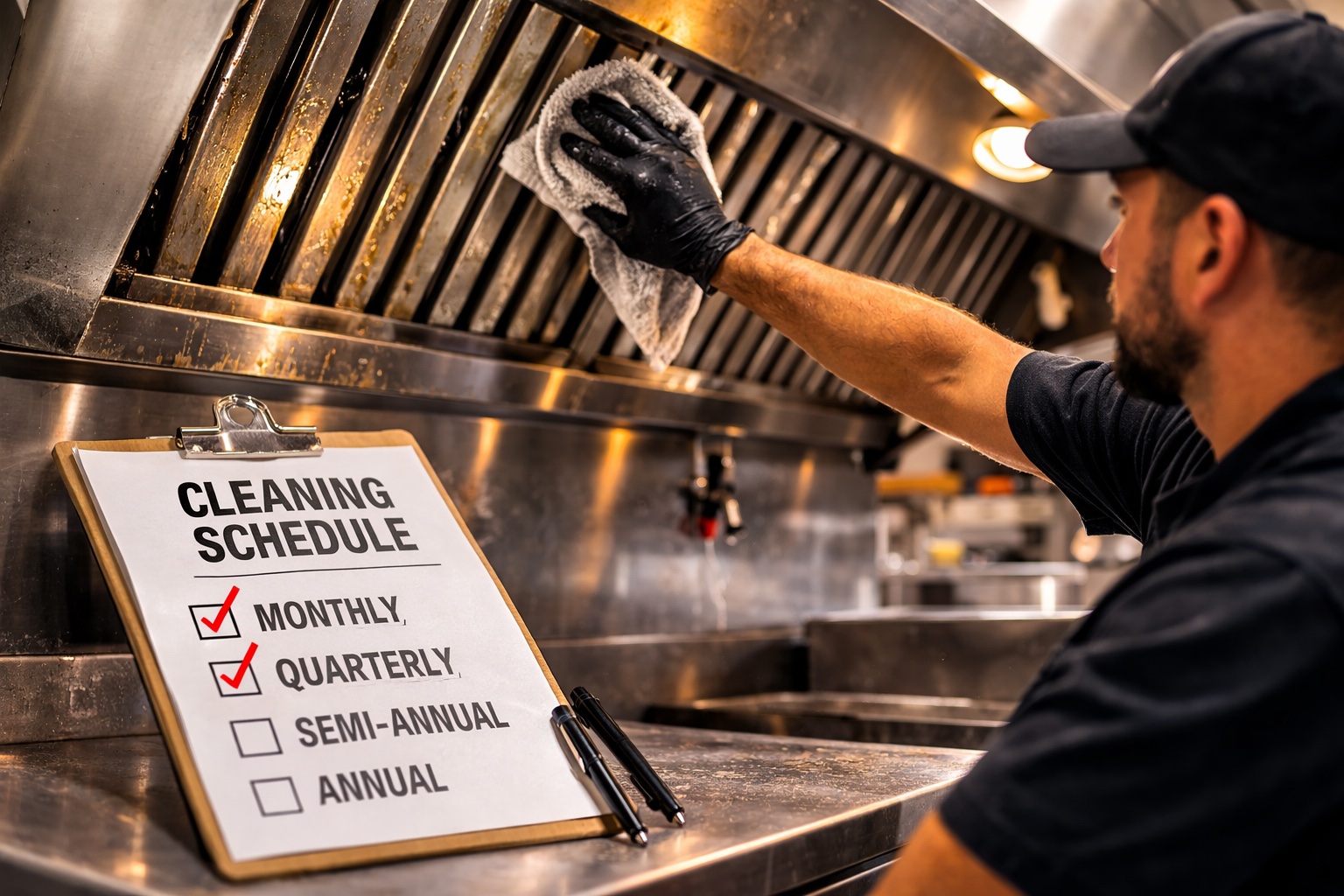
Under NFPA 96, solid fuel cooking operations require monthly inspection and cleaning at a minimum. In high-volume operations, more frequent service may be necessary depending on grease and creosote buildup.
If visible grease or creosote is present before your next scheduled cleaning, the interval is too long and should be adjusted immediately.
What Is a Spark Arrestor Filter?
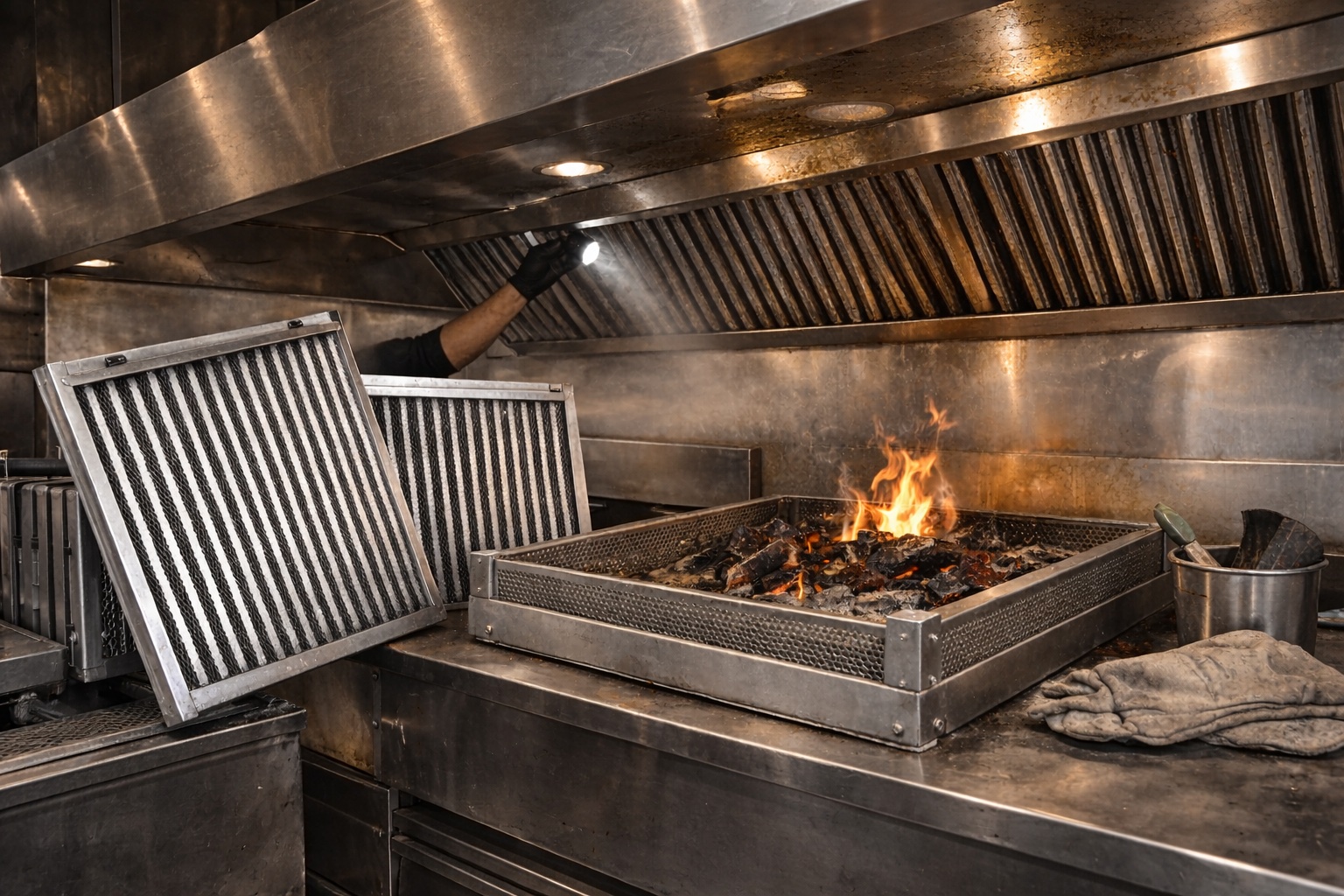
A spark arrestor filter is a specialized hood filter designed to prevent embers and sparks from entering the duct system.
These filters use a tighter baffle or mesh configuration to slow airflow and capture burning particles before they travel into the ductwork.
Why Spark Arrestor Filters Are Required
Without spark arrestors, live embers can enter grease-lined ductwork and ignite accumulated residue. This significantly increases the risk of duct fires.
NFPA 96 requires that solid fuel cooking operations be equipped with properly listed spark arrestor filters to reduce this ignition risk.
Maintenance Requirements for Spark Arrestor Filters
Spark arrestor filters must be cleaned more frequently than standard baffle filters due to heavier residue. In many solid fuel kitchens, daily or multiple-times-per-week cleaning is necessary.
Filters must sit flush within the hood with no gaps that would allow sparks to bypass the system.
Full-System Cleaning for Solid Fuel Kitchens
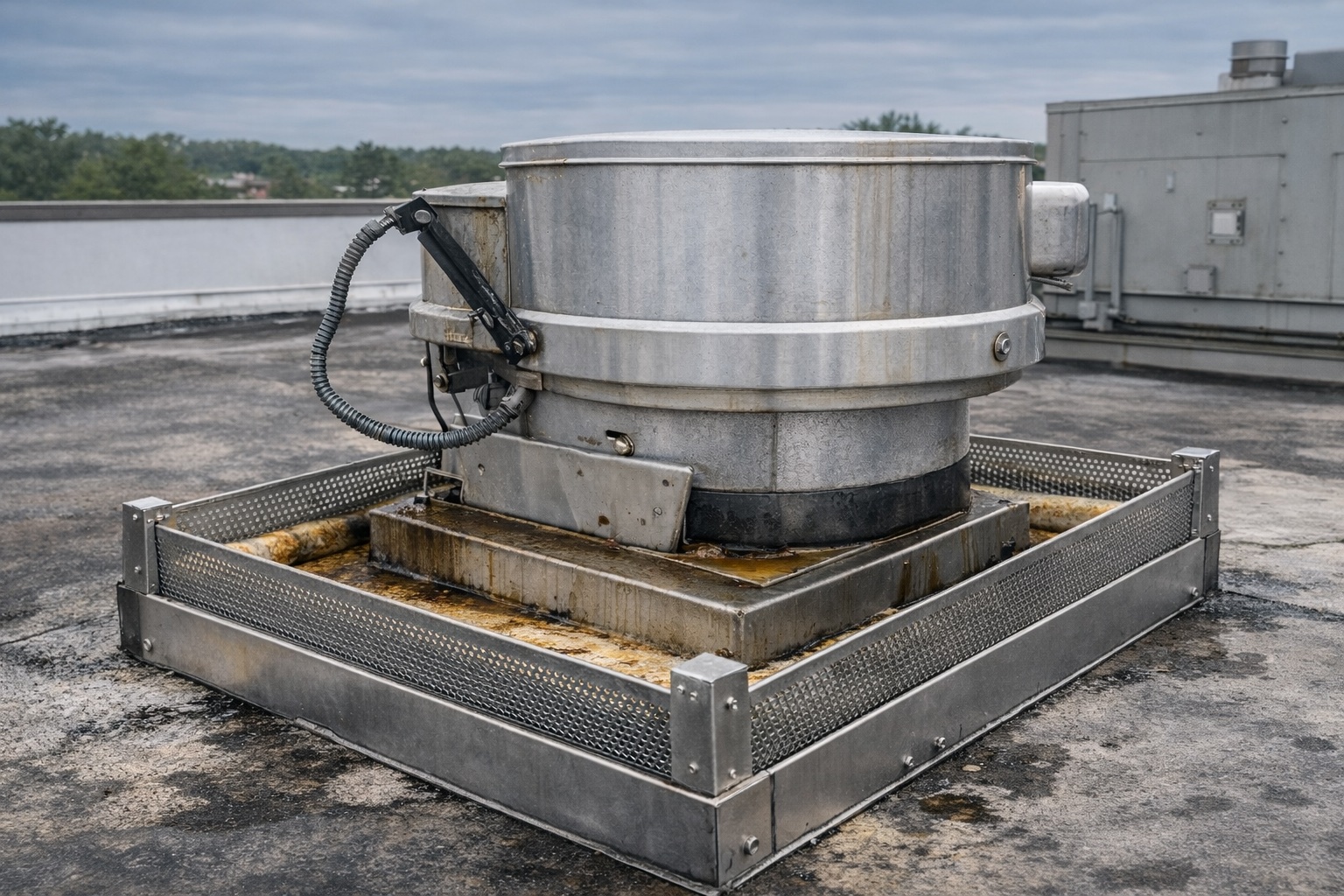
A proper solid fuel exhaust cleaning includes the hood canopy, spark arrestor filters, plenum, horizontal and vertical ductwork, access panels, and rooftop exhaust fan.
Creosote and grease buildup often extend farther into the duct system in solid fuel kitchens, making thorough access and inspection critical.
Common Compliance Issues in Solid Fuel Kitchens
Common issues include missing or incorrect spark arrestor filters, excessive creosote accumulation, inaccessible duct sections, infrequent cleaning intervals, and lack of documentation.
Restaurant owners are ultimately responsible for ensuring their system remains compliant, regardless of who performs the cleaning service.
Final Takeaway
Solid fuel cooking significantly increases fire risk due to embers, creosote, and heavy grease production. Monthly professional cleaning, proper spark arrestor filters, and consistent maintenance are essential to protecting your kitchen and remaining compliant with NFPA 96.
If you operate a wood- or charcoal-based kitchen, your exhaust system requires specialized attention, and a cleaning schedule aligned with the realities of solid fuel cooking.