How Often Should You Clean Your Commercial Hood?
Estimated reading time: 3 minutes
One of the most common questions restaurant owners ask is: How often should I clean my commercial hood?
The answer is based on NFPA 96, the national fire protection standard that governs commercial kitchen exhaust systems.
You can review the standard here: NFPA 96 – Standard for Ventilation Control and Fire Protection of Commercial Cooking Operations, specifically, Chapter 12.
Cleaning frequency is determined by what you cook, how often you cook, whether you use solid fuel or open flame, and how quickly grease accumulates in your system.
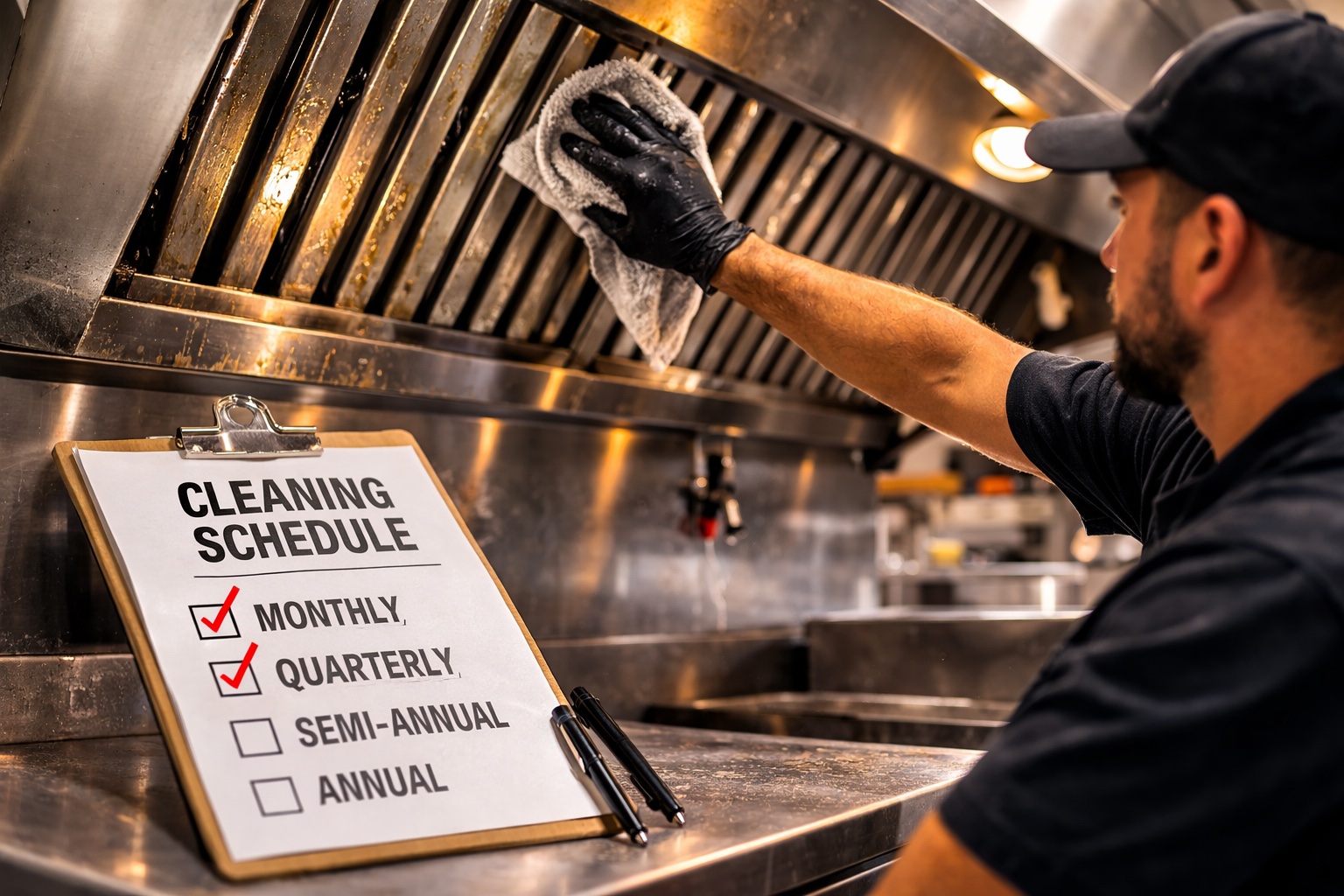
Kitchen Exhaust Cleaning Frequency by Restaurant Type
Monthly Cleaning
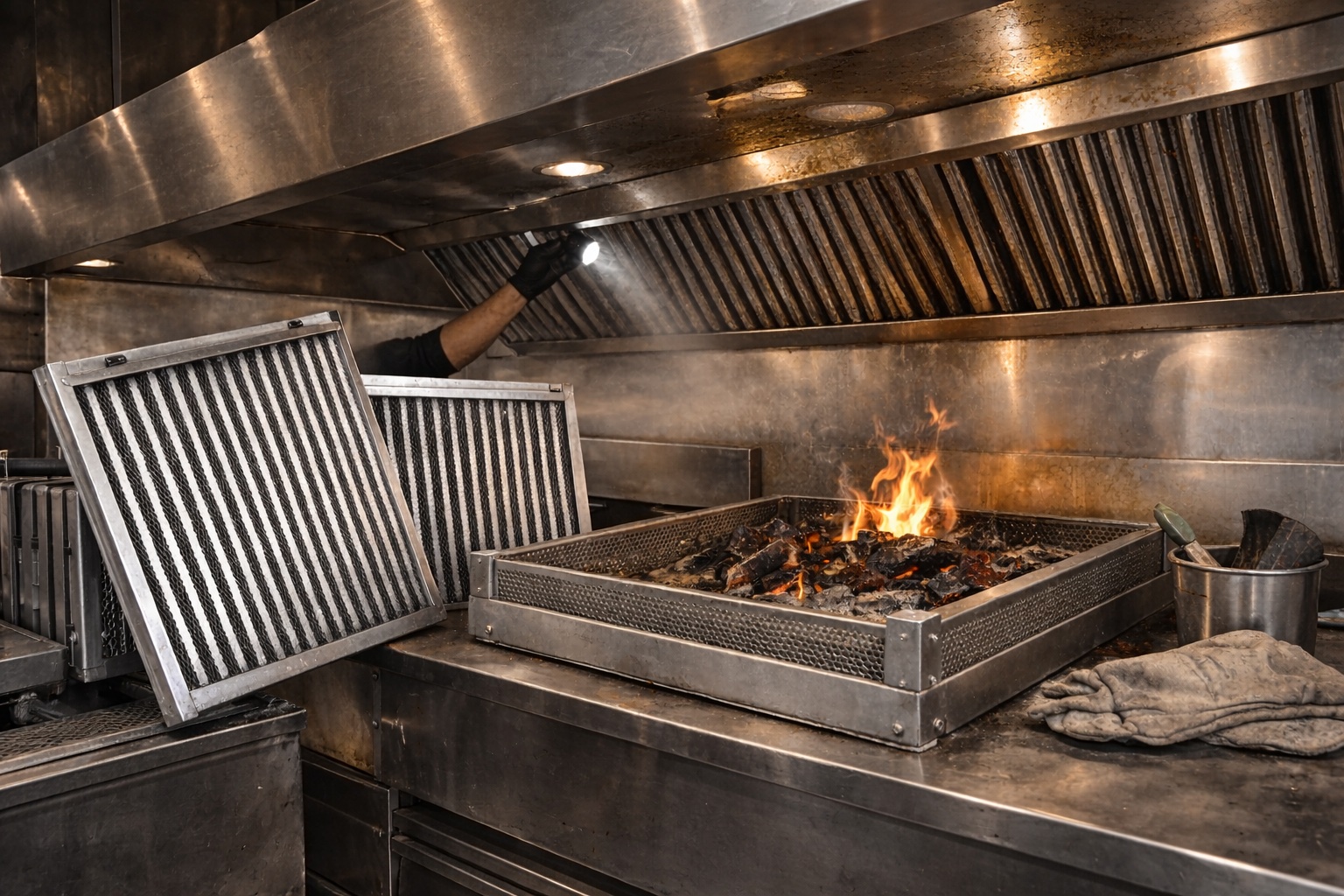
Typical for wood-fired ovens, charcoal grills, solid fuel cooking, and open-flame concepts. Solid fuel produces embers, creosote, and high grease accumulation, making monthly cleaning the national standard.
Quarterly Cleaning (Every 3 Months)
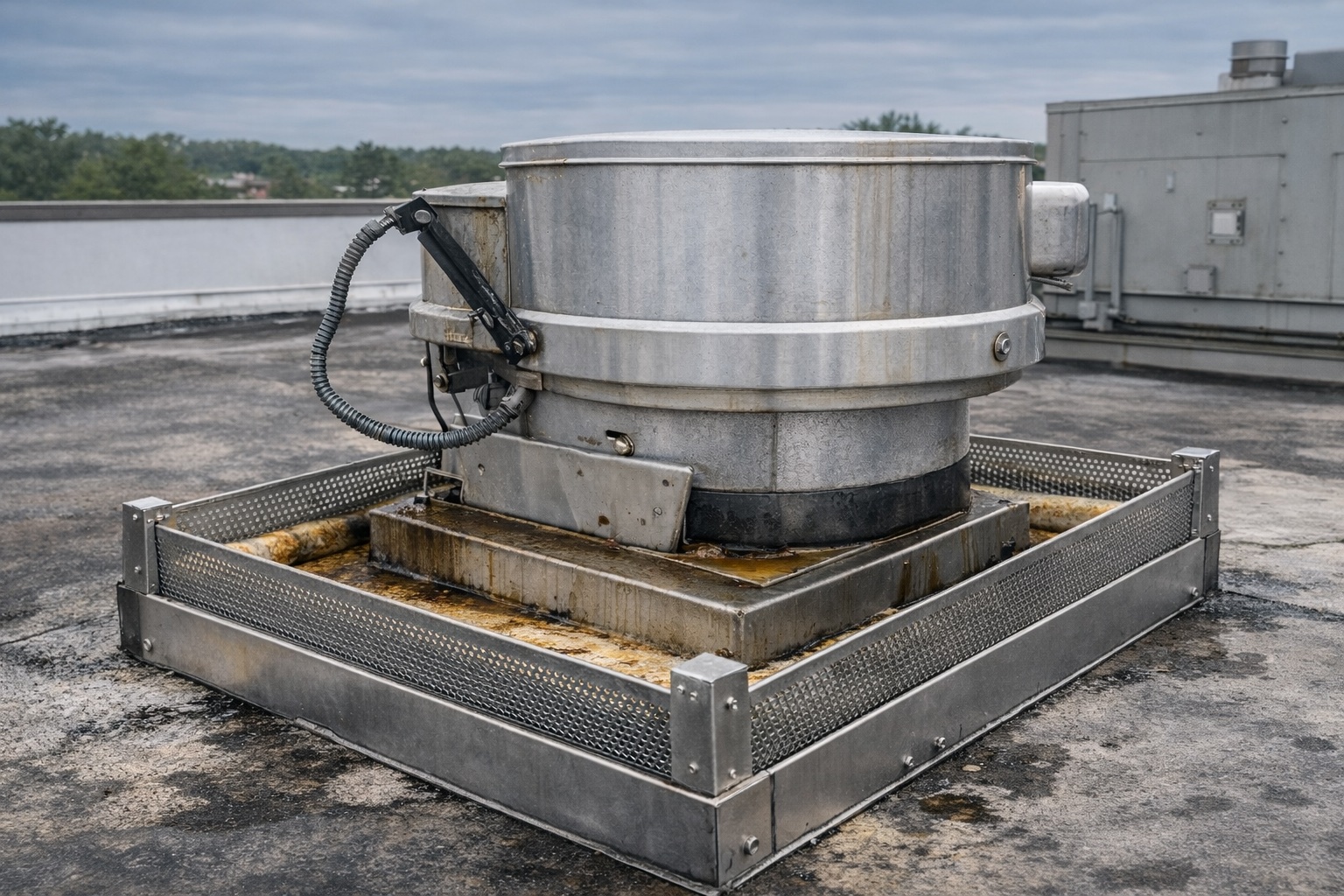
Typical for most every restaurant or commercial kitchen, such as fast-food operations, 24-hour kitchens, high-volume wok concepts, steakhouses, and banquet kitchens. In general terms, if there are at least 2 meal services per day, and open for 6-7 days per week. Continuous frying and extended hours create significant grease buildup in hoods, ductwork, and rooftop fans.
Semi-Annual Cleaning (Every 6 Months)
Typical for moderate-volume kitchens, fine dining with limited frying and/or limited meal services and open for 5 or fewer days per week, schools, and corporate cafeterias. This interval is appropriate only when grease accumulation remains controlled.
Annual Cleaning
Typical for seasonal kitchens (Boy Scout/Girl Scout camps), community halls (Elks or Masons lodges with a rental hall), and low-volume facilities. Even low-use kitchens must ensure grease does not accumulate in concealed ductwork.
NFPA 96 Sets Minimum Standards
Cleaning intervals should be shortened if grease is visible before the next scheduled service, if cooking volume increases, if equipment changes, or if operating hours expand. A Grease Comb should be used to determine if grease buildup is reaching mandatory cleaning levels before the next scheduled service (cleaning is due if only 5/64” is found).
Weekly SOP to Maintain Compliance
1. Documentation & Records
Maintain at least 12 months of cleaning reports and technician credentials as required by your jurisdiction. Reports should confirm full-system cleaning, including ducts and rooftop fans.
2. Verify Cleaning Scope
Confirm that hoods, filters, plenum, ductwork, access panels, and rooftop exhaust fans were serviced. Access panels should display updated inspection stickers.
3. Weekly Manager Walk-Through
Clean or exchange filters weekly, inspect for visible grease buildup behind filters, empty grease collection containers, and monitor fan operation for unusual vibration or noise.
4. During Inspection
Provide immediate kitchen access, present maintenance records, be prepared to remove filters for inspection, and ensure rooftop fan access is available.
5. Responding to Deficiencies
If deficiencies are identified, confirm the exact location, schedule corrective cleaning immediately, and document all remediation.
How to Decide Your Cleaning Frequency
- Solid fuel or open flame cooking: Monthly
- Daily frying or charbroiling: Quarterly
- Long operating hours: Quarterly
- Moderate cooking: Semi-Annual
- Occasional use: Annual
If more than one condition applies, choose the shortest interval.
Conclusion
Commercial hood cleaning frequency is determined by how your kitchen operates. Higher grease production requires shorter intervals. Lower-volume operations may qualify for longer intervals only when grease accumulation supports that classification.