
"*" indicates required fields
Grease Filter Exchange for Phoenix Commercial Kitchens
Filters are the one part of your exhaust system you swap out instead of scrubbing in place. They sit directly in the grease stream and load up fastest. Once they saturate, the hood stops catching grease. It collects in your duct run and on your roof instead. A filter exchange is what keeps that from happening between hood cleanings.
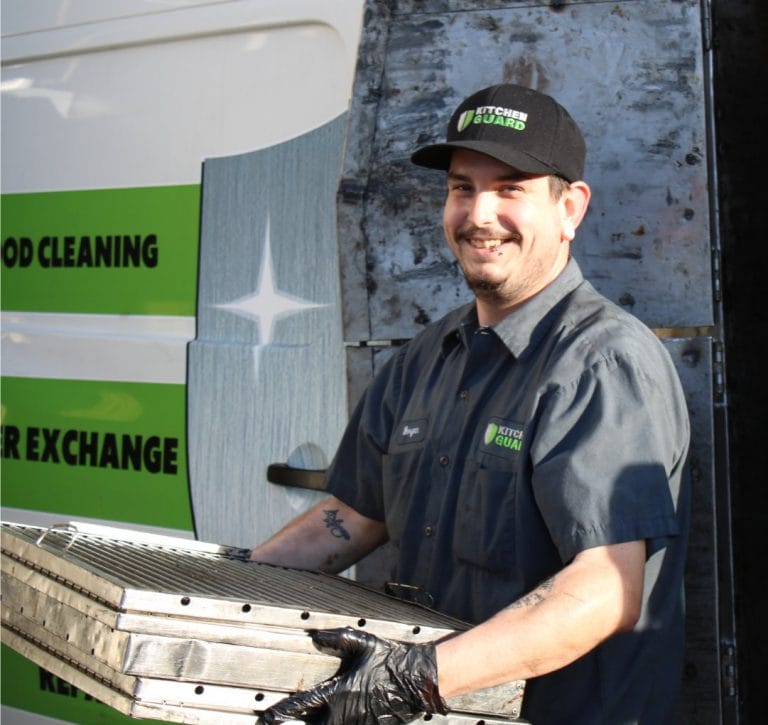
Kitchen Guard of Phoenix runs a swap program. We arrive with your clean set. The loaded set comes out of the hood and leaves with us. Nothing gets rinsed in your dish pit. No bin sits behind your building. Your crew never loses a shift to filter duty.
What a Filter Exchange Actually Is
An exchange is not the same as having someone wash your filters on site. Running filters through a three-compartment sink or a dish machine pushes liquefied grease into the building drain line. It also leaves detergent residue on the baffles and rarely clears the internal channels. An exchange takes the loaded filters off the property entirely. In the same visit, degreased filters go back in.
The difference shows up in your ductwork. A half-cleaned baffle filter still passes grease downstream. A properly degreased filter catches it, which is the entire reason the filter is in the hood.
What NFPA 96 Says About Grease Filters
NFPA 96 gets specific about grease removal devices, and most operators have never seen these details:
- Filters must be listed grease filters or baffles. Mesh filters do not count as the primary grease removal device. They qualify only when evaluated as an integral part of a listed hood, or listed for use with a primary filter.
- Filters sit at an angle of at least 45 degrees from horizontal. Grease then drains off instead of pooling in the media.
- A grease drip tray has to sit beneath the lower edge of the filters, pitched so it drains to a contained collection point.
- The grease removal device must be as far from the cooking surface as practical, and never closer than 18 inches.
Those four items are what an inspector can see from the floor without opening a single access panel. Flat filters, gapped filters, loose mesh pads, missing filters or a dry crusted trough are findings before anyone looks at your duct.
How Our Filter Exchange Program Works
- We measure first. Filter openings vary by hood, and a filter an inch short leaves a gap grease goes straight through. We measure every opening in your kitchen before the first exchange and keep the sizes on file.
- You own two sets. An exchange needs a second set of filters. Clean ones go in while our shop washes the loaded set. Most kitchens only have one, so the second set is a one-time purchase you own outright. It is not a rental, not a lease, and not a monthly line item that never ends. Leave the program someday and both sets stay in your kitchen.
- We mark your filters as yours. We stamp or engrave both sets along the edge when they enter the program, and we record them to your kitchen. You get your own filters back, not whatever came off the truck.
- Your clean set rides out with the crew. The swap happens in one visit instead of a measure now, come back later trip.
- We swap clean for dirty. Loaded filters come out and degreased filters go in. While the openings are clear, we wipe down the grease trough and lower hood surfaces.
- The dirty filters leave with us. We wash them off site at our shop, not in your kitchen and not behind your building.
- You get a standing schedule. Exchanges run weekly, biweekly or monthly depending on how hard your line cooks, and we work around your service hours.
Our shop sits at 2739 W Palm Ln in central Phoenix, just off I-17. That location keeps filters moving on a route instead of a special trip per kitchen.
Whose Filters Are They?
Some exchange programs hand you the provider’s filters and put your originals into storage. It works until the relationship ends, and then you are negotiating over hardware that sits in your hood. We do it the other way around. You buy the second set once and you own both sets. At setup we document ownership by marking each filter along the edge.
In kitchens where the hood is in guest view, or where the crew is attached to a matched set, that marking is what keeps a routine swap from turning into an argument about whose filters came back.
Why Filters Get Washed Off Site, Not in Your Kitchen
This is a local compliance issue, not a preference. The City of Phoenix Water Services Department runs a fats, oils and grease section. That group enforces the city sewer use ordinance at commercial and industrial facilities. Rinse water from a mop sink or dish machine goes into the same sewer line that section watches. A loaded hood filter carries far more grease than a standard dish-washing interceptor can catch.
Outside is not a loophole either. Wash water that runs across a dumpster pad or parking lot reaches the storm drain system. The city regulates that system separately under its stormwater program. Taking the filters off the property removes the question entirely. That is why our crews never ask you for a hose bib.
How Often Phoenix Kitchens Need an Exchange
What you cook and how long the line runs sets your frequency, not the calendar. A charbroiler under a 24-hour hood loads filters in days. A church kitchen running a Sunday service and a Wednesday dinner can go far longer. As a starting point:
- Weekly for charbroiling, wok lines, solid fuel and high-volume fryers, and kitchens running close to around the clock.
- Biweekly for busy full-service restaurants, hotel kitchens, and sports and entertainment venues in season.
- Monthly for moderate-volume kitchens, cafes, schools, senior living and most limited-menu concepts.
We set the interval after we see the hood, then adjust it if the filters tell us we guessed wrong. A set that comes out dry and light means we can stretch the schedule. A set that is dripping before the truck leaves the lot means the opposite.
Signs Your Filters Are Past Due
- Grease visible on the clean side of the filter, or on the inside of the hood plenum.
- Standing grease in the trough, or a trough that has overflowed onto the cook surface.
- Filters that will not seat flush, or that someone forced into place bent.
- Smoke hanging over the line while the fan is running.
- Fresh grease showing up around the rooftop fan curb between hood cleanings.
That last one usually means the filters stopped catching a while ago. Once grease is on the roof membrane it becomes a rooftop grease containment problem as well as a filter problem.
Our technicians are watching for it too. If a set comes out heavier than the interval should produce, the tech flags it to the office, it goes on your post-service report with the date, and someone follows up with you about either tightening the exchange schedule or getting the exhaust system cleaned. You should not have to be the one who notices.
Filters Are One Layer, Not the Whole System
An exchange program keeps the hood face and the grease trough under control and slows how fast grease reaches the rest of the system. It does not clean a duct run. NFPA 96 still requires the full system, including plenums, horizontal and vertical duct, access panels and the exhaust fan, to be inspected and cleaned on a schedule set by your cooking volume, and that is a separate visit. Most of our exchange clients pair the program with scheduled hood and exhaust cleaning so both sit on one calendar.
And if airflow is still weak with a clean set in the hood, the problem is upstream of the filters. That is usually a belt, a bearing or a fan that needs exhaust fan repair, not a tighter exchange schedule.
Filter Exchange Across the Valley
Phoenix, Scottsdale, Tempe, Mesa, Chandler, Gilbert, Glendale, Peoria, Surprise, Goodyear, Avondale, Paradise Valley, Fountain Hills, Cave Creek, Queen Creek, Sun City, Anthem, Laveen and Ahwatukee.
We work with commercial kitchens only: restaurants, hotels, schools, hospitals, senior living, churches, stadiums, casinos, food trucks and commissaries.
How We Price a Hood Filter Exchange in Phoenix
We do not price filter exchange over the phone. Filter count, opening sizes, hood configuration and how much grease is already sitting in the trough all change the answer, and none of that is visible from a phone call. The inspection is free, it takes about as long as a walkthrough of your line, and you leave with your sizes and a recommended interval in writing whether or not you hire us.
Every visit is documented with photos and a written service report, which is what you hand a fire inspector or send to your insurance carrier when they ask what was done and when.
Kitchen Guard of Phoenix Answers All Your Filter Exchange Questions
Regularly changing your exhaust filters is essential for fire prevention and ventilation efficiency. Here’s what you need to know:
It depends on your cooking volume, not the calendar. High-volume charbroiling, wok and solid-fuel lines generally need a weekly exchange. Busy full-service restaurants and hotel kitchens usually run biweekly. Moderate-volume kitchens, cafes, schools and senior living are typically monthly. We set your interval after we see the hood, then adjust it based on how the filters actually come out.
NFPA 96 does not use the phrase filter exchange, but it does require grease removal devices to be listed, correctly installed and kept clean, and it requires the hood and duct system to be inspected and cleaned on a schedule tied to your cooking volume. An exchange program is simply the most reliable way to meet the filter side of that without your staff washing grease into the building drains.
Not as the primary grease removal device. Under NFPA 96, a mesh filter is only acceptable if it was evaluated as an integral part of a listed hood, or if it is listed for use in combination with a primary filter. If your hood has loose mesh pads sitting in the openings, that is worth sorting out before your next fire inspection.
We would not recommend it. A dish machine does not reliably clear the internal channels of a baffle filter, so the filter goes back into the hood still passing grease downstream. It also sends liquefied grease into your drain line, and the City of Phoenix Water Services Department has a fats, oils and grease section that inspects and enforces the city sewer use ordinance at commercial kitchens. Washing off site keeps that off your property and off your record.
No. Filters are the first layer, not the whole system. Exchanges keep the hood face and grease trough under control and slow how fast grease reaches your ductwork, but plenums, horizontal and vertical duct runs, access panels and the rooftop fan still have to be cleaned on their own schedule. Most of our clients run both on one calendar.
We measure every opening in your kitchen during the free inspection and keep those sizes on file. It matters more than it sounds. A filter an inch short leaves a gap that grease goes straight through, and undersized filters are one of the more common things we find in kitchens that have been buying replacements off a shelf.
They ride out with the crew to our shop at 2739 W Palm Ln in central Phoenix and are degreased off site. Nothing is rinsed in your kitchen, on your dumpster pad or in your parking lot.
We schedule around your hours. Most exchanges happen before open or after close, which is also when the filters are cool enough to handle properly. Tell us your service window and we build the route around it.
Yes. You get photos and a written service report for the visit, with the date recorded. That is what you show a fire inspector or send to your insurance carrier when they ask what was done and when.
Yes, and it is a one-time purchase. An exchange only works if there is a clean set to put in while the loaded set is being washed, and most kitchens only own one set. You buy the second set once and own both outright, so nothing is rented or leased, and both sets stay in your kitchen if you ever leave the program.
Both of your sets are stamped or engraved along the edge when they enter the program and recorded to your kitchen. It matters most in open kitchens where the hood is in guest view, or where a crew is attached to a matched set, and it is the simplest way to keep a routine swap from turning into a disagreement.
We replace it rather than put it back in your hood or send you a letter about how it got that way. A damaged filter does not seat flush, and a filter that does not seat flush leaves a gap that grease goes straight through, so leaving it in service is not an option worth arguing over.
Our technician flags it. If a set comes out heavier than the interval should produce, it goes on your post-service report with the date, and someone follows up with you about tightening the exchange schedule or getting the exhaust system cleaned. Filters loading fast is usually the first sign that something upstream needs attention.