
"*" indicates required fields
Chattanooga Is Not a Service Area for Us. It Is the Shop Address.
Chattanooga hood cleaning is a local route for us, not a road trip. Downtown hotel kitchens around the convention center, Northshore cafes, Southside and MLK breweries, the Gunbarrel and Hamilton Place restaurant corridor, drive-thrus in Hixson and East Brainerd, hospital and school kitchens on both sides of the river, campus dining near UTC, and manufacturing cafeterias out toward Enterprise South. We clean them on schedules built around service, which usually means overnights and early mornings.
Because we are actually here, a missed vent hood or a fan that quits on a Friday does not turn into a week of waiting for a crew driving down from Nashville or up from Alabama. The same person answers 423-275-6273 on Monday that answered it in July.
Every job is cleaned to the NFPA 96 standard inspectors here enforce: canopy, filters, the full duct run, and the fan on the roof. When we finish, you get before-and-after photographs and a service record you can hand to the fire marshal or your insurance carrier without digging through a filing cabinet.
Who Actually Inspects Your Chattanooga Kitchen
Most operators never learn how their inspection works until they are failing one.
Inside Chattanooga city limits, your authority is the Chattanooga Fire Department’s Fire Prevention Bureau, which carries out fire and life safety inspections of commercial buildings, hazardous facilities and places of assembly across the city. What matters for you is how they choose where to go. The city runs a predictive model that assigns a fire risk score to commercial properties so inspectors can prioritize them. A commercial kitchen with solid-fuel or high-volume frying equipment is not at the bottom of that list. Waiting because nobody has come by in a while is not a compliance strategy.
Two agencies have an opinion about your exhaust system, and they are not the same agency. Fire officials work from the fire code Tennessee administers through the State Fire Marshal’s Office, which points to NFPA 96 for kitchen exhaust. The Tennessee Department of Health’s food service inspectors work from the food code, where visible grease on a hood gets written up on its own terms. Passing one is not passing the other, which is why the paperwork we leave is dated, photographed and specific enough to satisfy both.
Outside the city limits, the person walking through your door changes. East Ridge, Red Bank, Soddy-Daisy, Collegedale, Signal Mountain, Lakesite, Walden and the unincorporated parts of Hamilton County each have their own arrangement. If you are not sure which applies to you, ask us and we will tell you.
One distinction vendors tend to blur, worth being plain about. Cleaning your exhaust system and certifying your suppression system are two different jobs performed by two different trades. We clean and document the grease path. The wet-chemical system over your cook line runs on its own schedule with a suppression contractor, and if yours is coming due we will say so rather than let you assume one visit covered both.
What a Whole-System Hood Cleaning Means on a Chattanooga Job
Ask whoever cleaned your kitchen last for a photograph of the inside of your horizontal duct. If they cannot produce one, they never opened it.
That is the gap we keep finding here. Canopies polished to a shine, filters run through a soak tank, and a duct riser carrying two years of fuel, because opening it properly takes a scraper, a spinner and two more hours on site. Grease migrates toward the fan, so the further a section sits from the cook line, the less likely it is to have been touched, and the more likely it is to be the section that carries a fire.
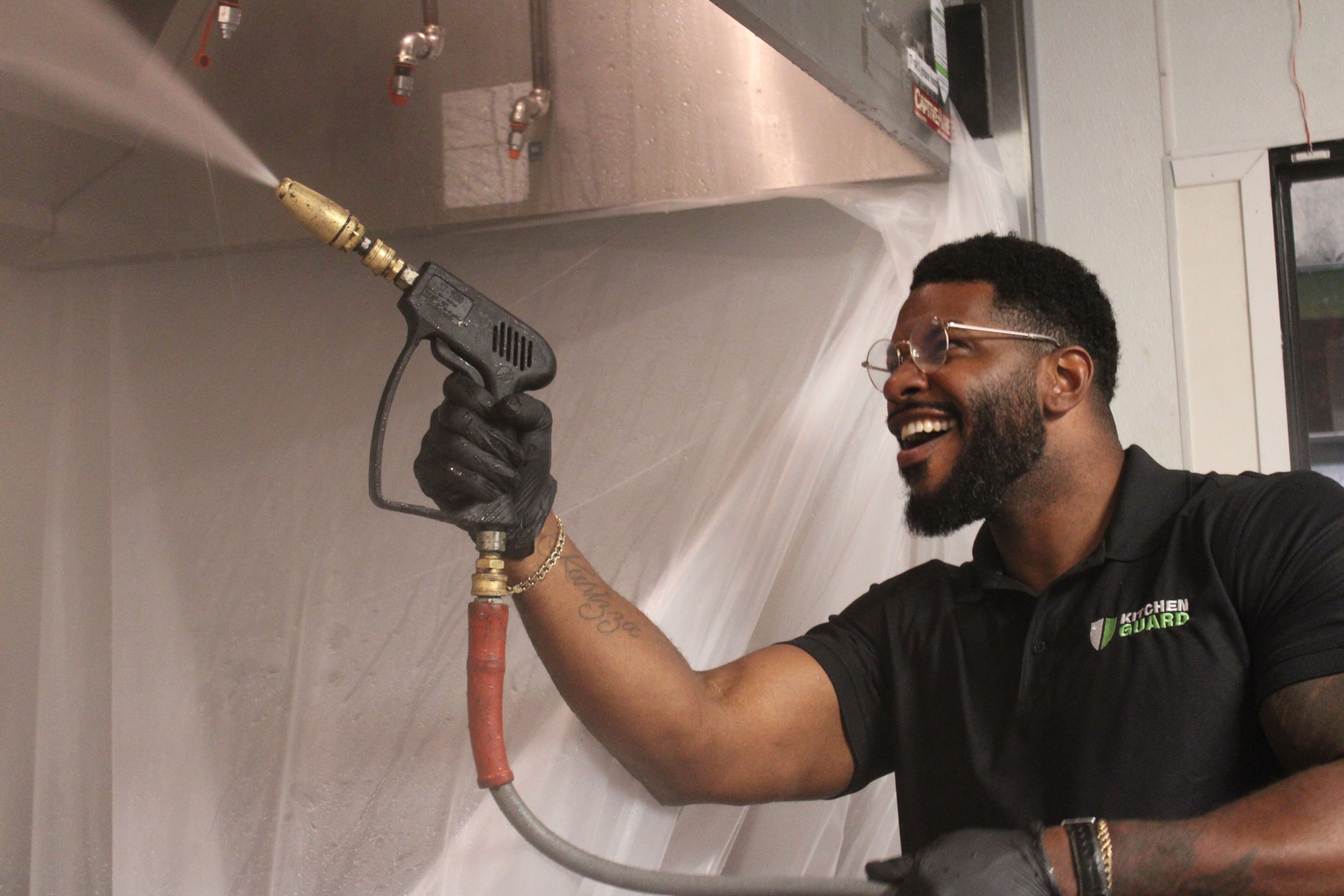
On a Chattanooga visit we work the grease path end to end. Filters come out and go off-site for cleaning. The plenum gets scraped. Every duct section is reached through its access panels, and where there are not enough panels to reach a section properly, we say so and price the panel instead of cleaning around the problem. Then the fan comes up off the curb so the housing, the blades and the roof underneath all get attention, because grease pooling on a membrane stops being a compliance matter and becomes a roofing invoice.
NFPA 96 does not simply say clean the hood. It expects the system cleaned to bare metal where practicable, areas that could not be cleaned recorded rather than quietly skipped, and a label showing who serviced the system and when. That is the standard we document against, and it is why our reports name the sections we could not reach and the reason we could not reach them.
Hood Cleaning in Chattanooga: How Often, and What It Costs
NFPA 96 ties frequency to what you burn and how hard you run. Solid fuel — wood, charcoal, a smoker out back — is monthly. High-volume cooking is quarterly. Moderate-volume, full-service kitchens are semiannual. Low-volume operations like churches, seasonal venues and day camps are annual. Those are minimums rather than targets: a charbroiler running twelve hours a day can push a kitchen onto a shorter cycle than its category implies. The full interval breakdown is on our hood cleaning page.
On price, what we will not do is quote your kitchen sight unseen. The drivers are hood count, duct complexity and roof access. A single wall canopy in a Northshore cafe and a four-hood line under a hotel banquet kitchen are not the same job, and anyone quoting both over the phone is guessing at your expense. Walkthroughs and quotes are free, the quote is the number you pay, and there is no fuel surcharge or mileage line for Hamilton County.
Who We Clean For in Chattanooga and Hamilton County
Restaurants and breweries — where fire code and an inspection date you did not pick are the same exposure whether you run one room or twenty.
Hotels and event venues — where breakfast service runs every day of the year and banquet kitchens spike around conventions, weddings and race weekends.
Hospitals and senior living — where a kitchen outage is a patient care problem rather than an inconvenience, and where documentation gets audited rather than glanced at.
K-12 and campus dining — cleaned around bell schedules, breaks and summer shutdowns.
Corporate and manufacturing cafeterias — where a servery opening late ripples through every shift in the building.
Food trucks, ghost kitchens and commissaries — which have the same grease and less room to hide it.
Multiple Locations, One Account
If you run several kitchens around Chattanooga, or a group spread from Cleveland to Knoxville, you can put every site on a single rotation with consolidated reporting instead of chasing invoices from three vendors and hoping the newest manager remembered to book. You get one contact, one interval schedule built per site rather than copied across all of them, and one place to pull records when a carrier or a regional inspector asks. We run our own routes in Cleveland, Knoxville and the Tri-Cities, so a multi-market account does not mean multiple vendors.
Who Shows Up for Your Chattanooga Hood Cleaning
Kitchen Guard of East Tennessee is locally owned and operated out of our shop at 109 Woodrow Ave in Chattanooga, TN 37415. The people cleaning your system are certified, safety-trained W2 employees we hired and trained, not a crew subcontracted for the night, and accountability for the work stays with us rather than shifting to a third party you never hired. Crews are fully insured and bonded.
Every service produces HD before-and-after photographs of the canopy, filters, duct interior, access points and the fan, plus a written service report naming the technician who did the work and the date it was done, an updated compliance label on the hood, and a plain list of anything we recommend or could not reach. All of it is delivered through an online client portal, so when a fire marshal, health inspector or insurance carrier asks how the system is maintained, the record is already in hand instead of something you reconstruct under pressure.
Kitchen Guard of East Tennessee
109 Woodrow Ave, Chattanooga, TN 37415
423-275-6273
Monday–Friday, 9 AM–5 PM. Overnight and early-morning service by schedule.
Chattanooga Hood Cleaning Questions
Who inspects my hood in Chattanooga?
Inside the city, the Chattanooga Fire Department’s Fire Prevention Bureau. The city scores commercial buildings for fire risk to decide inspection priority, and kitchens with heavy cooking equipment score high. Outside city limits — East Ridge, Red Bank, Soddy-Daisy, Collegedale, Signal Mountain and the unincorporated county — the authority differs. Either way, what they want is a maintained system and proof of when it was last cleaned.
How often do I actually need hood cleaning in Chattanooga?
Monthly for solid fuel, quarterly for high volume, semiannual for moderate volume, annual for low-volume and seasonal kitchens. We set your interval after walking the system rather than putting every kitchen on quarterly and billing accordingly.
Can you clean after we close?
Yes, and for most Chattanooga accounts that is the default. Give us your closing time and the hour your prep cook comes through the door, and we will work inside that window.
My last cleaner only did the hood. What will you find?
Usually a duct run and a rooftop fan holding most of the grease in the system, and sometimes grease that has sat on the roof membrane long enough to cause damage. We photograph what we find before we touch it, so you see the starting condition rather than a description of it.
We failed an inspection and have a re-inspection date. Can you help?
Call and say so. We can usually work you into the route that week, and if the system needs restoration rather than a routine cleaning, we will tell you honestly whether it can be done properly before your date.
Do you handle repairs and filters, or is that a second vendor?
Both in house — filter exchange, access panel installation, hinge kits, belts and bearings, fan replacement, and repair of grease damage around the curb. One vendor, one visit, one trip to the roof.
Do you charge extra for Hixson, East Brainerd or Lookout Valley?
No. Hamilton County is our home route, not a special trip. There is no mileage line on your invoice.
What does NFPA 96 expect me to keep on file?
A record of each cleaning showing the date, the company that performed it, and what was and was not cleaned, kept where an inspector can see it, plus the label on the hood. We hand you all of it after every visit and keep a copy, so a lost binder is not your problem.
Related Services and Nearby Areas
Chattanooga accounts most often pair hood cleaning with hood filter exchange, exhaust fan and system repairs, and commercial pressure washing for dumpster pads, drive-thru lanes and back-of-house concrete.
We also serve Cleveland, Knoxville and the Tri-Cities. The Chattanooga route covers East Ridge, Red Bank, Hixson, Soddy-Daisy, Collegedale, Ooltewah, Signal Mountain, Lookout Mountain and Lookout Valley.
Your next fire inspection is already scored and on somebody’s list. Get the system cleaned, documented and ahead of it. Call 423-275-6273 or schedule a consultation.