How to Choose a Hood Cleaning Company in Hendersonville: What the Paperwork Should Prove
Type “hood cleaning near me” from a Hendersonville kitchen and the results all sound alike. Every provider claims NFPA 96 compliance, trained crews, and full-system service. Yet the real difference between vendors rarely shows up in the sales call. It shows up months later: in the duct run nobody could reach, the fan that never got opened, and the file folder that sits empty when an inspector asks for proof of service. This guide gives Hendersonville owners and kitchen managers a selection process built on documentation, the one thing that outlasts every cleaning. You will learn what NFPA 96 expects a provider to actually do, the questions that expose a weak operation before you sign, the red flags that should end a conversation, and what the paperwork, above all the Post Service Report, should prove once the crew drives away.
Why Choosing a Hood Cleaning Company Is a Documentation Decision
Kitchen exhaust cleaning is one of the few services a restaurant buys that cannot be verified by looking at it. The hood canopy may gleam while the horizontal duct run above the ceiling still carries a heavy coat of grease. Once the access panels close, the only durable evidence of what happened inside the system is the record the provider produces.
That makes provider selection a documentation decision. The vendor you want is the one whose records would satisfy a skeptical reader: a fire inspector, an insurance adjuster, a landlord, or a buyer doing diligence on your business.
A restaurant hood cleaning service that cleans well but documents poorly still leaves you exposed. One that documents honestly, including what could not be reached, protects your operation.
Hendersonville’s Dining Scene Has Outgrown Handshake Vendors
Hendersonville is Sumner County’s largest city, and its food scene has grown with it. Between the restaurants working the Old Hickory Lake waterfront, the independents along the Main Street corridor, and the build-out of fast-casual and franchise concepts around Indian Lake Boulevard, more commercial hoods are running here than ever.
That growth has pulled in every kind of vendor, from national outfits to one-truck operations, chasing kitchens that do not need the same thing:
- Lakeside and marina-adjacent restaurants with hard seasonal swings in cooking volume
- Main Street corridor independents running smaller, older exhaust systems
- Fast-casual and franchise kitchens clustered around Indian Lake Boulevard
- Church, school, and event-hall kitchens that cook heavily but only part of the year
- Caterers and commissary kitchens supporting Sumner County’s event calendar
A company that quotes them all the same price, on the same schedule, without asking questions, is guessing.
What NFPA 96 Requires From a Hood Cleaning Provider
The national benchmark for this work is NFPA 96, the Standard for Ventilation Control and Fire Protection of Commercial Cooking Operations. Tennessee’s adopted fire codes lean on it, insurers reference it, and inspectors treat it as the yardstick for exhaust maintenance.
For provider selection, a handful of NFPA 96 requirements matter most:
- The entire exhaust system, meaning hood, filters, ductwork, and exhaust fan, is inspected at intervals tied to cooking volume
- Systems found with grease buildup are cleaned to NFPA 96 standards, not wiped where visible
- The work is performed by properly trained and qualified persons
- Access panels exist wherever needed so duct interiors can actually be reached
- Records of inspection and cleaning are maintained and available to the authority having jurisdiction
Recordkeeping is written directly into the standard. A provider who treats paperwork as an afterthought is not aligned with NFPA 96, whatever the brochure says.
Who Holds the Standard in Hendersonville and Sumner County
Locally, the authority having jurisdiction is the Hendersonville Fire Department, an all-hazards department protecting more than 50,000 residents from six stations. Its staff includes a fire marshal and three fire inspectors, so commercial kitchens here operate under a staffed, active inspection program.
At the state level, fire prevention and code enforcement roll up to the Tennessee State Fire Marshal’s Office within the Department of Commerce and Insurance.
Inspectors are not the only readers of your service records:
- Insurance carriers can request exhaust-cleaning documentation at renewal or after a loss
- Landlords and property managers often write exhaust maintenance into lease terms
- Franchise brands audit their operators’ fire-safety compliance
Choose a hood cleaning company whose paperwork can stand in front of all of those audiences at once.
What Fire Data Says About Cooking Operations
The U.S. Fire Administration’s restaurant fire data snapshot, covering 2011 through 2013, found that cooking was the leading cause of restaurant fires by a wide margin, ahead of every other ignition source combined. The exhaust system sits at the center of that risk. Grease-laden vapor condenses inside the hood, ductwork, and fan housing every hour the line is cooking, leaving fuel above the flame source and a duct that can carry fire to the roof.
For a Hendersonville operator, that turns vendor selection into risk management. The provider you hire determines whether that fuel layer actually comes out on schedule, and whether anyone can prove it did.
Cleaning Frequency: The First Thing a Good Proposal Gets Right
Before you compare prices, compare how each candidate sets your cleaning schedule. NFPA-aligned guidance ties the interval to cooking volume, running from monthly for the heaviest grease producers down to semi-annually for kitchens that cook lightly or seasonally. The interval itself is not what separates providers. How a provider arrives at it is.
A provider cannot place your kitchen on that scale without asking questions first. Expect a good one to ask about:
- What you cook and what fuels the equipment
- Hours of operation and weekly cooking load
- Whether the line includes wok ranges, charbroilers, or solid-fuel appliances
- Seasonal swings, which matter for lakeside and event-driven kitchens in Hendersonville
If a quote arrives before the questions do, both the number and the schedule are guesses. A company that assigns you an interval sight unseen is selling a route, not a service.
Seven Questions to Ask a Hood Cleaning Company Before You Sign
The fastest way to separate candidates is to ask each one the same seven questions and write the answers down. Weak providers fail this exercise quickly, because the questions target the places where corners get cut.
1. What Exactly Is in Your Scope of Work?
“Hood cleaning” means different things to different vendors, and the cheap quote is usually cheap because the scope is thin. The scope you want covers the system end to end:
- Hood canopy, interior and exterior
- Filters, swapped out through a filter exchange program rather than cleaned on site
- Vertical and horizontal duct runs, cleaned to NFPA 96 standards wherever they can be reached
- The exhaust fan itself, opened up and degreased, not sprayed from below
- Rooftop grease containment around the fan and curb
Full-system scope, put in writing before work begins, is the baseline for professional commercial hood cleaning services. Anything less is a partial cleaning sold at a full-cleaning price.
2. How Are Your Technicians Trained?
NFPA 96 requires the work to be done by trained and qualified persons, but it does not vet crews for you. That is your job, and it takes one direct question: how do you train the people who will be on my roof and inside my ductwork?
Listen for specifics rather than slogans:
- A structured training program for new technicians, not just ride-alongs
- Experienced leads supervising every job
- Safety training for rooftop work, ladders, and chemical handling
- Familiarity with the full exhaust system, including fans and curbs
A confident provider answers in detail. Vague answers mean the program does not really exist.
3. What Happens Above the Roofline?
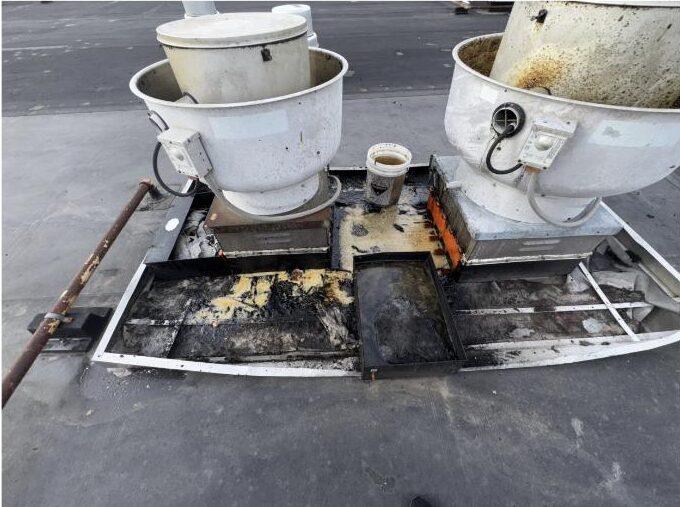
The rooftop is where quality is easiest to fake, because you are rarely up there to check. Yet the fan and its surroundings are where grease exits the building and fires reach the roof structure.
Ask each candidate to describe their rooftop process, and expect to hear:
- The fan is shut down, opened or hinged back, and cleaned inside the housing
- Blades and the shroud are degreased, not just wiped
- Grease containment around the fan is checked and serviced
- The curb and surrounding roof surface are inspected for grease saturation
Rooftop grease also degrades roof membranes and creates landlord disputes, so documented rooftop conditions protect your lease as well as your kitchen.
4. How Do You Handle Duct Runs You Cannot Reach?
Plenty of exhaust systems in older Hendersonville buildings, especially along the Main Street corridor, were installed with too few access panels. Every provider eventually meets a duct section it cannot reach. The difference is what happens next.
The honest answer has two parts: the limitation is disclosed in writing on the service documentation, and the provider proposes a fix, typically access panels installed through a proper exhaust system repair service, so the next cleaning can reach what this one could not.
The dishonest answer is silence: a report that never mentions the section at all. That silence becomes your problem during an inspection or a claim.
5. What Documentation Will I Receive After the Service?
This is the heart of the selection process. Ask each candidate exactly what lands in your hands after a service visit:
- A written Post Service Report after every visit, not just the first one
- A record of what was cleaned and, just as important, any areas that could not be serviced
- Condition notes on the system: fan belts, access panels, containment, wear items
- Before-and-after photos available upon request
If the answer amounts to “you get an invoice,” keep looking. An invoice proves you paid, not what happened inside your ductwork.
6. How Will You Set and Adjust My Cleaning Schedule?
A schedule set once and never revisited drifts out of compliance. Hendersonville kitchens see real seasonal swings: lake traffic in summer, event catering through the holidays. The provider you want commits to a recurring service schedule, tracks it, and revisits frequency when the kitchen changes. Triggers worth a schedule conversation include:
- A new menu, new equipment, or a switch to charbroiling or wok cooking
- Extended hours or a sustained jump in weekly covers
- Seasonal peaks that push a moderate kitchen into high-volume territory
Ask who initiates that conversation. The right answer is the provider, based on what technicians observe from visit to visit.
7. What Happens When You Find Something You Cannot Clean Away?
Cleaning crews see problems first: a worn fan belt, a missing access panel, a fan running without a hinge kit, missing grease containment beneath the fan, a saturated curb. Ask each candidate what happens with those findings.
A documentation-first provider writes them into the report and routes them to a repair team for access panel installation, exhaust fan and belt replacement, fan hinge kits, grease containment, curb work, and roof repair. That closed loop, from finding to written recommendation to hood and exhaust repairs, keeps small mechanical issues from maturing into failed inspections or a dead fan on a Friday night.
Red Flags That Should End the Conversation
Some answers should stop a vetting process immediately. Watch for these:
- A quote delivered without a single question about your menu, hours, or cooking volume
- No proof of liability insurance offered when you ask for it
- A scope limited to the hood and filters, with ductwork and the fan left unmentioned
- No description of rooftop work at all
- Refusal to put the scope of work in writing
- Nothing issued after service except an invoice
- Vague or defensive answers about technician training
- Pressure to sign a long agreement before anyone has looked at your system
Any one of these is disqualifying. Two or more means the provider is counting on you never checking the work.
The Paperwork Trail: From Proposal to Proof
Documentation is not one document. Across a healthy vendor relationship, it accumulates in order:
- A written proposal that names every component in scope, from filters to fan to rooftop containment
- A certificate of insurance you can file and show your landlord
- A service agreement that states cleaning frequency in NFPA-aligned terms
- A Post Service Report after every single visit, filed where your managers can find it
Nothing on that list is exotic. A candidate who cannot produce these basics is telling you how the rest of the relationship will go.
Inside the Post Service Report
The Post Service Report is the most important document in kitchen exhaust maintenance: the proof layer a good provider produces once the work is done. A complete one should show:
| Report element | What it should prove |
|---|---|
| Service date, location, and technician | Who did the work, where, and when |
| Areas serviced | Hood, filters, accessible ductwork, and the exhaust fan were addressed |
| Areas not serviced, with reasons | Inaccessible sections are disclosed, not hidden |
| System condition notes | Wear and hazards are flagged: belts, panels, containment, fan condition |
| Written recommendations | Repairs and frequency changes exist on paper, not in a hallway conversation |
| Next service due | The recurring schedule is real and being tracked |
This is the model Kitchen Guard of Nashville works from: a Post Service Report issued after every service, with before-and-after photos available upon request.
Keep every report in one inspection-readiness file; when the fire inspector, your insurer, or your landlord asks for records, that folder answers in seconds.
Before-and-After Photos: Evidence, Not Decoration
Photos convert a claim into a record, especially for places you will never personally see, like the fan housing interior and the horizontal duct run. Ask each provider how photo documentation works. Useful practice looks like:
- Before-and-after pairs of the same locations, shot from the same angles each visit
- Coverage of the hidden areas, not just the hood canopy
- Photos available upon request alongside the written report
A provider who resists the question is telling you the camera would not help their case.
The Hood Sticker Is a Claim; the Report Is the Proof
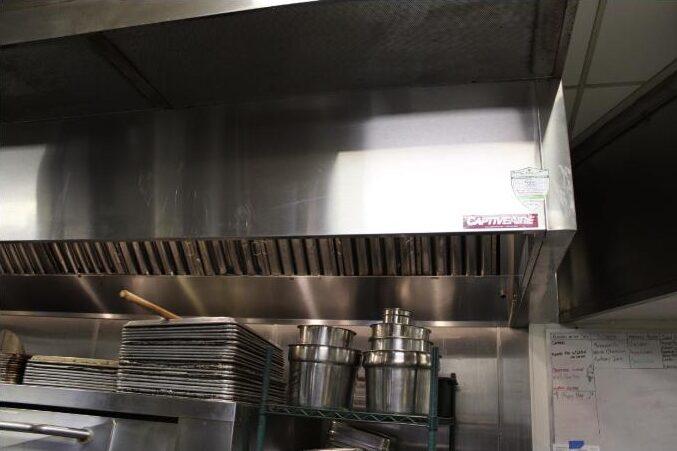
Most hood cleaning companies apply a service sticker to the hood showing the company name and service date. Inspectors do look at them, but a sticker proves only that someone was present, not what happened above the ceiling line.
Treat the sticker as the cover page and the Post Service Report as the actual document. A provider who offers one without the other is selling the appearance of compliance rather than the substance of it.
Comparing Providers Side by Side
Once you have asked your questions, a comparison grid makes the decision nearly automatic:
| Criterion | Weak answer | Documentation-first answer |
|---|---|---|
| Scope of work | Hood and filters | Hood, filters, ductwork, fan, rooftop containment, in writing |
| Exhaust fan | Sprayed from below | Opened, degreased, condition noted |
| Inaccessible duct | Never mentioned | Disclosed in the report, access panel fix proposed |
| After-service paperwork | Invoice only | Post Service Report after every visit |
| Photos | Not offered | Before-and-after photos upon request |
| Mechanical findings | Ignored | Written recommendations routed to a repair team |
| Scheduling | Static, customer-tracked | Recurring, provider-tracked, adjusted to cooking volume |
Score every candidate against the right-hand column. The price gap between vendors usually lives between those two columns, and so do fire risk and inspection findings.
One System, One Accountable Partner
Exhaust cleaning rarely stands alone. Filters need regular swaps, dumpster pads and patios need degreasing, and mechanical wear needs fixing. Splitting that work across a patchwork of vendors splits the paper trail, and gaps between vendors become gaps in your records.
There is a strong documentation argument for consolidation:
- One provider, one report format, one file for inspectors
- A filter exchange program that keeps grease capture working between hood cleanings
- Commercial kitchen pressure washing for patios, dumpster pads, drive-throughs, and sidewalks
- Cleaning-crew findings routed directly into repairs instead of dying in a voicemail
You can see how those pieces fit together on the full lineup of commercial kitchen services Kitchen Guard of Nashville runs across Middle Tennessee.
What Working With Kitchen Guard of Nashville Looks Like
Kitchen Guard of Nashville was built around the standard described here. Technicians are trained on the full exhaust system, filters to fan to rooftop containment, and the scope of work goes in writing before service begins.
For a Hendersonville kitchen, the engagement looks like this:
- A complimentary consultation and quote, built after questions about your menu, hours, and equipment
- An NFPA-aligned recurring schedule matched to your cooking volume
- Full-system service with a Post Service Report issued after every visit
- Before-and-after photos available upon request
- Repair capability for access panels, exhaust fans, belts, fan hinge kits, grease containment, curbs, and roofs
To see what that documentation standard looks like on your own system, schedule a complimentary consultation for your Hendersonville kitchen or call 615-546-0037.
Serving Hendersonville From Great Circle Road
Kitchen Guard of Nashville runs out of 220 Great Circle Rd #132, Nashville, TN 37228, a short run up Vietnam Veterans Boulevard from Sumner County. Crews serve kitchens across Hendersonville and the rest of Middle Tennessee, including:
- The Main Street corridor and its older, tighter exhaust systems
- The Indian Lake Boulevard retail and restaurant district
- The lakeside operations along Old Hickory Lake
Whether you found this page through a “hood cleaning near me” search or a referral, the vetting standard is the same. You can reach the team through the contact page with questions about your system, your schedule, or your records.
Frequently Asked Questions
How do I know a hood cleaning company has set my cleaning interval correctly?
NFPA-aligned guidance ties the interval to cooking volume, so no provider can set yours without first asking what you cook, how many hours the line runs, and whether your kitchen has seasonal swings. If an interval arrives before those questions do, it was assigned rather than assessed. Ask any provider to put the reasoning for your interval in writing, and to revisit it when your menu or volume changes.
What paperwork should a hood cleaning company give me after each service?
You should receive a written Post Service Report after every visit documenting what was serviced, any areas that could not be reached, the condition of system components, written recommendations, and the next service date. Before-and-after photos should be available upon request.
Who checks hood cleaning records in Hendersonville?
The Hendersonville Fire Department, whose staff includes a fire marshal and three fire inspectors, is the local authority having jurisdiction, with the Tennessee State Fire Marshal’s Office setting statewide fire-prevention direction. Insurance carriers, landlords, and franchise brands may also ask to see exhaust-cleaning records.
Does Kitchen Guard of Nashville serve Hendersonville?
Yes. Crews dispatch from 220 Great Circle Rd #132, Nashville, TN 37228 and serve Hendersonville and the rest of Sumner County. Call 615-546-0037 to discuss your kitchen.
Ready to Put Your Hood Cleaning on Paper?
You will never see the inside of your own ductwork, and neither will your insurer or your fire inspector. All three of you will see the paperwork, so pick the hood cleaning company in Hendersonville whose documentation proves the work.
Kitchen Guard of Nashville delivers full-system exhaust cleaning on an NFPA-aligned schedule, with a Post Service Report after every visit and before-and-after photos upon request. Call 615-546-0037, or request a quote for your Hendersonville kitchen and put your exhaust system on the record.