NFPA 96 Hood Cleaning Compliance for Nashville Restaurants: What the Fire Marshal Expects
What NFPA 96 Actually Requires of a Nashville Kitchen
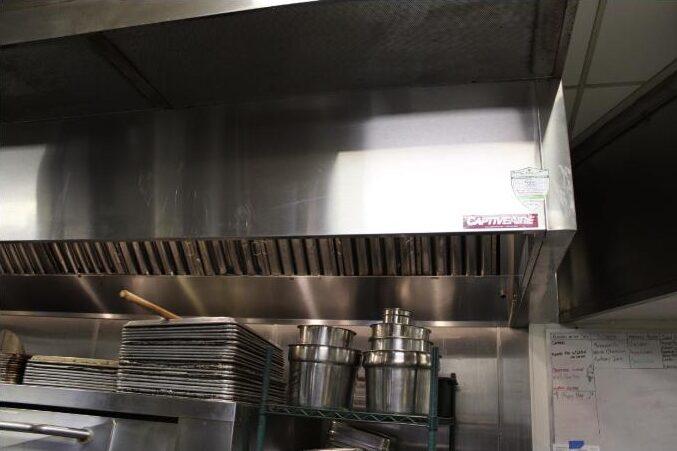
NFPA 96 is the national standard for ventilation control and fire protection of commercial cooking operations. It is the reference point nearly every authority having jurisdiction uses when they inspect a kitchen exhaust system, and it is the framework behind our commercial hood cleaning in Nashville. The standard covers the entire cooking exhaust system: the hood canopy, the grease filters, the horizontal and vertical ductwork, the exhaust fan, and the rooftop termination. You can read the standard itself on the NFPA 96 standard page.
The core idea is simple. Cooking produces grease-laden vapor. That vapor condenses on the inside surfaces of your exhaust system as it travels from the hood to the roof. Over weeks and months, that residue builds into a continuous fuel layer. NFPA 96 requires that the system be inspected on a schedule and cleaned wherever grease has accumulated. The standard does not ask for a lighter touch when a kitchen gets busy. It asks for more frequent attention.
Why Grease Buildup Is a Fire Problem, Not a Housekeeping Issue
It is easy to treat a greasy hood as a cosmetic annoyance. The data says otherwise. According to the U.S. Fire Administration, an estimated 5,600 restaurant fires are reported to fire departments each year, and cooking is the leading cause, accounting for roughly 64 percent of restaurant fires. Those fires cause about 116 million dollars in property damage annually.
A hood fire does not stay in the hood. Once flames reach the grease coating the inside of the duct, the duct becomes a chimney that carries fire straight through the roof line and into the structure. That is the exact path NFPA 96 is written to interrupt. When the interior surfaces are clean, a flare-up on the cooking surface has far less to feed on above it. This is why inspectors treat interior grease as a life-safety issue rather than a matter of appearance, and why a thorough cleaning is measured by what is left on the metal, not by how the hood looks from the floor.
Who Enforces Hood Cleaning Rules in Nashville and Davidson County
In Nashville, the authority having jurisdiction is the Metro Nashville Fire Marshal’s Office, which handles fire and life safety inspections for the Metropolitan Government of Nashville and Davidson County. Their inspectors conduct annual inspections, operational permit inspections, and reviews tied to fire suppression systems, and a commercial kitchen exhaust system falls squarely within that scope.
Statewide standards are set through the Tennessee State Fire Marshal’s Office, part of the Department of Commerce and Insurance, which administers the fire code adopted across Tennessee. For a Nashville operator, the practical takeaway is that you answer to the Metro inspector on the ground, working from a code framework that traces back to the state and to NFPA 96. Knowing who signs off on your kitchen matters, because it tells you whose expectations your documentation needs to satisfy.
How Often Your Exhaust System Has to Be Cleaned
NFPA 96 ties cleaning frequency to how hard your kitchen works its exhaust system. The heavier the cooking volume and the greasier the cooking style, the more often the system needs attention. The following cadence reflects the NFPA-aligned guidance we build every Nashville service schedule around.
| Cooking profile | Typical operations | Suggested cleaning frequency |
|---|---|---|
| High-volume, high-grease | 24-hour kitchens, wok cooking, charbroiling, solid fuel | Monthly |
| Moderate-volume | Standard sit-down restaurants, hotel kitchens | Quarterly |
| Low-volume | Churches, seasonal venues, day cafes | Semi-annually |
These are starting points, not absolute promises. A moderate-volume kitchen that adds a charbroiler or extends its hours can move into a monthly cadence quickly. The right interval is the one that keeps interior surfaces from ever building a meaningful grease layer between visits, which is a judgment call best made after a technician sees your actual system.
What Inspectors Look For During a Kitchen Exhaust Inspection
When a Nashville fire inspector or a qualified cleaning technician evaluates your system, they are not glancing at the stainless steel. They are checking specific points where grease hides and where compliance tends to fall apart. These are the four that matter most.
1. Grease Accumulation in Horizontal Duct Runs
Horizontal duct sections are where grease settles and pools, because vapor slows down and condenses as it changes direction. These runs are also the hardest for a rushed provider to reach. An inspector who opens an access panel and finds a soft grease layer in a horizontal run knows the last cleaning was either incomplete or too long ago.
2. Access Panels That Are Missing or Sealed Shut
NFPA 96 requires access panels at intervals along the duct so the entire interior can be reached and cleaned. If panels are missing, painted over, or sealed, the duct cannot be properly serviced, and that becomes its own finding. Proper access panel work and exhaust repairs are part of keeping a system cleanable, not a separate luxury.
3. The Fan and Rooftop Termination
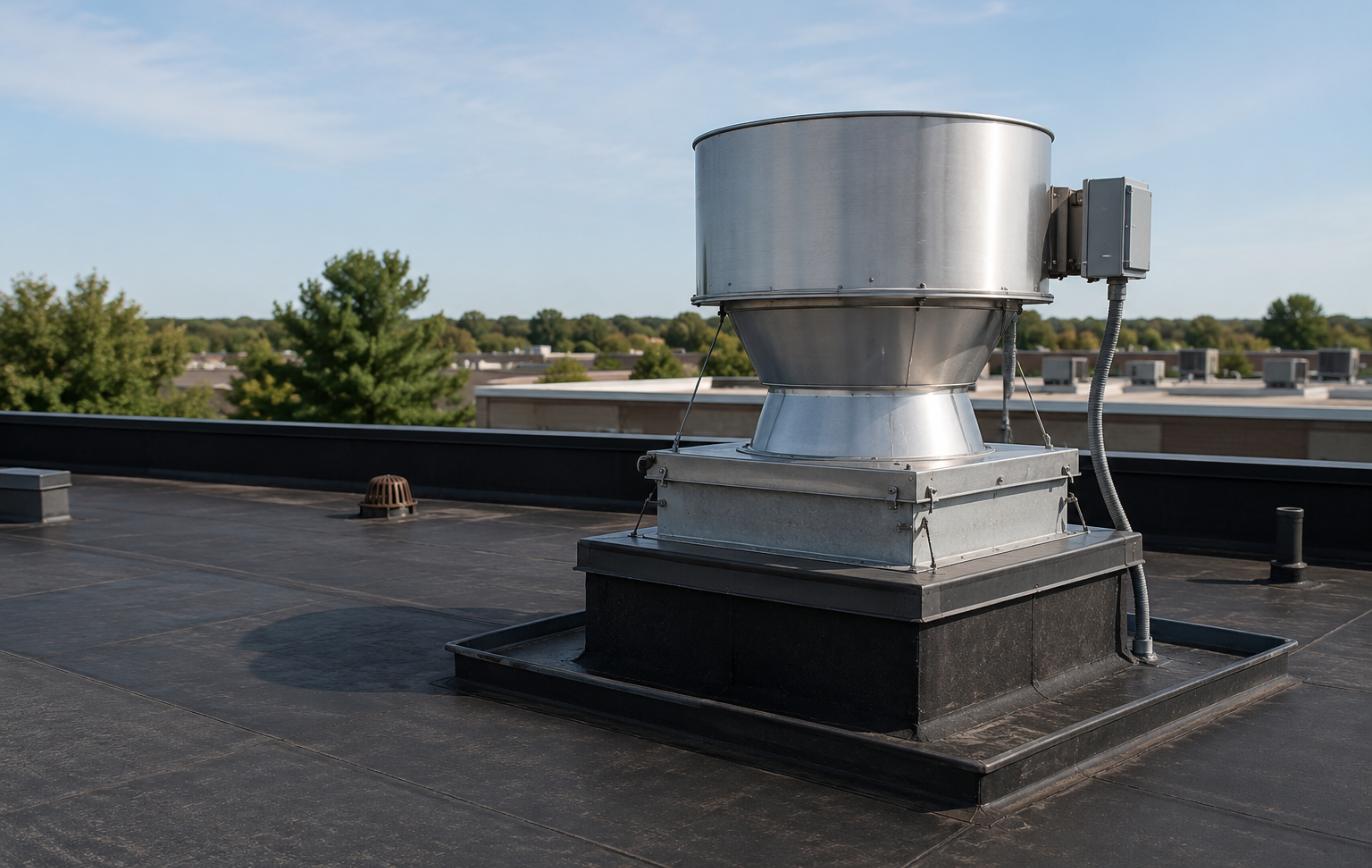
The exhaust fan and the roof around it collect grease that has traveled the full length of the system. Inspectors check whether the fan is clean and operating, whether grease containment is in place, and whether grease has been allowed to run onto the roof membrane. A neglected rooftop is both a fire concern and a source of expensive roof damage.
4. Your Service Documentation
An inspector will ask when the system was last cleaned and by whom. Without a record, the honest answer is a guess, and a guess does not satisfy an inspection. Documentation is not paperwork for its own sake. It is the proof that the physical work happened on schedule.
What a Full NFPA 96 Cleaning Covers
A compliant cleaning addresses the entire system, from the cooking surface to the point where the exhaust leaves the roof. A partial cleaning that stops at the visible hood leaves the most dangerous grease exactly where it does the most harm. Our full hood and exhaust cleaning service covers:
- The hood canopy and the capture area above the cooking line
- The grease filters, cleaned or exchanged as part of the visit
- The horizontal and vertical ductwork, cleaned to bare metal
- The exhaust fan, including the housing and blades
- The rooftop termination and grease containment
- Before and after photos and a written record of the work
The point of listing the full scope is that “hood cleaning” and “exhaust system cleaning” are not the same thing. NFPA 96 is concerned with the whole path the grease travels, and a Nashville kitchen that only ever cleans the visible canopy is carrying hidden risk in the ducts and on the roof.
The Paperwork That Proves Compliance
Every Kitchen Guard of Nashville service comes with a Post Service Report that records what was cleaned, the date, and the condition of the system, along with before and after photos available on request. That report is what you hand an inspector, an insurer, or a corporate compliance officer when they ask for proof.
Documentation matters for three reasons. It shows the fire marshal you are on a compliant schedule. It protects you with your insurer, because a fire claim is far easier to defend when you can show a consistent service history. And it gives multi-unit operators a single, consistent record across locations. The initial inspection we perform to scope a job is internal and informs your quote. The Post Service Report is the deliverable that follows every cleaning.
What Falling Behind on Hood Cleaning Costs
Deferring service rarely saves money. It moves the cost to a worse moment and usually makes it larger. The table below lays out where the exposure sits when a Nashville kitchen lets its exhaust cleaning slip.
| Area of risk | What happens when you fall behind | Consequence |
|---|---|---|
| Fire safety | Grease builds into a continuous fuel layer in the ducts | Higher chance of a duct fire that spreads to the structure |
| Inspection | Marshal finds heavy interior grease or missing panels | Violation, reinspection, possible operational hold |
| Insurance | No service records after an incident | Claim scrutiny or denial |
| Equipment | Grease loads the fan and stresses the motor | Premature fan failure and emergency repair |
| Reputation | Smoke, odor, or a visible incident | Lost covers and damaged standing with guests |
None of these are hypothetical for a busy kitchen. They are the predictable results of treating a scheduled safety service as optional.
Filters: The First Line of Defense
Grease filters are the first barrier between your cooking surface and the rest of the exhaust system. When filters are clogged or the wrong size, more grease passes into the ducts and airflow drops, which makes the whole system work harder. A structured hood filter exchange program keeps clean filters in place by swapping dirty ones for cleaned spares on a schedule, so your staff is not scrubbing filters at the end of a shift and your ducts stay cleaner between full services. Filters are the cheapest point in the system to stay ahead of, and the easiest to manage with a regular filter exchange.
When Repairs Become Part of Compliance
A cleaning visit often surfaces issues that affect compliance directly. Missing access panels, a failing fan belt, an upblast fan that no longer seats properly, or grease containment that has broken down all keep a system from being cleaned or operated safely. Because our technicians are already inside the system during a service, they can diagnose these problems and handle exhaust system repairs and fabrication, from access panels and belt replacement to fan work and rooftop grease containment. Addressing them promptly keeps a small finding from becoming a shutdown.
Keeping the Rest of the Kitchen Inspection-Ready
Fire code attention centers on the exhaust system, but health inspections and guest experience extend to the floors, drains, and back-of-house surfaces where grease and buildup collect.Grease migration is the reason this matters more than it first appears. The same vapor that coats your ductwork settles on nearby walls, ceiling tiles, and the floor around the cooking line, and over time that residue turns into a slip hazard and a magnet for pests. A health inspector who sees heavy buildup behind the line draws the same conclusion a fire marshal draws about a greasy duct: the cleaning program is not keeping up. A properly maintained kitchen exhaust system will keep more of those vapors going up the duct like they’re supposed to, instead of escaping into the kitchen and creating potential health and safety hazards.
Building a Cleaning Schedule That Matches Your Menu
The best schedule is one you do not have to think about. Rather than reacting when the hood looks bad or an inspection looms, a Nashville kitchen is better served by a recurring plan set to its cooking profile. We build multi-visit service plans with consistent pricing so the cleaning happens on cadence, the filters get exchanged, and the documentation accumulates without anyone chasing it. A predictable schedule also spreads the work across the year instead of forcing an expensive emergency cleaning the week an inspector is due.
Menus change, and the schedule should change with them. A kitchen that adds a fryer station, extends into late-night service, or shifts toward charbroiled and wok dishes is putting more grease through the same system, and a cadence that was right last year can quietly fall behind. The advantage of a managed plan is that the interval is reviewed against what the kitchen is actually cooking, not set once and forgotten. When your technician sees the system regularly, they can flag a rising grease load early and tighten the schedule before it becomes an inspection problem, which is far cheaper than discovering the gap during a failed inspection.
Older Nashville Kitchens and Long Duct Runs
Nashville has plenty of buildings that were not designed as restaurants and were later converted, and those kitchens often have long, twisting duct runs to reach a roofline that is far from the cooking line. Longer and more complex ductwork means more horizontal sections, more places for grease to settle, and more access panels needed to reach every interior surface. If your space is an older conversion, it is worth having the full duct path evaluated, because the standard site-unseen assumptions about a simple straight run may not hold, and the cleaning interval may need to be tighter than the cooking volume alone would suggest.
Older systems also tend to hide problems that only surface once a technician is inside them. Access panels may have been added over the years in the wrong places or not at all, seams may have separated, and previous providers may have left sections that were never reachable and therefore never cleaned. When we take on an older Nashville kitchen, part of the first service is mapping the real duct path and confirming that every run can actually be accessed and cleaned. That baseline matters, because a compliance record is only meaningful if it reflects the entire system rather than the portions that happened to be easy to reach.
How to Choose a Qualified Hood Cleaning Provider in Nashville
Not every provider works to the same standard, and the differences show up exactly where an inspector looks. When you evaluate who cleans your Nashville kitchen, weigh these three points.
1. Insist on Full-System Cleaning, Not Spot Cleaning
Ask directly whether the price covers the hood, the full duct run, the fan, and the rooftop, cleaned to bare metal. A quote that only addresses the visible hood is cheaper for a reason, and the savings sit in the ducts as unremoved grease.
2. Confirm They Document Every Visit
A qualified provider gives you a written Post Service Report with photos, not a verbal all-clear. If a company cannot show you the record you will hand an inspector, they are not solving your real problem.
3. Check That They Handle Repairs and Rooftop Work
Systems need access panels, fan service, and grease containment to stay cleanable. A provider who can handle repairs as they arise saves you from coordinating a second vendor and from leaving a compliance gap open while you do.
What to Expect When You Work With Kitchen Guard of Nashville
Our trained technicians clean the entire exhaust system to NFPA 96 standards, exchange filters, service the fan and rooftop, and complete a Post Service Report with before and after photos. We build recurring service plans around your cooking profile so nothing falls off the calendar, and we handle repairs when a cleaning surfaces them. You can review the full range of what we do on our Nashville services page, and every relationship starts with a complimentary inspection so we can scope your system accurately before you commit. No guesswork, no partial cleanings, and a record you can stand behind at inspection time.
Serving Nashville and the Surrounding Middle Tennessee Communities
Kitchen Guard of Nashville serves commercial kitchens across Middle Tennessee, including Nashville, Franklin, Brentwood, Murfreesboro, Hendersonville, Smyrna, and the surrounding communities. From a single restaurant to a multi-unit group, we keep exhaust systems clean, compliant, and documented so operators can focus on service instead of scrambling ahead of an inspection. Wherever your kitchen sits in the region, the standard is the same and so is the paperwork that proves it.
Frequently Asked Questions
How often does NFPA 96 require hood cleaning for a Nashville restaurant?
It depends on your cooking volume. High-volume and high-grease kitchens generally need monthly cleaning, moderate-volume sit-down restaurants quarterly, and low-volume operations semi-annually. The right interval keeps interior surfaces from building a grease layer between visits.
Does the fire marshal really check inside the ductwork?
Yes. A qualified inspection includes opening access panels to check horizontal duct runs, the fan, and the rooftop, not just the visible hood. Interior grease and missing access panels are common findings.
What documentation do I need to prove compliance?
A written service record showing what was cleaned and when, ideally with before and after photos. Kitchen Guard of Nashville provides a Post Service Report after every visit that you can hand to an inspector or insurer.
Is a partial hood cleaning good enough?
No. NFPA 96 is concerned with the entire exhaust path, including ducts, fan, and rooftop. A cleaning limited to the visible hood leaves the most dangerous grease in place.
What is included in a complimentary inspection?
We evaluate your full exhaust system, identify grease buildup and any access or repair issues, and use that to scope an accurate service plan. It informs your quote and comes at no cost.
Ready to Get Your Nashville Kitchen Inspection-Ready
If you are not certain when your exhaust system was last cleaned to bare metal, that uncertainty is the risk. Kitchen Guard of Nashville will inspect your system, build a schedule that matches your menu, and give you the documentation that keeps you ahead of the fire marshal. Call us at 615-546-0037 to schedule your complimentary inspection, or reach out through our Nashville contact page to get started.