Restaurant Kitchen Fire Prevention in CT and NY: The Role of Hood Cleaning
Efforts to prevent restaurant kitchen fires do not stop at the cooking line. Fryers, ranges, grills, woks, and charbroilers create heat and grease vapor every day. The hood system captures that vapor and carries it out of the building. If grease is left inside that system, it becomes fuel above the cookline.
This is where hood cleaning becomes part of fire prevention. It removes combustible grease from the exhaust path before a flare-up has a hidden place to travel. A clean exhaust system helps keep a cooking fire closer to the appliance area, where the fire suppression system has a better chance to control it. A dirty exhaust system gives flame a path through the hood, plenum, ductwork, and fan.
Why Hood Cleaning Belongs in Restaurant Kitchen Fire Prevention
Every commercial kitchen has ignition sources. Hot oil, open flame, charbroilers, overheated pans, and electrical equipment are part of the operating environment. A fire-prevention program cannot remove these risks from a working restaurant.
Grease fuel is different. It can be controlled. Hood cleaning reduces the amount of combustible grease inside the exhaust system, including the areas staff cannot reach during normal closing work.
The goal of hood cleaning is to keep the exhaust system from becoming a fuel path above the cooking line.
A restaurant can look orderly from the floor and still carry fire risk above the cookline. If the hood canopy is wiped down but the plenum, ducts, and fan are still greasy, the system has not been maintained as a fire-prevention asset.
How Grease Moves From the Cookline Into the Exhaust System
Cooking produces grease-laden vapor. The hood pulls that vapor upward with heat, smoke, and steam. Filters remove part of the grease load, but they do not stop everything. The remaining vapor cools as it moves through the exhaust path and leaves residue on metal surfaces.
That residue collects wherever air slows, turns, or meets a surface that catches grease. The risk grows in the parts of the system that restaurant staff do not see during service.
| Exhaust component | What grease does there | Fire-prevention concern |
|---|---|---|
| Hood canopy | Grease collects on visible interior surfaces above the cookline | Visible grease can ignite or feed flame at the hood entry |
| Filters and filter rails | Filters capture grease, but damaged or saturated filters let more pass through | Poor filter condition sends more grease into hidden areas |
| Plenum | Vapor cools and leaves residue behind the filters | Grease behind the filter line is easy to miss from the floor |
| Ductwork | Grease coats horizontal runs, vertical risers, elbows, and seams | Flame can travel through the same path that carries exhaust |
| Access panels | Panels allow inspection and cleaning inside the duct | Missing or sealed panels make hidden grease harder to verify |
| Rooftop fan | Grease builds on fan blades, housings, bowls, and discharge areas | A dirty fan can become a secondary fire point at the roof |
Grease follows the airflow. If the exhaust system is not opened and cleaned, the fire load moves farther away into the hood system.
Why a Clean-Looking Hood Is Not Enough
A clean-looking hood does not prove the exhaust system is clean. It proves only that the visible surfaces look acceptable from the kitchen floor.
That is where many restaurants get a false sense of protection. A vendor can wipe the canopy, clean the filters, place a sticker on the hood, and leave the most important fire risk untouched. The owner sees a service date. The ductwork and fan may still hold grease.
The simplest test is also the best one: ask for the report from the last cleaning. A serious report should show the hood, plenum, duct access points, fan, and any inaccessible areas. It should not rely on a sticker or invoice as the only proof.
What Full-System Hood Cleaning Should Remove
Full-system hood cleaning addresses the exhaust path from the hood to the termination point. It is not limited to the stainless steel surfaces above the cooking equipment.
At minimum, the scope should account for these areas:
| Area | What proper fire-prevention cleaning should address |
|---|---|
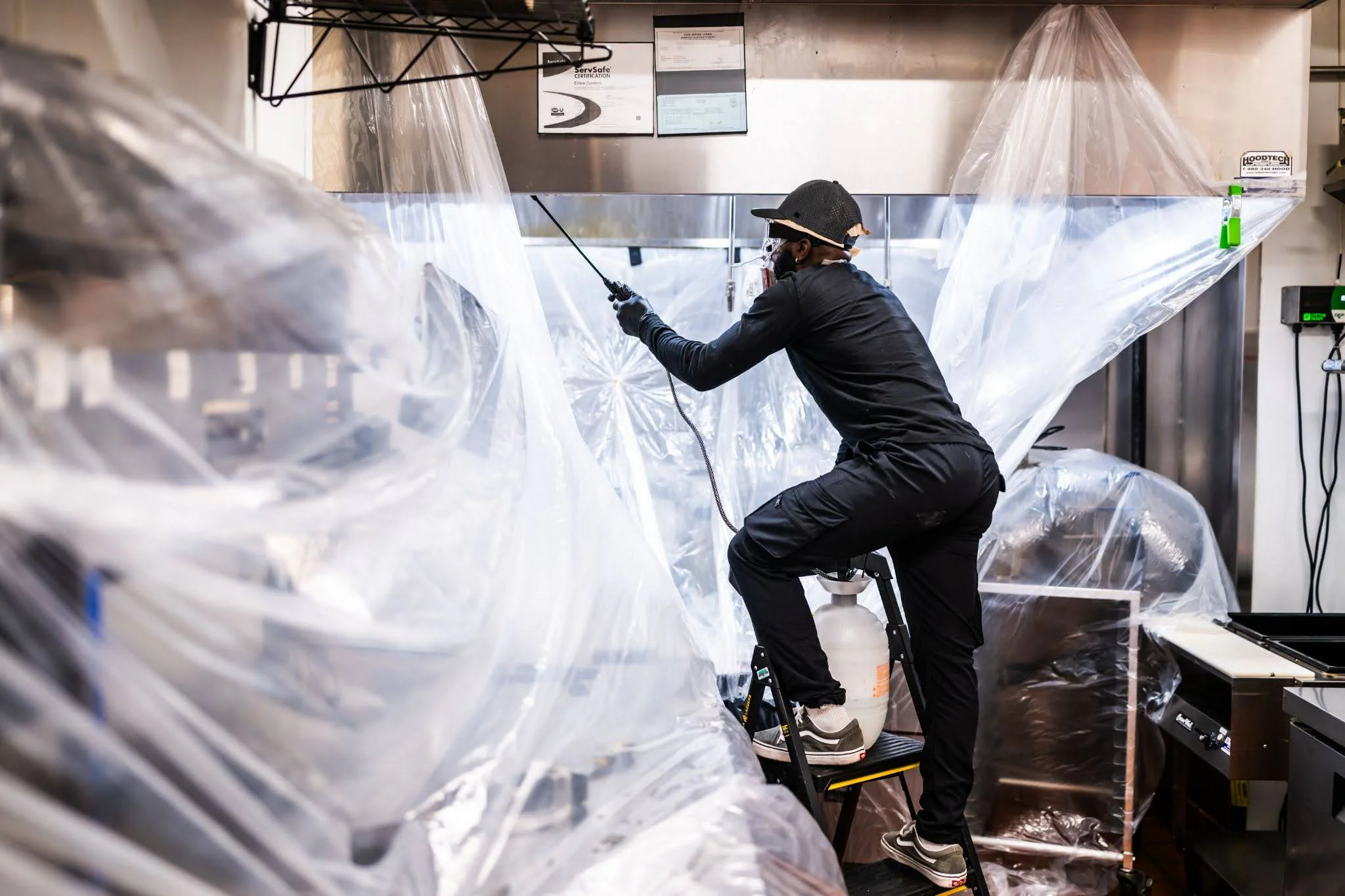
| Hood canopy interior | Grease film above the appliances and around the hood body |
| Grease filters and filter rails | Saturated filters, filter channels, grease cups, and drain points |
| Plenum | Grease behind the filters and inside the capture area |
| Duct runs | Accessible horizontal and vertical duct sections |
| Access panel interiors | Internal duct surfaces that can be reached through code-required access points |
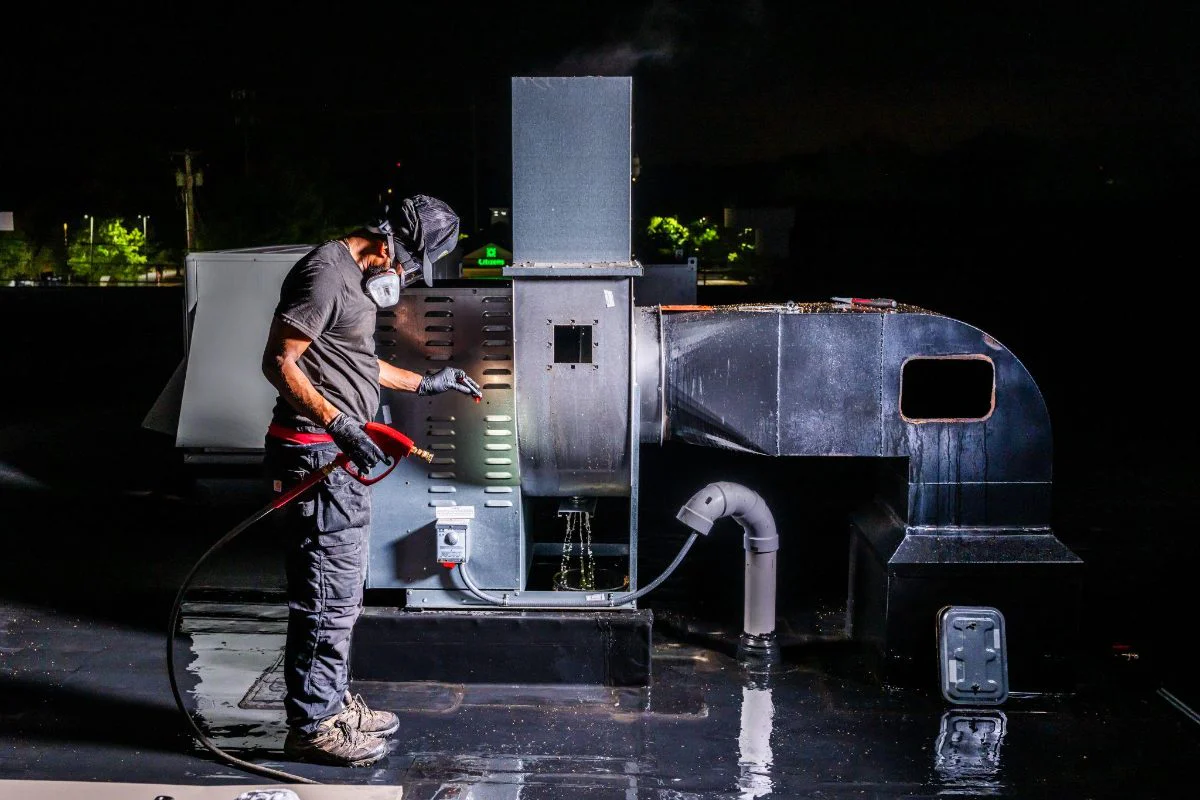
| Rooftop fan | Fan blades, fan bowl, housing, and surrounding discharge areas |
Access panels deserve special attention. If ductwork cannot be opened, the vendor cannot properly inspect or clean the internal surfaces. Painted-shut panels, missing panels, rusted hardware, and blocked access points are not small administrative issues. They prevent verification of the very area where hidden grease accumulates.
The written report should also identify any area the vendor could not reach, including missing or sealed access panels, damaged components, or structural limitations.
Fire Suppression Systems and Hood Cleaning Solve Different Problems
A fire suppression system is active protection. It responds after a fire starts. Hood cleaning is preventive work. It removes grease before that grease can support ignition or flame spread.
Both matter. They do not replace each other.
| Fire protection element | What it does | What it does not do |
|---|---|---|
| Fire suppression system | Suppresses an active cookline or hood-area fire | Does not remove grease from ducts, access panels, or rooftop fans |
| Hood cleaning | Removes combustible grease from the exhaust path | Does not replace suppression inspection or service |
| Staff cleaning | Controls visible grease and filter condition between professional services | Does not replace full exhaust-system cleaning |
The suppression system protects the appliance and immediate hood area. It does not clean ductwork. It does not remove grease inside a rooftop fan. If flame enters a grease-loaded duct, the suppression system is no longer dealing with a simple appliance fire.
Restaurant owners should maintain both systems. Suppression controls flame. Hood cleaning reduces the fuel that lets flame spread beyond the cookline.
Hood Cleaning Frequency for CT and NY Restaurants
Hood cleaning frequency depends on grease production. A low-volume seasonal kitchen does not create the same exhaust load as a charbroiler-heavy restaurant or a kitchen running long hours every day.
NFPA 96-based guidance is commonly organized around these baseline categories:
| Kitchen type | Common baseline interval |
|---|---|
| Solid fuel cooking, including wood or charcoal | Monthly |
| High-volume cooking, charbroiling, wok cooking, or long operating hours | Quarterly |
| Moderate-volume restaurants | Semi-annually |
| Low-volume, seasonal, or limited-use kitchens | Annually |
These intervals are not a universal guarantee. The local Authority Having Jurisdiction (AHJ), often the fire marshal or other code enforcement official, can require a shorter interval if grease accumulation is excessive. A menu change, longer operating hours, new fryers, or heavier charbroiling can also make an old schedule inadequate.
For a more detailed schedule by restaurant type, see Kitchen Guard’s NFPA 96 hood cleaning schedule for Connecticut and New York restaurants.
What CT and NY Operators Should Keep Inspection-Ready
Connecticut and New York State both rely on NFPA 96-based fire-prevention principles through their code frameworks and local enforcement. In practice, the AHJ is the person whose interpretation matters during inspection. That is often the local fire marshal or code official.
Restaurant operators should be ready to show that the exhaust system was cleaned, not merely that a vendor visited. Keep the file simple and complete:
- Current service tag or certificate
- Written cleaning report
- Before-and-after photos
- Notes on inaccessible areas
- Deficiency notes and repair recommendations
- Records for fire suppression inspection and maintenance
For Connecticut operators, the safest working standard is to maintain records and follow the local AHJ’s instructions on what must be submitted or kept on-site. Do not assume that every municipality handles reports the same way.
For New York State operators outside New York City, inspectors will look for records, tags, grease levels, filter condition, access, and evidence that cleaning followed a professional standard recognized by the AHJ. For a broader compliance overview, Kitchen Guard has a separate Connecticut and New York NFPA 96 Compliance Guide.
Operators with New York City locations should verify FDNY requirements separately. NYC has its own framework and should not be treated as interchangeable with the rest of New York State.
What to Ask Your Hood Cleaning Vendor Before Fire Risk Becomes a Problem
The best time to question a hood cleaning scope is before the next service, not after an inspection problem or fire event. A restaurant owner does not need to become a code expert. The owner needs to ask questions that reveal whether the vendor cleans the full system.
Before scheduling service, confirm that the vendor will address each of the following:
- Full cleaning of the hood, plenum, ducts, access panels, fan, and rooftop discharge area
- Opening of all code-required access panels
- Before-and-after photographs of the ductwork and fan
- Documentation of any inaccessible areas
- Written identification of damaged filters, missing access panels, fan problems, or other deficiencies
- Technicians trained through an industry-recognized certification program
- Self-performed work, not subcontracted
The answers should be specific. “We clean the hood” is not enough. A serious vendor can explain the exhaust path, identify the access points, describe the fan work, and show proof after the job.
Kitchen Guard has also published a practical guide of questions to ask before hiring a restaurant hood cleaning vendor in CT and NY.
Practical Fire-Prevention Checklist for Restaurant Hood Systems
Restaurant staff can help control visible conditions between professional cleanings. They cannot replace professional exhaust-system cleaning. The checklist below separates daily operating awareness from the full-system work that requires trained technicians.
| Timing | What to check | Why it matters |
|---|---|---|
| Daily or weekly | Grease dripping from hood seams, filter edges, or nearby surfaces | Active grease movement means the system is not containing deposits properly |
| Daily or weekly | Smoke, heat, or odors that do not clear with the fan running | Weak capture can point to filter, fan, or buildup problems |
| Daily or weekly | Filter condition and fit | Warped, saturated, or poorly seated filters let more grease pass into the exhaust path |
| After professional service | Photos of plenum, duct access points, and fan | These prove the hidden areas were opened and cleaned |
| After professional service | Notes on inaccessible areas or deficiencies | Unreachable duct sections and damaged components remain fire-prevention concerns |
| Ongoing | Service reports, tags, photos, and suppression records | Managers need records ready for inspectors, insurers, landlords, and ownership |
Warning signs should not be ignored just because the calendar says the next cleaning is months away. Dripping grease, smoke that will not clear, fan vibration, heavy filter buildup, and rooftop grease staining all deserve attention. Kitchen Guard’s guide to restaurant hood warning signs that need immediate cleaning covers those conditions in more detail.
The Fire-Prevention Role Every Hood Cleaning Should Serve
For restaurant operators in Connecticut and New York, the difference between a surface-level hood wipe and a complete exhaust-system cleaning often determines whether a flare-up stays contained or travels through hidden grease in the plenum, ducts, and fan. When the full path is properly cleaned and documented, you strengthen your position with fire marshals, insurers, and landlords while reducing the fuel load that lets fire spread beyond the reach of your suppression system.
Kitchen Guard provides thorough, code-aligned hood and exhaust cleaning throughout Fairfield County and Westchester County. If you’d like to schedule service or review your current system’s condition, visit our commercial kitchen exhaust cleaning page.
FAQ: Restaurant Kitchen Fire Prevention and Hood Cleaning
How does hood cleaning prevent restaurant kitchen fires?
Hood cleaning removes grease fuel from the exhaust system. A flare-up on the cookline becomes more dangerous when it reaches grease inside the hood, plenum, ductwork, or rooftop fan. Cleaning reduces that fuel load and minimizes the risk.
Can grease inside restaurant ductwork catch fire?
Yes. Grease inside ductwork can ignite if flame, sparks, or high heat reach it. Once fire enters a grease-coated duct, airflow and grease deposits can allow fire to spread beyond the cooking line.
Does a fire suppression system replace hood cleaning?
No. A fire suppression system responds to active fire at the appliance and hood area. It does not remove grease from ductwork, access panels, or rooftop fan components. Restaurants need both suppression maintenance and exhaust-system cleaning.
How often should CT and NY restaurants clean their hoods to prevent fires?
The baseline interval depends on cooking type and grease production. Under NFPA 96, the guideline is monthly for solid fuel, quarterly for high-volume, semi-annually for moderate-volume, and annually for low-volume kitchens. The AHJ can require more frequent cleaning based on actual grease conditions. NFPA 96 states that cleaning should be done before heavy buildup occurs, with the definition of heavy buildup being anything more than 1/8 inch of grease accumulation in the system or on the filters.
What parts of a restaurant hood system need to be cleaned?
The hood canopy, filters, plenum, accessible ductwork, access panel interiors, rooftop fan, fan housing, and discharge area all matter. Cleaning only the visible hood leaves the hidden exhaust path unverified.
What are signs that a restaurant hood is becoming a fire hazard?
Warning signs include grease dripping from hood seams or filter edges, smoke that does not clear with the fan running, heavy filter buildup, fan noise or vibration, and grease staining near the rooftop fan. These signs mean the system should be inspected before the next routine cleaning date.
Can restaurant staff clean the hood system themselves?
Staff can wipe visible surfaces and maintain filters according to the restaurant’s procedures. Staff cleaning does not replace professional exhaust-system cleaning because ductwork, fan interiors, access panels, and rooftop components require proper access, equipment, and documentation.
What does a fire marshal look for in a restaurant hood system?
A fire marshal looks for grease accumulation, filter condition, accessible ductwork, current service tags, cleaning reports, suppression-system records, and signs that the full exhaust system was maintained. Missing documentation makes it harder to prove what was cleaned.