Restaurant Hood Cleaning Certification: What CT & NY Restaurant Owners Need to Know

The fire marshal arrives for a routine inspection at your Hartford restaurant. Your kitchen was cleaned three months ago. You paid for it, you have the invoice. But when the marshal pulls the access panel on the duct, the grease is thick. The service tag on the hood lists a vendor with no verifiable credentials. There is no service report on file, no evidence the duct runs or rooftop fan were included in the service. The marshal rejects the cleaning as non-compliant. You have thirty days to schedule a qualified service and pass reinspection.
Most restaurant owners who end up in that situation did not ignore their maintenance. They hired someone who showed up, cleaned the visible hood, left a sticker, and moved on. What they missed was the ductwork, the vertical riser, the fan housing on the roof, and any actual qualification to do the job under the Connecticut fire code.
Hood cleaning certification is what separates that scenario from a pass. Across Connecticut and New York State, the baseline is NFPA 96, the national fire prevention standard governing commercial kitchen exhaust systems, which requires that cleaning be performed by qualified, trained professionals. Neither state issues a statewide license for hood cleaning, but local fire marshals and inspectors are the ones who decide whether that standard was met. In New York City, the requirements go a step further: technicians must hold an FDNY Certificate of Fitness (a W-64,F-64, or P-64) and the company itself must carry separate FDNY approval.
Here is what catches most owners off guard: verifying the qualification of the vendor you hire is your responsibility, not theirs. If a fire starts in an exhaust duct that was cleaned by an uncertified contractor, you rinsurance carrier may have grounds to deny the claim entirely. The cleaning invoice is not enough. The sticker on the hood is not enough. The right documentation, from the right vendor, is what holds up when it matters.
What follows covers what hood cleaning certification actually means, how Connecticut, New York State, and New York City each handle it, and exactly what to verify before you sign a contract.
2. The Standard Behind It All: NFPA 96
NFPA 96, published by the National Fire Protection Association, is the national fire safety standard for commercial kitchen exhaust systems. Connecticut, New York State, and New York City all build their local fire code requirements on it, which is why you will see it referenced in inspection reports, insurance policies, and vendor contracts.
| What NFPA 96 Covers | Why It Matters to You |
| Inspection and cleaning requirements for the full exhaust system | Sets the baseline your vendor must meet |
| Cleaning frequency based on cooking volume and fuel type | Determines how often your system must be serviced |
| Requirement that work be performed by qualified personnel | Gives fire marshals grounds to reject substandard cleanings |
| Full system scope: hood, ducts, and rooftop fan | Defines what a legitimate service actually includes |
One point worth knowing: NFPA 96 sets the standard, but it does not certify technicians or approve companies. That is handled by local authorities and industry certification bodies. Certification is how a technician proves they are trained to work to that standard.
3. What “Hood Cleaning Certification” Actually Means
The term kitchen exhaust hood cleaning certification gets used loosely in the industry. Some vendors use it to mean their technicians completed one of the available training programs. Others mean they hold a government-issued credential. Knowing the difference is how you avoid hiring the wrong vendor.
At the industry level, certification covers three things:
- Technical training – hands-on training on commercial exhaust system components: hoods, ducts, access panels, and rooftop fans
- Code knowledge, covering NFPA 96 requirements for cleaning scope, inspection, and documentation
- Testing or verification through written exams or supervised field experience
Industry-recognized certification programs are the standard evidence of qualification in this field. They require technicians to demonstrate knowledge of NFPA 96, exhaust system components, and proper cleaning procedures through written exams or documented field experience. These are industry credentials, not government licenses. They confirm the technician has been trained to clean the full system, not just the visible hood.
In Connecticut and New York State, there is no statewide license for hood cleaning, but fire marshals still expect technicians to be qualified, and credentials from an industry-recognized certification program are the standard evidence of that. In New York City, the requirements go further: FDNY Certificates of Fitness and approved company status, both covered in detail in the NYC section below.
When a company tells you they are certified,ask certified by whom. A vendor that cannot answer that question specifically is one running pressure washers over the hood canopy and calling the job done.
4. How Often Does Your Kitchen Need a Hood Cleaning?
Cleaning frequency is not arbitrary. NFPA 96 ties inspection and cleaning intervals to how much grease a kitchen is likely to produce, based on cooking method and fuel type.
| Kitchen Type | Typical Cleaning Frequency |
| Solid fuel cooking (wood, charcoal) | Monthly |
| High-volume cooking (charbroiling, 24-hour operations) | Quarterly |
| Moderate-volume restaurants | Semi-annually |
| Low-volume kitchens (churches, seasonal facilities) | Annually |
These are baseline intervals. Fire inspectors can require more frequent cleaning if grease accumulation is excessive.
One important exception is New York City. The FDNY requires commercial kitchen exhaust systems to be inspected and cleaned at least every three months, regardless of cooking volume.
For a more detailed breakdown by restaurant type, see the kitchen exhaust cleaning frequency chart.
Keeping to the right schedule is the starting point, not the finish line. Some owners discover they have been under-cleaning only when a fire marshal flags excessive grease accumulation and shortens their interval on the spot. Grease that has migrated into the duct runs is also beyond the reach of the hood’s fire suppression system, which is designed to protect the cooking surface, not the full exhaust path. But even owners who are cleaning on schedule can fail an inspection if the vendor they hired was not actually qualified to perform the work. Frequency and certification are two separate requirements, and both have to be right.
5. Connecticut: What the Fire Marshal Expects
In Connecticut, commercial kitchen exhaust cleaning falls under theConnecticut State Fire Safety Code, which incorporates NFPA 96 as the industry standard. Enforcement is handled locally. The Authority Having Jurisdiction (AHJ) is typically the town or city fire marshal or fire department, and that office decides whether a restaurant’s exhaust system maintenance meets code.
Connecticut does not issue a statewide license specific to hood cleaning technicians or companies. The code requires that systems be cleaned by qualified personnel, but “qualified” is not defined by a state-issued credential. In practice, fire marshals treat certifications from industry-recognized programs as the accepted evidence that a technician understands NFPA 96 and can perform the full-system cleaning it requires.
Compliance rests with the restaurant operator, not the vendor. During a routine fire inspection, a Connecticut fire marshal will look for documentation showing the system has been properly maintained:
| What the Fire Marshal Looks For | What It Indicates |
| Service sticker or tag on the hood or access panel | Identifies the vendor and date of service |
| Cleaning records or invoices | Confirms the service interval meets NFPA 96 requirements |
| Evidence of full-system cleaning | Shows that ducts and the exhaust fan were addressed, not just the hood canopy |
| Vendor credentials when requested | Confirms that technicians performing the work are qualified |
Connecticut has no centralized database of approved hood cleaning companies. Any vendor can legally offer exhaust cleaning services in the state. That puts the verification step entirely on the restaurant owner. If a technician cannot produce credentials from an industry-recognized certification program on request, a fire marshal has no obligation to accept the cleaning process as code-compliant.
6. New York State: Section 607 and Statewide Requirements
In New York State, commercial kitchen exhaust systems are regulated under the New York State Fire Code, specifically Section 607, which covers the operation and maintenance of commercial cooking ventilation systems. The state adopts NFPA 96 as the underlying technical standard, and the core dynamic is similar to Connecticut: no statewide license for hood cleaning technicians, but a clear requirement that the work be performed by qualified personnel.
Where New York State stands apart is in how explicitly Section 607 spells out the documentation requirements. Cleaning records must be kept on-site and available for immediate review by code officials. Service tags must include the company name, address, phone number, and the date of service, not just a logo sticker. Inspectors have specific items to check, and the records are expected to be in order when they ask.
| What Inspectors Look For | What It Confirms |
| Cleaning records kept on-site | The system is being serviced at the required interval |
| Service tag with vendor name, address, phone, and date | Identifies who performed the work and when, in verifiable detail |
| Evidence of full-system cleaning | Confirms ducts and rooftop fans were addressed, not just the hood canopy |
| UL 1046-rated grease filters in place during commercial cooking operations | Confirms basic fire safety hardware is functional and compliant |
Enforcement is handled by local fire officials, and inspection practices vary by municipality. Some jurisdictions conduct annual inspections as a matter of routine. Others act primarily on complaints or in connection with permit reviews. That variability matters: an operator who passes one year with minimal scrutiny may face a more rigorous inspection the next, particularly if there has been a complaint or a change in cooking volume or equipment.
As with Connecticut, any vendor can legally offer hood cleaning services in New York State. There is no approved company list to check against. The technician who shows up needs to be qualified, the records need to be complete, and both need to be ready if an inspector asks.
7. New York City: The FDNY Hood Cleaning Certification System
New York City is the one jurisdiction where hood cleaning certification has a formal legal definition. The city’s fire code requires that exhaust systems be inspected and cleaned by technicians who hold specific FDNY-issued credentials, and that those technicians work for companies separately approved by the FDNY. Operating outside that framework is a violation.
The cleaning schedule is also fixed differently from every other jurisdiction covered here. The FDNY requires that commercial cooking exhaust systems be inspected and cleaned at least once every three months, regardless of cooking volume or fuel type. The frequency categories from NFPA 96 that apply in Connecticut and New York State do not override this. For most restaurants in the five boroughs, quarterly cleaning is the floor, not a variable.
On top of the schedule, NYC regulates who can perform the work. Technicians must hold one of three FDNY Certificates of Fitness:
| FDNY Certificate | What It Allows |
| W-64 | Citywide exhaust cleaning technician, authorized to work for any FDNY-approved company |
| F-64 | Premises-specific technician, authorized to clean systems at a single location |
| P-64 | Technician certified to service pollution control units and electrostatic precipitators |
Each certificate is obtained by passing an FDNY examination in person, covering the NYC Fire Code, NFPA 96, and proper cleaning procedures. The W-64 and P-64 require a renewal application every three years.
Certification does not stop at the individual level. The company itself must hold separate FDNY approval as a Commercial Cooking Exhaust System Servicing Company. After each compliant cleaning, the FDNY requires a service decal on the hood identifying the company and the technicians who performed the work. If it is missing, outdated, or lists a company not on the FDNY-approved roster, the inspection fails regardless of how recently the cleaning took place.
That is the key distinction between New York City, Connecticut, and New York State. In Connecticut and New York State, an owner can unknowingly hire an unqualified vendor and find out only when an inspector flags the documentation. In New York City, hiring a non-FDNY-approved company means the cleaning never counted as compliant to begin with.
8. What Happens During an Inspection: What Officials Look For
Inspectors are not checking whether the hood looks clean. They are verifying code compliance: the right vendor, the right interval, and documentation on hand to confirm both. That assessment usually takes only a few minutes when everything is in order.
| What Inspectors Check | What They Are Looking For |
| Service sticker or FDNY decal | Vendor identity, cleaning date, and in NYC, technician Certificate of Fitness numbers |
| Cleaning records kept on-site | Confirmation the system has been serviced on schedule |
| Technician credentials when requested | Evidence the work was performed by a qualified professional |
| Access panels and duct interiors | Grease removal beyond the hood canopy: ducts, risers, and the rooftop fan |
| Grease filter condition | UL 1046-rated filters in place and operational during cooking |
When these items are present and consistent, inspections move quickly. When they are not, the outcome depends on what is missing.Hi.
Owners who have recently had a cleaning that did not produce complete documentation are better served by scheduling a corrective service before the next inspection rather than after. A service contract with a certified vendor also makes interval compliance easier to demonstrate: records are consistent, documentation is standardized, and the vendor’s credentials are already on file.
9. How to Verify Your Hood Cleaning Vendor Is Actually Certified
Most restaurant owners only discover certification problems after an inspection fails. The verification step takes less than five minutes before you agree to service, and it is the one step that prevents most of the scenarios described in this article.
Use the following checklist before agreeing to service.
| Verification Step | What to Ask or Check | Why It Matters |
| Technician certification | Ask which industry-recognized certification the technician holds | Confirms the person performing the work is trained in NFPA 96 cleaning procedures |
| Certificate of Insurance | Request a current COI showing liability coverage and confirm the business name matches the vendor performing the work | Protects the restaurant if damage occurs during service |
| Cleaning documentation sample | Ask to see a sample service report with before-and-after photos and a full-system checklist | Confirms the vendor documents work in a format inspectors recognize |
| Service sticker format | Confirm the vendor leaves a dated tag or decal with company contact information | Inspectors check the hood sticker first |
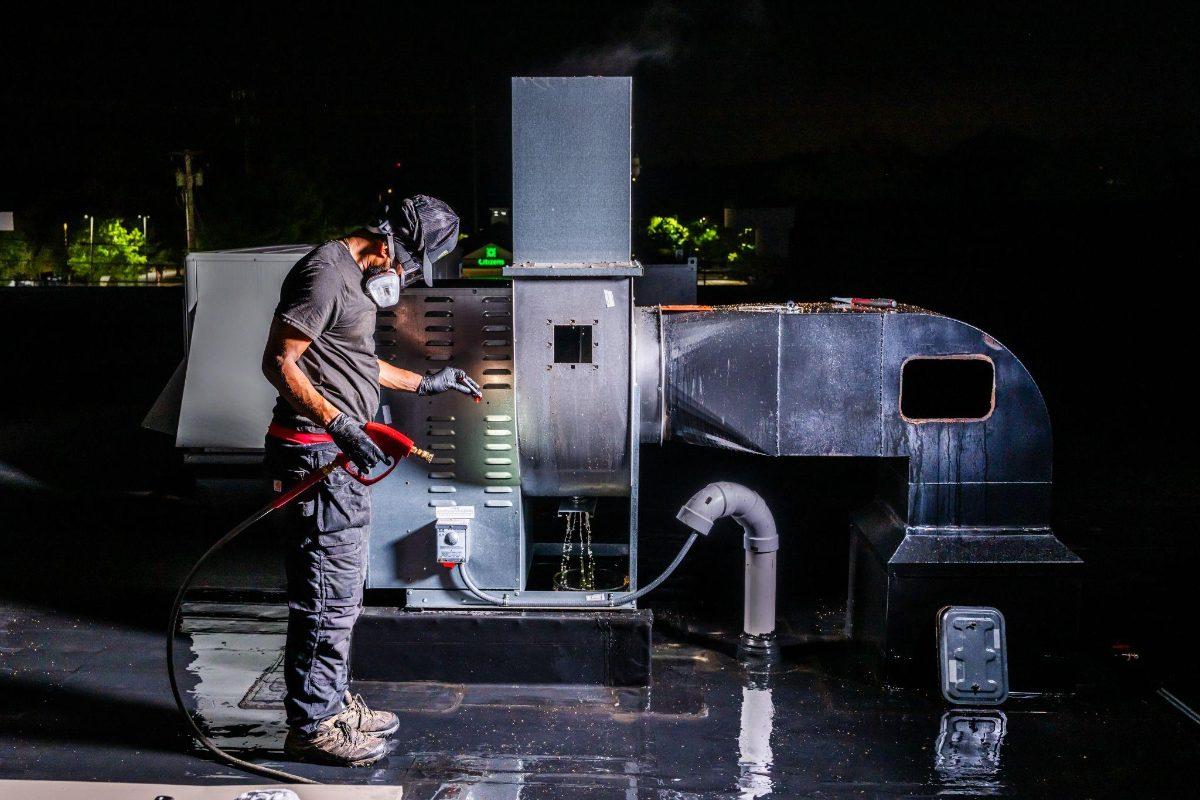
| Scope of cleaning | Ask whether the service includes ducts, access panels, and the rooftop fan | Confirms the cleaning covers the full exhaust path required by NFPA 96 |
Any certified vendor will answer these questions directly and produce documentation without being asked twice. Vague answers or missing credentials are not a yellow flag. They are a no.
10. Red Flags: Signs Your Hood CleanerMay Not Be Qualified
Most hood cleaning vendors present themselves as compliant. The warning signs show up in the proposal language, the scope of work, and what documentation they leave behind. These are the ones worth acting on before you sign a contract.
- The proposal only mentions cleaning the hood: NFPA 96 requires cleaning of the full exhaust path, including ducts and the rooftop fan. A hood-only cleaning is not compliant.
- The price is dramatically lower than other bids: Extremely low quotes often mean major parts of the system are skipped, particularly duct runs or the roof fan.
- No technician certification can be provided: A legitimate vendor should be able to name the certification body and produce technician credentials on request.
- No documentation beyond a basic invoice: A legitimate vendor provides service reports, typically including before-and-after photos and a record of the areas serviced.
- No service tag or inspection sticker left on the hood: Inspectors rely on the service tag to identify the vendor and confirm the cleaning date.
Any one of these is reason to keep looking. More than one means finding a different vendor.
Conclusion
A cleaning that cannot be documented by a qualified vendor is not a cleaning that will hold up under inspection or an insurance investigation. NFPA 96 requires the full exhaust path: hood, ducts, and rooftop fan. A cleaning that only touches the visible hood does not meet code, regardless of what the invoice says. In Connecticut and New York State, there is no approved list to check against, but fire marshals still expect credentials when they ask for them. In New York City, those requirements go further still. That verification step falls to the restaurant operator.
The invoice is not enough. The sticker on the hood is not enough. Certification and documentation are what inspectors actually check, and what insurance carriers look at when a claim follows a fire.
Verifying a vendor before signing takes five minutes. A failed inspection does not.
Frequently Asked Questions (FAQs): Hood Cleaning Certification
1. Do hood cleaning technicians need to be certified in Connecticut?
Connecticut does not issue a statewide license for hood cleaning technicians. The state fire code adopts NFPA 96, which requires that exhaust systems be cleaned by qualified personnel. In practice, fire marshals expect technicians to hold credentials from an industry-recognized certification program when asked.
2. Do hood cleaning businesses need certification in New York State?
New York State does not issue a dedicated license for hood cleaning businesses. Section 607 of the New York State Fire Code requires that commercial cooking ventilation systems be maintained by qualified personnel, and inspectors expect vendors to demonstrate those credentials on request. Restaurants operating in New York City are subject to additional requirements, including FDNY-issued credentials for technicians and separate company-level approval.
3. What is the difference between hood cleaning and exhaust system cleaning?
Hood cleaning typically refers to cleaning the visible hood canopy above the cooking equipment. Exhaust system cleaning, as defined by NFPA 96, covers the entire exhaust path: the hood, duct runs, access panels, vertical risers, and the rooftop fan. A cleaning that only addresses the hood canopy does not meet code.
4. Can restaurant staff clean the kitchen hood themselves?
Kitchen staff can handle routine surface cleaning of the hood exterior and grease filters. Exhaust system cleaning under NFPA 96 covers the entire exhaust path, including ducts and rooftop fans, and must be performed by qualified technicians.
5. What documentation should I receive after a hood cleaning?
A legitimate vendor leaves a dated service sticker, along with a service report or cleaning record. These identify the vendor, confirm the cleaning date, and confirm the work was performed by a qualified technician.