NFPA 96 Changes in 2024-2025: What Restaurant Owners Must Know

The 2024 edition of NFPA 96 tightened the focus on responsibility, inspection records, inaccessible areas, and full-system maintenance. In 2025, New York State’s updated Fire Code gave restaurants outside NYC a new enforceable state-code layer for commercial cooking systems, while still tying those systems to the broader NFPA 96 fire-protection framework. Connecticut operators still need to follow the NFPA 96 requirements adopted through their state code and enforced by the local fire marshal.
Given these updates, Connecticut and New York restaurant owners should check three things: which code edition the local fire official is applying, whether the cleaning schedule still matches the kitchen’s actual grease load, and whether the service report documents the hood, ducts, access panels, and rooftop fan. New York City operators also need to account for FDNY approval and local decal requirements.
This article breaks down what changed, what did not change, and what owners should verify before the next inspection, insurance review, or vendor visit.
What NFPA 96 Covers
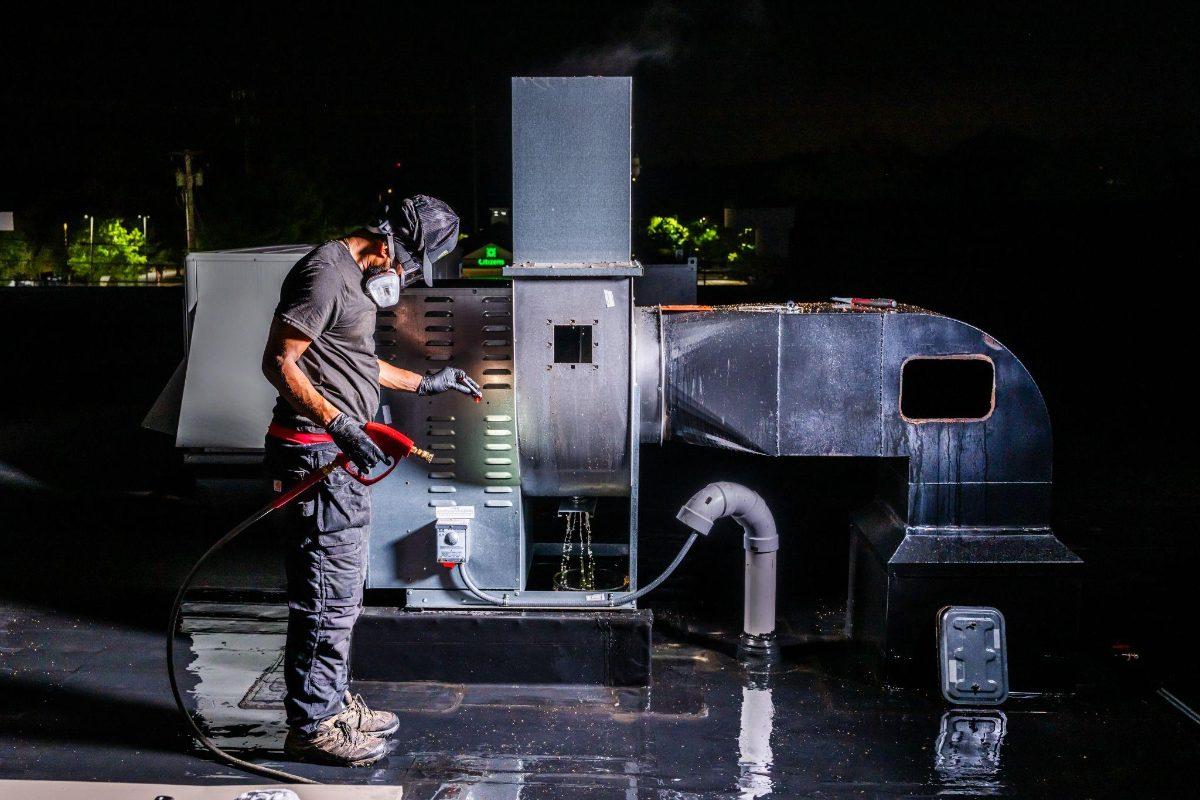
Most owners think first about the metal canopy above the cooking line. NFPA 96 covers the entire exhaust path, including the parts hidden above the ceiling and on the roof.
| System Component | Why It Matters |
| Hood canopy | Captures smoke, heat, and grease vapor above cooking equipment |
| Grease filters | Reduce grease entering the duct system |
| Plenum | Collects grease vapor behind the visible hood area |
| Ductwork | Carries grease-laden air through the building |
| Access panels | Allow inspection and cleaning inside duct runs |
| Rooftop exhaust fan | Pulls air through the system and collects grease at the fan housing |
| Rooftop grease containment | Keeps grease from collecting on the roof surface |
| Fire suppression system | Protects cooking appliances and ties into fuel shutoffs |
This is why visible hood cleaning is not enough. A hood canopy can look clean while the duct run or rooftop fan still contains grease. If you need a broader refresher on the local code framework, read our CT and NY restaurant fire code guide that explains how NFPA 96 fits into local enforcement.
NFPA does not inspect restaurants. The standard becomes enforceable through state codes, local fire officials, insurance requirements, and lease terms.
What The 2024 NFPA 96 Edition Clarified
NFPA’s public revision records show targeted clarifications, not a complete rewrite of restaurant hood-cleaning rules. These are the items in the public record that matter most to a restaurant owner.
| 2024 Clarification Or Update | Practical Meaning For Owners |
| Owner responsibility | The revised language clarifies that the equipment owner is responsible for inspection, testing, maintenance, and cleanliness unless that duty is transferred in writing. It also clarifies that a periodic service contractor does not assume that responsibility. |
| Written reports after inspection or cleaning | Reports must specify areas that were inaccessible, not inspected, not cleaned, or in need of cleaning. The revision record also includes a two-week window for providing written reports to the owner or owner’s agent. |
| Labels after inspection or cleaning | The revision record calls for an adhesive label on the hood after an exhaust system is inspected or cleaned, tied to the service provider and person performing the work. |
| Mobile and temporary cooking | The revision record adds more direct attention to food trucks, pop-ups, and temporary cooking setups. Fixed restaurant operators are not the primary audience for this change. |
The common thread is traceability. The 2024 updates put more weight on whether an owner can show who inspected the system, what they found, what they could not access, and what record was left behind.
A useful report does not stop at “cleaned.” It says what the technician opened, what was cleaned, what could not be reached, and what follow-up work is needed. That is the difference between a receipt and a defensible maintenance record.
What Did Not Change
Some summaries of the 2024-2025 NFPA 96 changes make the updates sound broader than they are.
For example, there is no verified new national 2025 rule requiring every restaurant to clean monthly. Cleaning frequency still depends on cooking volume, fuel type, grease load, and the local Authority Having Jurisdiction (AHJ). A high-volume charbroil kitchen and a low-volume church kitchen do not belong on the same schedule. More about the cleaning schedule is covered in Kitchen Guard’s NFPA 96 hood cleaning schedule.
Another example is digital reporting. There is no verified universal NFPA mandate for a specific reporting platform. Digital reports and before-and-after photos are strong proof, especially for insurance and landlord questions, but the useful question is simpler: can the restaurant produce a complete record when the fire marshal asks?
Paper records are not automatically invalid. A paper record that identifies the date, vendor, areas cleaned, inaccessible areas, and deficiencies is stronger than a vague digital invoice that says only “hood cleaning.”
Claims about UL 300 also need careful handling. UL 300 relates to fire testing for commercial cooking fire suppression systems, but owners should not treat “new 2025 UL 300 rule” claims as fact without local confirmation. Ask your fire suppression contractor when the system was last evaluated and whether it is currently accepted by the AHJ and insurer.
What CT And NY Owners Should Check
Start with this short audit before the next inspection, insurance review, or vendor visit.
| Check | Question To Ask |
| Code edition | Which NFPA 96 edition or local fire code is the AHJ applying? |
| Cleaning frequency | Does the schedule match current cooking volume, menu, equipment, and grease load? |
| Menu changes | Has the restaurant added charbroiling, wok cooking, breakfast service, longer hours, or solid fuel? |
| Responsibility | If the space is leased, who holds maintenance responsibility in writing? |
| Access | Can the vendor reach the ductwork, access panels, and rooftop fan? |
| Documentation | Does the report show what was cleaned and what was inaccessible? |
| Tags | Are old tags removed or covered so the current service date is clear? |
| Suppression records | Are suppression service records separate from exhaust cleaning records? |
Doing nothing can be the right answer if the system is already clean, accessible, and documented. The risk is assuming that a sticker proves the full system was cleaned.
Owners often worry that a full-system inspection will uncover repairs or added cleaning costs. The better move is to find those issues early, before an inspection deadline turns routine maintenance into an urgent correction.
Questions To Ask Your Hood Cleaning Vendor
Use these questions before the next service. They are practical due diligence, not a technical exam.
- Which NFPA 96 edition and local code requirements are you applying to this kitchen?
- Do you clean the full system, including ductwork, access panels, fan housing, fan blades, and rooftop components?
- Do you provide before-and-after photos?
- Do you document inaccessible areas and recommended repairs in writing?
- Do you provide a written service report, and when is it delivered?
- Can you provide the written scope before service, including how repair recommendations or added work are handled?
- Do you remove or update old tags so the current service date is clear?|
Depending on location and equipment, also ask:
- If this is in New York State, what cleaning standard does the local code or AHJ expect?
- If this is in NYC, are the vendor and technician currently FDNY-approved for this work?
- If this kitchen uses solid fuel, smokers, wood-fired equipment, or charcoal, what inspection and cleaning tier applies?
If the answer to most questions is “we leave a sticker,” that is not enough. For a fuller vendor-selection checklist, readChoosing a Restaurant Hood Cleaning Company in CT & NY.
What Inspectors, Insurers, And Landlords Want To See
Different reviewers ask for different proof.
| Reviewer | What They Care About | What The Owner Should Have Ready |
| Fire marshal or AHJ | Full-system condition, access, tags, deficiencies | Report, photos, tag, inaccessible-area notes |
| Insurance carrier | Maintenance history and risk control | Multi-service records, reports, photos, repair follow-up |
| Landlord or property manager | Lease compliance and building risk | Current service record and next-service plan |
| Health inspector | Visible grease and sanitation risk | Clean visible areas plus proof of professional maintenance |
A fire marshal can look beyond the hood surface. Filters, access panels, duct interiors, rooftop fan condition, old tags, and uncorrected deficiencies can all matter.
An insurer may ask for maintenance records during renewal or after a fire. A landlord may ask because the building’s own insurance policy requires proof that tenants are maintaining fire-risk systems. An invoice alone is weak evidence.
Health inspectors focus on visible sanitation conditions. Grease dripping from the hood, dirty filters, and poor ventilation can prompt fire marshal follow-up, turning one hood issue into two inspection problems.
Connecticut, New York State, And NYC Differences
| Jurisdiction | What Owners Should Know |
| Connecticut | Connecticut’s 2022 fire prevention code materials state that operation, inspection, and maintenance of commercial cooking equipment must comply with Chapter 50 and NFPA 96. |
| New York State outside NYC | New York State’s 2025 Fire Code places commercial cooking equipment and systems in Section 606. The state code is the enforceable layer for restaurants outside NYC, while NFPA 96 remains part of the commercial cooking fire-protection framework. Inspection and cleaning records must identify who performed the work and when it occurred. Hood or duct inspections require a conspicuous tag with service provider name, address, phone, and service date. Prior tags must be covered or removed. |
| New York City | NYC restaurants face a stricter FDNY layer. The NYC Fire Code requires commercial cooking exhaust systems to be cleaned by an approved cleaning company. NYC owners should verify vendor approval, technician credentials, and decal or tag accuracy. |
Connecticut operators should treat the local fire marshal as the controlling practical authority. One town may focus on documentation. Another may focus on access panels, visible grease, suppression records, or rooftop fan condition. That local variation makes complete records more valuable.
New York State’s 2025 code also gives owners a useful inspection-frequency reference:
| Cooking Operation | Inspection Frequency |
| High-volume cooking, including 24-hour cooking, charbroiling, or wok cooking | 3 months |
| Low-volume operations, including places of religious worship, seasonal businesses, and senior centers | 12 months |
| Solid fuel-burning cooking appliances | 1 month |
| All other cooking operations | 6 months |
For multi-location operators, the records should be standardized across sites. The state framework can be the same while the inspection emphasis changes by municipality.
Documentation Owners Should Keep After Every Cleaning
A sticker or invoice can show that a visit occurred. It does not prove the ductwork, fan, access panels, or inaccessible sections were handled correctly.
| Record Item | What It Should Show | Why It Matters |
| Written service report | Date, vendor, technician, scope, findings | Proves more than a vendor visit |
| Before-and-after photos | Hood, plenum, ducts, access panels, fan, rooftop | Makes the work easier to verify |
| Tag, decal, or sticker | Current service date and vendor details | Gives inspectors a visible service marker |
| Inaccessible-area notes | What could not be reached and why | Prevents false confidence |
| Deficiency notes | Repairs, missing access, damaged parts | Creates a follow-up record |
| Invoice | Billing record tied to the service | Supports administrative proof |
| Next service recommendation | Timing based on grease load and operation type | Shows ongoing maintenance planning |
Keep the full set on-site or readily accessible for the AHJ. Maintain digital copies as backup. Do not rely only on a vendor portal if no one at the restaurant can access the record during an inspection.
Confirm record-retention requirements with the local AHJ. Until you have a local answer, keep at least one to three years available, and keep longer if your lease or insurance policy requires it.
Common Mistakes That Create Inspection Risk
The biggest mistake is not always skipped cleaning. It is partial cleaning with poor documentation.
Common failures include:
- No ductwork photos
- No rooftop fan documentation
- No access panel notes
- No inaccessible-area disclosure
- No deficiency report
- Old tags left in place
- No current next-service plan
- Cleaning frequency not updated after menu, equipment, or operating-hour changes
- No written responsibility assignment for tenant-operated kitchens
- Suppression service records confused with exhaust cleaning records
Owners often avoid full-system questions because they fear surprise repairs. That can create a larger problem: paying for partial cleaning while hidden grease, access issues, or old deficiencies remain undocumented.
Filter condition belongs in the report as well. Damaged, warped, or grease-loaded filters can allow more grease to move into the ductwork and fan.
The 2024-2025 NFPA 96 Hood Cleaning Changes: In Summary
The 2024 NFPA 96 edition clarified three things that matter operationally. First, owner responsibility: the equipment owner is responsible for inspection, testing, maintenance, and cleanliness unless that duty is formally transferred in writing. Hiring a cleaning vendor does not transfer that responsibility. Second, written reports: service reports must now specify what was inaccessible, what was not cleaned, and what needs correction, not just confirm that a visit occurred. Third, labels: an adhesive label tied to the service provider must be placed on the hood after inspection or cleaning.
In 2025, New York State added a new enforceable layer through its updated Fire Code, placing commercial cooking systems under Section 606 with specific record-keeping requirements, a mandatory service tag, and a published frequency table tied to cooking volume and fuel type.
For Connecticut, the enforcement authority remains the local fire marshal operating under the state fire code framework that references NFPA 96. The practical effect is the same: a sticker is no longer a sufficient answer when a fire marshal, insurer, or landlord asks for proof of maintenance.
FAQ
The 2024 NFPA 96 edition added targeted clarifications around responsibility, reports, labels, inaccessible areas, and related issues. In 2025, New York State’s Fire Code created a new state-code layer for restaurants outside NYC while continuing to connect commercial cooking fire protection to NFPA 96.
No. The cleaning schedule is still based on cooking volume, fuel type, grease load, and AHJ direction. A solid-fuel kitchen, high-volume charbroil operation, and low-volume seasonal kitchen are not treated the same.
NFPA 96 does not require restaurants to use a specific digital reporting platform. However, photos and digital reports are still useful because they show what was cleaned, what was inaccessible, and what condition the system was in before and after service.
No. A sticker shows a service date. It does not prove the ducts, access panels, rooftop fan, inaccessible areas, or deficiencies were documented.
An old sticker is weak proof if the current service date is unclear. In New York State, prior tags must be covered or removed when a hood or duct system is inspected.
Yes. A recent cleaning can still fail if the vendor cleaned only visible surfaces, skipped duct or fan areas, left access issues unresolved, or failed to document inaccessible sections.
Solid-fuel and live-fire cooking create heavier combustible residue. Confirm the inspection and cleaning tier with the AHJ and vendor.
Confirm the local retention requirement with the AHJ. As a practical baseline, keep at least one to three years available, and keep longer if your lease or insurance policy requires it.
Provide the service report, current tag or decal, invoice, before-and-after photos, deficiency notes, and any repair follow-up. If your file has only a sticker or invoice, ask the vendor for the full report.
No. Fire suppression service and exhaust cleaning are separate requirements. The suppression system protects the cooking area, but it does not remove grease from ductwork or rooftop fans.