
"*" indicates required fields
Kitchen Exhaust Cleaning for Santa Ana’s Restaurants, Food Halls and Institutions
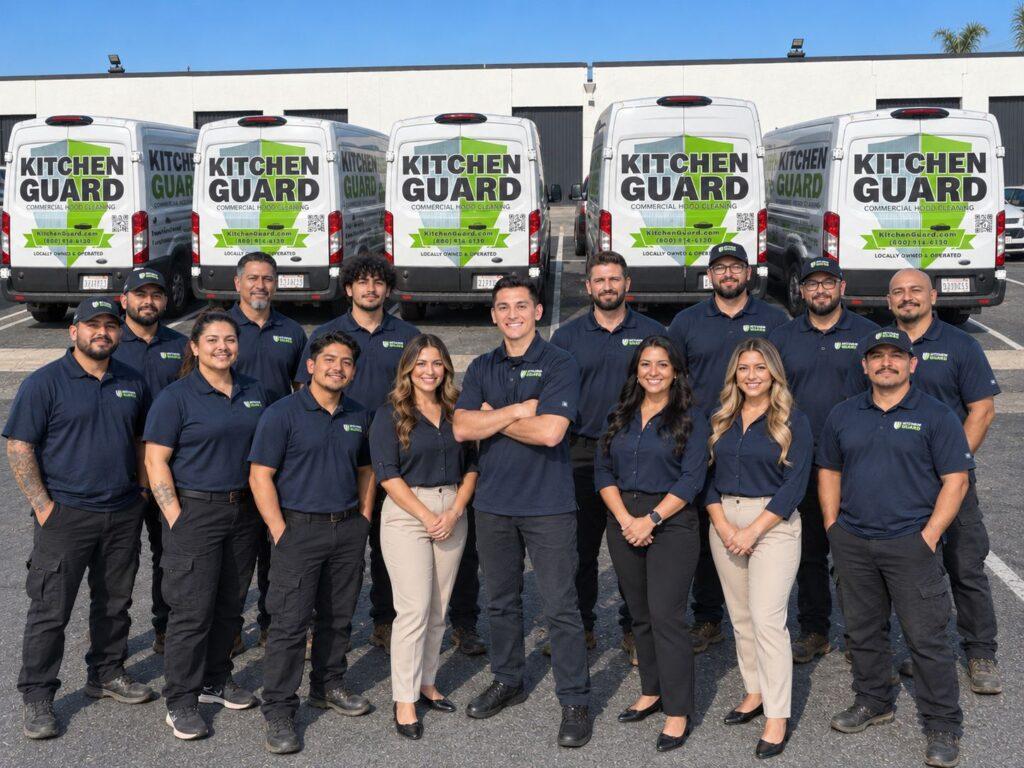
Santa Ana is Orange County’s county seat, its second-largest city and one of its busiest places to cook. Taquerias and family restaurants line 4th Street and the neighborhood corridors. Food-hall stalls in Downtown’s East End share a single building. School, hospital and government kitchens feed thousands of people a day. Kitchen Guard of Orange County, owned and operated by Elijah Arcos, cleans commercial kitchen exhaust systems across Santa Ana to ANSI/IKECA C10, with a dated photo report for every job.
Three Agencies, All Based Here
Santa Ana is the one city where all three agencies that check your kitchen have offices in town:
- Fire: the Orange County Fire Authority. Santa Ana joined OCFA in 2012 as its 23rd partner city, ending the city’s own fire department. OCFA’s Prevention Field Services inspects restaurants and other businesses with commercial kitchens, and commercial cooking requires a California Fire Code permit.
- Health: the OC Health Care Agency. Its Environmental Health offices are on East Dyer Road in Santa Ana. It permits and inspects restaurants, markets, school cafeterias and food trucks countywide, including checks on hood and filter condition.
- Sewer and grease: the City of Santa Ana. The Public Works Agency runs the city’s own fats, oils and grease (FOG) control program.
We document every job so the record works for all three. Your posted service label and photo report cover the fire inspection. A clean hood and filters help with the health inspection. Keeping grease in the exhaust system and out of your drains helps with FOG compliance.
Santa Ana’s FOG Program Is Strict
Santa Ana’s FOG ordinance sets specific maintenance rules, detailed in the city’s FOG Control Program Guidebook. Gravity grease interceptors must be pumped at least quarterly, hydromechanical interceptors at least monthly, and neither can go past 25% grease and solids. Additives can’t replace pumping. Food businesses need a FOG permit through the city, keep a FOG binder of training, interceptor and waste-oil logs, and are generally inspected once a year. Hood cleaning isn’t interceptor pumping, but it’s part of the same picture. Grease that the hood and filters don’t capture lands on floors and drains and ends up in your interceptor.
Taquerias, Food Halls and Downtown Kitchens
| Santa Ana kitchen type | Typical NFPA 96 schedule | Why |
|---|---|---|
| Charcoal or mesquite grills | Monthly | Solid-fuel cooking has the strictest schedule in NFPA 96 |
| Busy taquerias with griddles, charbroilers and fryers | Quarterly | High-volume cooking for long hours loads ducts fast |
| Food-hall stalls sharing a building | Quarterly to semi-annually | Each stall’s hood is its own system, with its own label and report |
| School, hospital and government cafeterias | Semi-annually to quarterly | Continuous service and compliance documentation |
| Cafés and light-cooking kitchens | Semi-annually to annually | Moderate or low-volume cooking |
Downtown Santa Ana brings its own logistics: older buildings, shared roofs, tight alleys and nightly foot traffic along 4th Street and in the East End. For food halls such as the 4th Street Market, we coordinate with building management, clean each vendor’s system separately and give every operator their own label and report. For big Downtown weekends like Noche de Altares, we schedule around the crowds so kitchens are clean before the rush.
Schools, Hospitals and Civic Center Kitchens
Santa Ana Unified is one of the largest school districts in California, serving about 44,000 students. Add Santa Ana College, the city’s hospitals and the courthouse and government buildings around the Civic Center, and there are a lot of kitchens that can’t close for a cleaning. We schedule institutional work around meal service and school calendars, and we provide records that facilities and compliance teams can keep on file.
Santa Ana Neighborhoods and ZIP Codes We Serve
We clean kitchens throughout Santa Ana: Downtown, including 4th Street and the East End, the Civic Center, the MainPlace area on Main Street, the South Coast Metro area near South Coast Plaza, and the neighborhood commercial corridors on First Street, Bristol, Harbor, Edinger and 17th Street. That covers ZIP codes 92701, 92703, 92704, 92705, 92706 and 92707. We also serve neighboring Tustin, Orange, Garden Grove, Costa Mesa and Irvine. Kitchen Guard of Orange County also has local pages for Anaheim, Newport Beach, Huntington Beach and Fullerton.
Call (949) 445-1300 or schedule a consultation. We’ll walk your Santa Ana kitchen and roof and quote the cleaning. See our full hood cleaning process, and ask about Filter Exchange, exhaust repairs and pressure washing for your dumpster pad and entry.
Santa Ana Hood Cleaning Questions, Answered
What Santa Ana restaurant owners, food hall vendors and facilities managers ask us most.
The Orange County Fire Authority. Santa Ana joined OCFA in 2012 and no longer has its own fire department. OCFA inspects restaurants and other businesses with commercial kitchens, and commercial cooking requires a California Fire Code permit. Health inspections come separately from the OC Health Care Agency.
Most busy taquerias running griddles, charbroilers and fryers all day fall under NFPA 96’s high-volume category, which calls for quarterly inspection, and cleaning whenever buildup is found. Kitchens cooking over charcoal or mesquite fall under the solid-fuel category and need monthly inspection.
Under the city’s FOG program, gravity interceptors must be pumped at least quarterly and hydromechanical interceptors at least monthly, and neither can exceed 25% grease and solids. Additives can’t replace pumping. Food businesses need a FOG permit and must keep training, interceptor and waste-oil logs.
Indirectly. Hood cleaning doesn’t replace interceptor pumping, but grease that the hood and filters don’t capture ends up on floors, in drains and in your interceptor. A clean exhaust system and a regular filter program reduce how much grease goes down the drain.
Yes. We coordinate access with building management, clean each vendor’s exhaust system separately, and give every operator their own service label and report.
A dated service label posted in your kitchen, as NFPA 96 requires, plus a written report with before-and-after photos of the hood, duct access points and rooftop fan. The report notes any areas we couldn’t reach and any problems we found.
Yes. We schedule around meal service and school calendars, and we provide records that facilities and compliance teams can keep on file.
All of Santa Ana, including Downtown and the East End, the Civic Center, the MainPlace area, South Coast Metro and the city’s neighborhood commercial corridors. That covers ZIP codes 92701, 92703, 92704, 92705, 92706 and 92707.