
"*" indicates required fields
Kitchen Exhaust Cleaning for Irvine’s Restaurants, Campuses and Hospitals
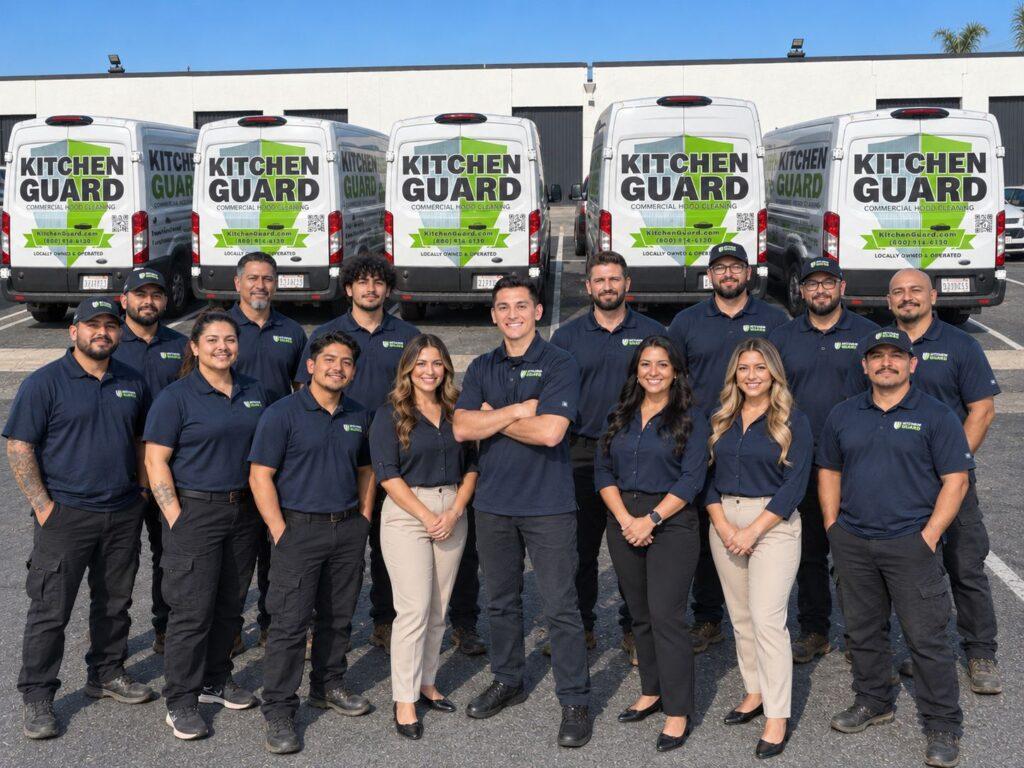
Irvine’s kitchens don’t look like most cities’. The majority of its restaurants sit inside master-planned, professionally managed shopping centers. Some of the county’s busiest hot pot, Sichuan and Korean BBQ kitchens are clustered at Diamond Jamboree and Culver Plaza. The city’s largest employer, UC Irvine, feeds thousands of students every day from its residential dining commons. Kitchen Guard of Orange County, owned and operated by Elijah Arcos, cleans commercial kitchen exhaust systems across Irvine to ANSI/IKECA C10, with a dated photo report for every job.
Irvine Is Inspected by the Orange County Fire Authority
Irvine is one of the 23 member cities of the Orange County Fire Authority, and OCFA’s headquarters is in Irvine itself, on Fire Authority Road. OCFA’s Prevention Field Services section runs periodic inspections of restaurants and other businesses with commercial kitchens, and commercial cooking is one of the uses that needs an OCFA operational permit. Inspectors enforce the California Fire Code, which adopts NFPA 96 for kitchen exhaust. They look for a current cleaning label and records showing the system is cleaned on schedule.
Working Inside Irvine’s Managed Shopping Centers
Much of Irvine’s retail, including Irvine Spectrum Center and neighborhood centers like Culver Plaza, is owned and run by professional property management. That changes how a hood cleaning gets done. Roof access is controlled. Work is limited to after-hours windows. Landlords often want proof of cleaning and a certificate of insurance on file. We coordinate with property management before the visit, schedule the work for the center’s approved hours, and send the service report to both the tenant and the landlord when requested. Rooftop grease is a common landlord concern in these centers, so we flag failing grease containment around exhaust fans in every report.
Diamond Jamboree, Culver Plaza and High-Volume Asian Kitchens
Irvine has one of Orange County’s largest concentrations of Asian restaurants. Diamond Jamboree on Alton Parkway and Culver Plaza on Culver Drive anchor dozens of hot pot, Sichuan, Taiwanese, Korean and Japanese restaurants. Many of them run high-heat wok, grill and fryer stations for long hours, seven days a week. Under NFPA 96, that puts them in the high-volume category with quarterly inspection. Kitchens grilling over charcoal fall under the solid-fuel category, which requires monthly inspection. We set each kitchen’s cleaning schedule by what we actually find in its ducts, not by a generic calendar.
| Irvine kitchen type | Typical NFPA 96 schedule | Examples |
|---|---|---|
| Charcoal or wood-fired grills | Monthly | Charcoal Korean BBQ, wood-fired pizza |
| High-volume wok, grill and fryer kitchens | Quarterly | Hot pot, Sichuan and wok kitchens, busy fast-casual lines |
| Campus and hospital kitchens | Quarterly to semi-annually | University dining commons, hospital cafeterias, high school kitchens |
| Full-service restaurants and cafés | Semi-annually | Moderate-volume dining at Irvine Spectrum and neighborhood centers |
| Low-volume kitchens | Annually | Churches, community centers, seasonal kitchens |
University, Hospital and School Kitchens
Institutional kitchens in Irvine run at a scale most restaurants never reach. UC Irvine’s residential dining commons serve students all day. The Irvine Unified School District serves more than 12,000 breakfasts and nearly 17,000 lunches a day, with high school meals cooked on site. Irvine’s hospitals, including UCI Health–Irvine, Hoag Irvine and Kaiser Permanente Irvine, run kitchens that never fully close. A newer all-electric kitchen still produces grease-laden vapor, and NFPA 96 applies to its hood the same way. For these facilities we schedule around service periods and academic calendars, and we provide documentation that facilities, risk and compliance teams can file.
Grease Interceptors and the Irvine Ranch Water District
Irvine’s sewer service, including its fats, oils and grease (FOG) program, is run by the Irvine Ranch Water District, not the city. IRWD requires a grease interceptor for new food service establishments and for changes of ownership, operations or kitchen remodels. Interceptors are sized to the California Plumbing Code, and IRWD inspects food facilities after they open and on a routine basis afterward. Hood cleaning and interceptor maintenance are separate services, but they’re connected: grease that isn’t captured by the hood and filters ends up on surfaces, in floor drains and in the interceptor.
Irvine Neighborhoods and ZIP Codes We Serve
We clean kitchens throughout Irvine: the Irvine Spectrum area, the Irvine Business Complex near John Wayne Airport, Diamond Jamboree, University Park and Culver Plaza, Woodbridge, Northwood, Great Park, the UC Irvine campus area and Quail Hill. That covers ZIP codes 92602, 92603, 92604, 92606, 92612, 92614, 92617, 92618 and 92620. We also serve neighboring Tustin, Lake Forest, Costa Mesa, Newport Beach and Santa Ana. Kitchen Guard of Orange County also has local pages for Anaheim, Huntington Beach, Garden Grove & Westminster and Fullerton.
Call (949) 445-1300 or schedule a consultation. We’ll coordinate with your property manager, walk your system from hood to roof and quote the cleaning. See our full hood cleaning process, or add Filter Exchange and exhaust repairs to the same service plan.
Irvine Hood Cleaning Questions, Answered
What Irvine restaurant operators, property managers and campus facilities teams ask us most.
The Orange County Fire Authority. Irvine is one of OCFA’s 23 member cities, and OCFA’s headquarters is in Irvine. OCFA inspects restaurants and other businesses with commercial kitchens, and commercial cooking requires an OCFA operational permit. Health inspections come separately from the OC Health Care Agency.
Yes. Most Irvine restaurants are in professionally managed centers with controlled roof access and approved work hours. We coordinate access and timing with property management before the visit, and we can send the service report and certificate of insurance to your landlord.
Most high-heat wok, grill and fryer kitchens fall under NFPA 96’s high-volume category, which calls for quarterly inspection, and cleaning whenever buildup is found. Kitchens with charcoal grills fall under the solid-fuel category and need monthly inspection. We set your schedule based on what we find in your system.
Yes. Electric fryers, griddles and ovens still turn cooking oils and fats into grease-laden vapor, and it collects in the hood, ducts and fan the same way. NFPA 96 applies to the exhaust system regardless of whether the cooking is gas or electric.
Yes. We schedule institutional kitchens around meal service and academic calendars, and we provide dated reports and photos that facilities, risk and compliance teams can keep on file.
The Irvine Ranch Water District runs the fats, oils and grease program for Irvine food service establishments. IRWD requires a grease interceptor for new facilities, changes of ownership or operations and many remodels, and it inspects food facilities routinely.
A dated service label posted in your kitchen, as NFPA 96 requires, plus a written report with before-and-after photos of the hood, duct access points and rooftop fan. The report notes any areas we couldn’t reach and any problems we found, such as missing access panels or failing grease containment.
All of Irvine, including the Irvine Spectrum, the Irvine Business Complex, Diamond Jamboree, University Park, Woodbridge, Northwood, Great Park and the UC Irvine area. That covers ZIP codes 92602, 92603, 92604, 92606, 92612, 92614, 92617, 92618 and 92620.