






About Us

About Kitchen Guard of Orange County

Orange County does not have one fire department. Twenty-three cities contract their fire service to the Orange County Fire Authority, while Anaheim, Brea, Costa Mesa, Fountain Valley, Fullerton, Huntington Beach, Laguna Beach, Newport Beach, Orange and Placentia each run their own. Your health permit comes from a third body again — the OC Health Care Agency’s Environmental Health Division in Santa Ana.

So the inspector who walks into a kitchen in Irvine and the one who walks into a kitchen in Fullerton are not the same person, and will not necessarily ask for the same paperwork. We clean to one standard regardless, and leave behind documentation built to satisfy whichever of them turns up: dated, photographed, and specific to the system we cleaned.

Our Value Proposition
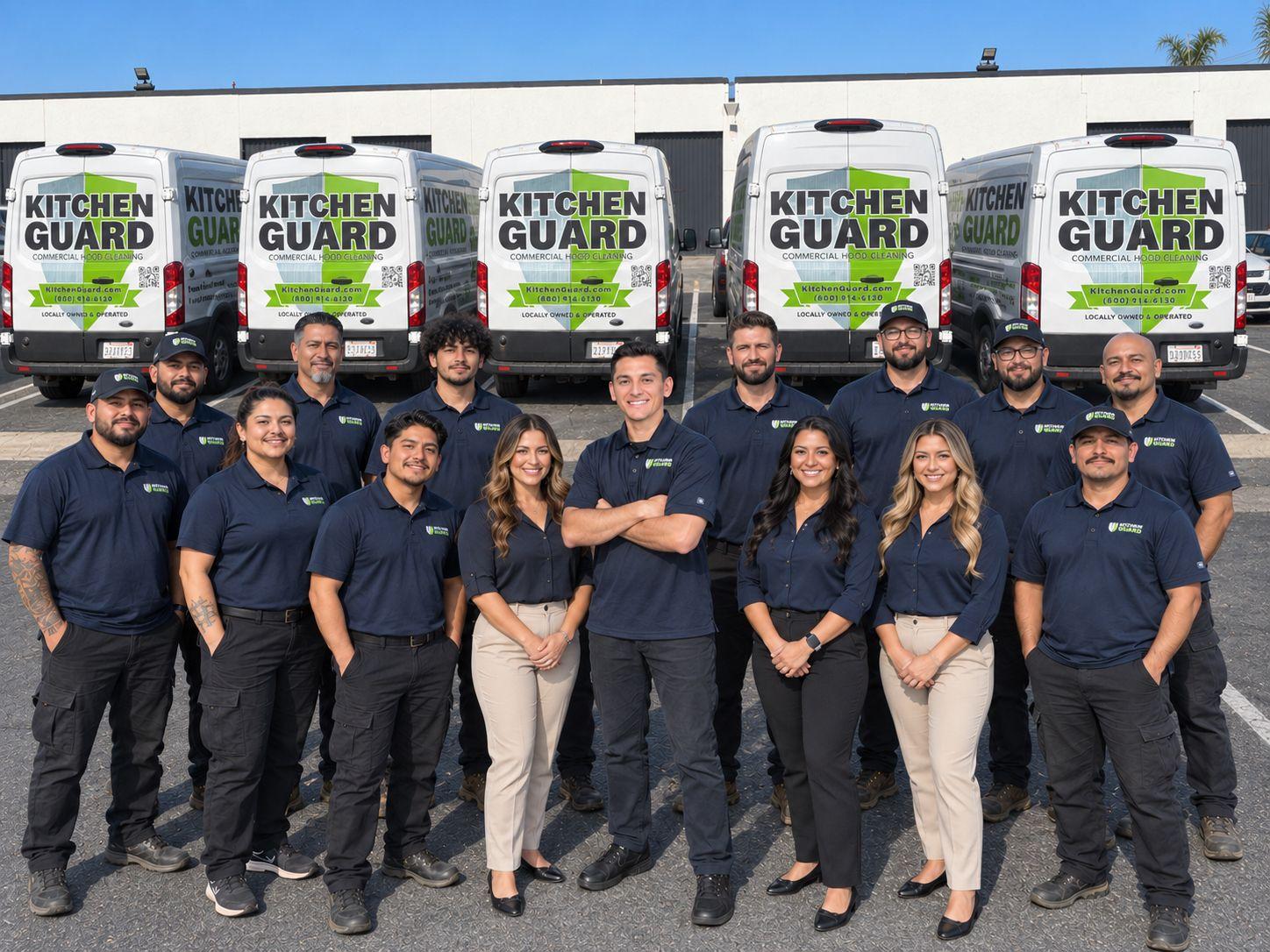
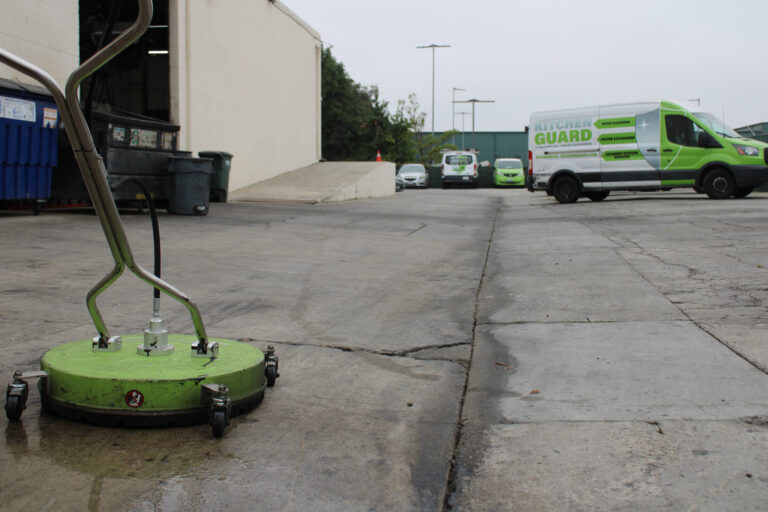
The Kitchen Guard of Orange County crew in front of their commercial hood cleaning vans
Compliance & Credentials

The Standard Behind Our Orange County Work

International Kitchen Exhaust Cleaning Association (IKECA) member logo

The work Kitchen Guard of Orange County does is held to a standard somebody else wrote. Kitchen Guard holds corporate membership in the International Kitchen Exhaust Cleaning Association — the ANSI-accredited standards developer for this trade — and our crews clean to ANSI/IKECA C10-2021, the consensus standard for how commercial kitchen exhaust systems are cleaned.

Technicians are trained by instructors who hold the Certified Exhaust Cleaning Specialist (CECS) credential from IKECA. Every visit in Orange County leaves you with dated documentation and photographs you can hand to an inspector or an insurer. Read how NFPA 96 and the ANSI/IKECA standards fit together.

Why Businesses Choose Us

  • NFPA logo
    We Clean the Whole System
    Canopy, filters, the full duct run and the fan on the roof. A cleaning that stops at the part you can see is the reason a system passes a look and fails an inspection.
    We Clean the Whole System

    Canopy, filters, the full duct run and the fan on the roof. A cleaning that stops at the part you can see is the reason a system passes a look and fails an inspection.

  • Photo Reports Before We Leave
    A dated report with photographs of the system going in and coming out, handed over on site. That is what an inspector or an insurer asks for, and it is the part most operators find out they don’t have at the worst possible moment.
    Photo Reports Before We Leave

    A dated report with photographs of the system going in and coming out, handed over on site. That is what an inspector or an insurer asks for, and it is the part most operators find out they don’t have at the worst possible moment.

  • We Know Which Inspector Is Yours
    Ten Orange County cities run their own fire departments and the rest sit with OCFA. Knowing which one covers your address changes what we document and when.
    We Know Which Inspector Is Yours

    Ten Orange County cities run their own fire departments and the rest sit with OCFA. Knowing which one covers your address changes what we document and when.

  • Trained to ANSI/IKECA C10
    Our technicians are trained by instructors holding IKECA’s Certified Exhaust Cleaning Specialist credential, and we clean to a published consensus standard rather than a house method.
    Trained to ANSI/IKECA C10

    Our technicians are trained by instructors holding IKECA’s Certified Exhaust Cleaning Specialist credential, and we clean to a published consensus standard rather than a house method.

  • One Schedule for Multi-Location Groups
    Run eight kitchens across the county and you get one schedule and one point of contact, not eight invoices arriving in different weeks.
    One Schedule for Multi-Location Groups

    Run eight kitchens across the county and you get one schedule and one point of contact, not eight invoices arriving in different weeks.

  • Emergency SMS Alerts
    If something on your system needs attention before the next scheduled visit, you hear about it by text the same day, not in a report next quarter.
    Emergency SMS Alerts

    If something on your system needs attention before the next scheduled visit, you hear about it by text the same day, not in a report next quarter.

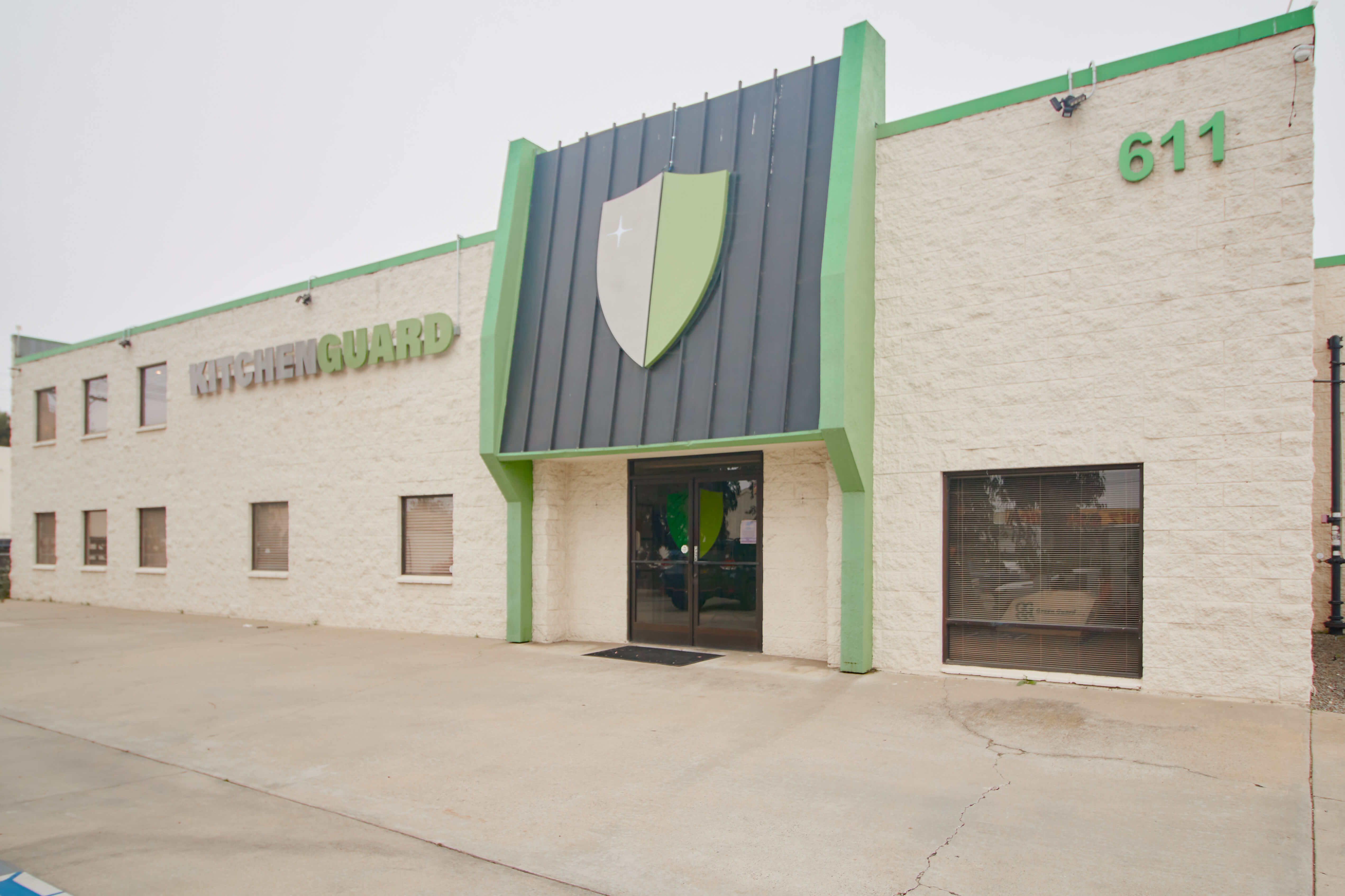
KGS HQ_Econdido
Orange County Compliance

Questions Orange County Operators Ask

  • Who inspects my kitchen hood in Orange County?
    It depends on your address, and there is no single answer for the county. Twenty-three Orange County cities and the unincorporated areas are covered by the Orange County Fire Authority. Anaheim, Brea, Costa Mesa, Fountain Valley, Fullerton, Huntington Beach, Laguna Beach, Newport Beach, Orange and Placentia each run their own fire departments with their own inspectors. Separately from any of them, your food facility health permit and its inspections come from the OC Health Care Agency’s Environmental Health Division. A grease interceptor brings in a fourth body again — your city’s sewer program. Four authorities can touch one kitchen, and they do not share paperwork.
    Who inspects my kitchen hood in Orange County?

    It depends on your address, and there is no single answer for the county. Twenty-three Orange County cities and the unincorporated areas are covered by the Orange County Fire Authority. Anaheim, Brea, Costa Mesa, Fountain Valley, Fullerton, Huntington Beach, Laguna Beach, Newport Beach, Orange and Placentia each run their own fire departments with their own inspectors. Separately from any of them, your food facility health permit and its inspections come from the OC Health Care Agency’s Environmental Health Division. A grease interceptor brings in a fourth body again — your city’s sewer program. Four authorities can touch one kitchen, and they do not share paperwork.

  • How often does my hood have to be cleaned?
    NFPA 96, which California adopts through the California Fire Code, does not set a cleaning calendar. It sets an inspection schedule based on how hard you cook: monthly for solid-fuel cooking, quarterly for high-volume operations, semiannually for moderate volume, and annually for low volume. Cleaning is required when that inspection finds grease accumulation — which for most Orange County restaurants works out to quarterly, but a twenty-four-hour taqueria and a hotel breakfast line are not on the same schedule, and neither is a wood-fired pizza oven. Your cooking volume sets it, not a sales calendar.
    How often does my hood have to be cleaned?

    NFPA 96, which California adopts through the California Fire Code, does not set a cleaning calendar. It sets an inspection schedule based on how hard you cook: monthly for solid-fuel cooking, quarterly for high-volume operations, semiannually for moderate volume, and annually for low volume. Cleaning is required when that inspection finds grease accumulation — which for most Orange County restaurants works out to quarterly, but a twenty-four-hour taqueria and a hotel breakfast line are not on the same schedule, and neither is a wood-fired pizza oven. Your cooking volume sets it, not a sales calendar.

  • What records do I need to keep, and for how long?
    For the exhaust system: a dated report of each inspection and cleaning, naming what was cleaned and what was not, with photographs. Inspectors and insurers ask for this, and the moment it is usually discovered missing is after a fire. For grease, the requirement is written down. Under OC San’s FOG ordinance, food service establishments must keep records for at least two years — best-management-practice logs, employee training records, grease interceptor maintenance records and waste hauling manifests.
    What records do I need to keep, and for how long?

    For the exhaust system: a dated report of each inspection and cleaning, naming what was cleaned and what was not, with photographs. Inspectors and insurers ask for this, and the moment it is usually discovered missing is after a fire. For grease, the requirement is written down. Under OC San’s FOG ordinance, food service establishments must keep records for at least two years — best-management-practice logs, employee training records, grease interceptor maintenance records and waste hauling manifests.

  • Do I need a grease interceptor?
    If you discharge wastewater containing fats, oils and grease, generally yes. OC San’s FOG ordinance (OCSD-25) requires food service establishments to install and maintain an approved grease interceptor sized to the Uniform Plumbing Code, and to hold a FOG wastewater discharge permit. The interceptor must be pumped so that grease and solids never exceed 25 percent of its total design hydraulic depth, and at minimum every six months. Operations doing only reheating, hot holding or assembly of ready-to-eat food may be exempt. Two things worth knowing: OC San covers central and northwest Orange County and relies on each city to run the actual program, so your city’s specifics govern, and south county sits outside OC San entirely under its own agencies. Check yours before assuming these numbers apply to you.
    Do I need a grease interceptor?

    If you discharge wastewater containing fats, oils and grease, generally yes. OC San’s FOG ordinance (OCSD-25) requires food service establishments to install and maintain an approved grease interceptor sized to the Uniform Plumbing Code, and to hold a FOG wastewater discharge permit. The interceptor must be pumped so that grease and solids never exceed 25 percent of its total design hydraulic depth, and at minimum every six months. Operations doing only reheating, hot holding or assembly of ready-to-eat food may be exempt. Two things worth knowing: OC San covers central and northwest Orange County and relies on each city to run the actual program, so your city’s specifics govern, and south county sits outside OC San entirely under its own agencies. Check yours before assuming these numbers apply to you.

  • Are my hood filters part of grease compliance?
    Yes, and it is the part people are surprised by. Maintaining kitchen exhaust filters is written into OC San’s list of required best management practices, alongside drain screens, waste-oil recycling, employee training twice a year and signage in food prep areas. Loaded filters push grease further into the duct and, when they drip, into the floor drain — which is a sewer problem as much as a fire one. Filters are not a cosmetic item on an inspection.
    Are my hood filters part of grease compliance?

    Yes, and it is the part people are surprised by. Maintaining kitchen exhaust filters is written into OC San’s list of required best management practices, alongside drain screens, waste-oil recycling, employee training twice a year and signage in food prep areas. Loaded filters push grease further into the duct and, when they drip, into the floor drain — which is a sewer problem as much as a fire one. Filters are not a cosmetic item on an inspection.

  • What is the difference between hood cleaning and filter exchange?
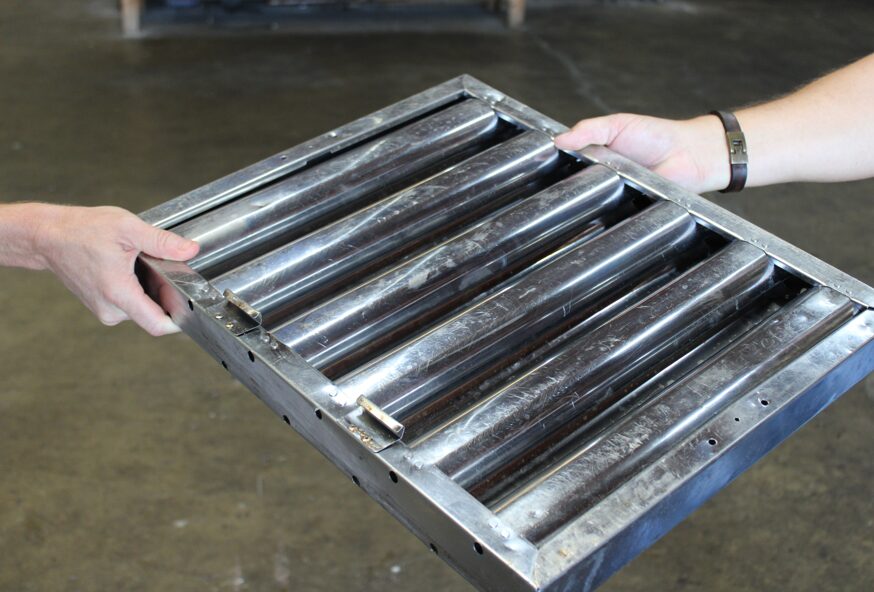
    Hood cleaning is the whole system: canopy, plenum, the full duct run and the exhaust fan on the roof, on the inspection-driven schedule above. Filter Exchange is a separate, more frequent program, and it works differently than people expect — we do not clean filters on your site. We arrive with clean spare filters in the van, swap yours out, and take the dirty ones away. No soak tank in your kitchen, no filters drying on a rack in the dish pit, and no wash water going down your drain.
    What is the difference between hood cleaning and filter exchange?

    Hood cleaning is the whole system: canopy, plenum, the full duct run and the exhaust fan on the roof, on the inspection-driven schedule above. Filter Exchange is a separate, more frequent program, and it works differently than people expect — we do not clean filters on your site. We arrive with clean spare filters in the van, swap yours out, and take the dirty ones away. No soak tank in your kitchen, no filters drying on a rack in the dish pit, and no wash water going down your drain.

KGS HQ_Econdido
The Visionary Behind Kitchen Guard

Meet The Founder

Nathan Leathers

Founder of Kitchen Guard

Screenshot_2024-01-23_at_20.39.27-removebg-preview

Meet The Crew

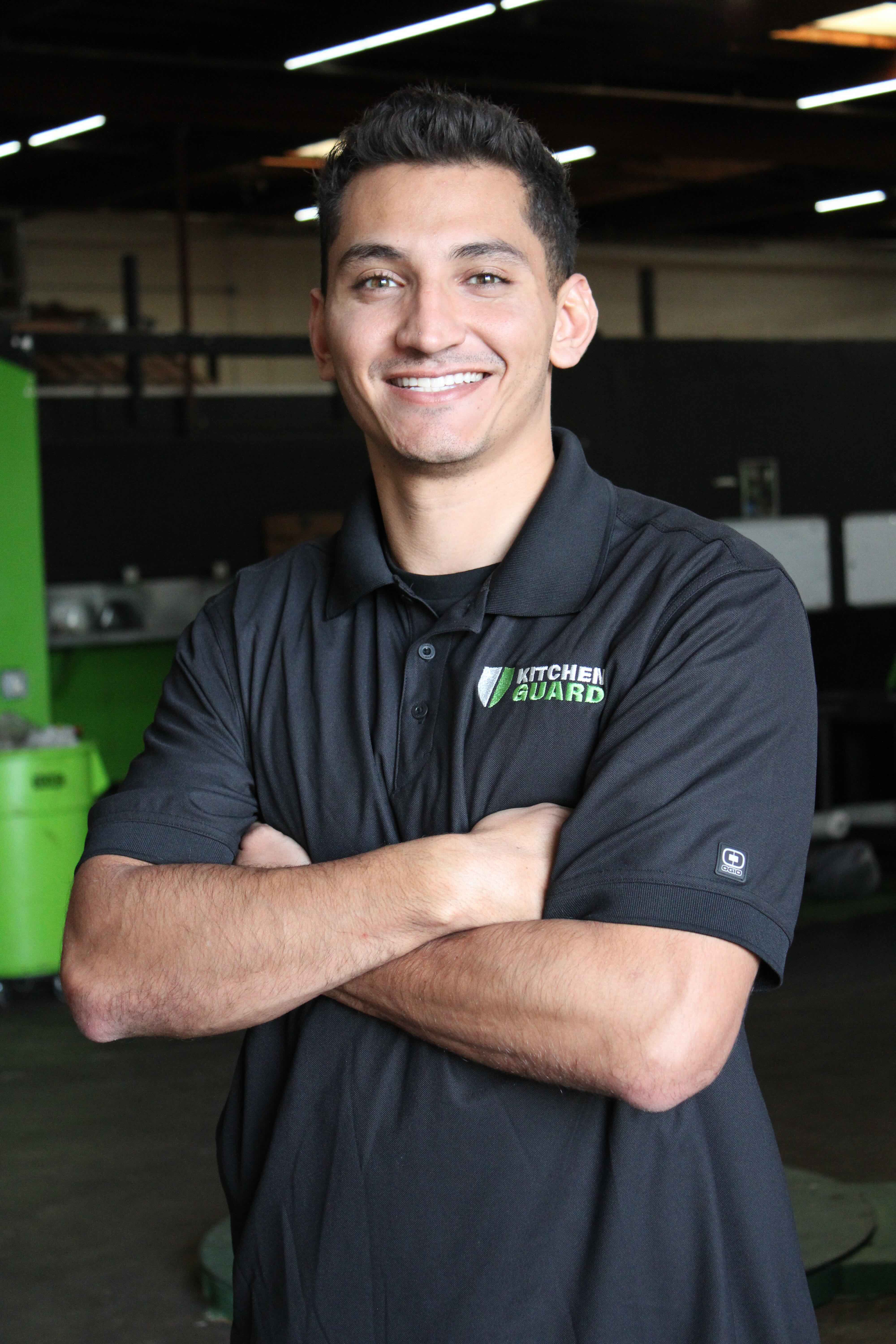
  • Elijah Arcos, owner of Kitchen Guard of Orange County

    Elijah Arcos

    Owner

Join Our Team of Guardians

Do you have a passion for safety and service? We’re always on the lookout for talented technicians, foremen, and Fire & Life Safety Consultants to join our supportive, professional team in Orange County.

Click below to see what opportunities exist to join our growing business.


Keeping Commercial Kitchens Safe & Efficient (and Operating)

Full Ventilation System Cleaning & Maintenance

Hood Cleaning

Hood Cleaning

Hood Cleaning

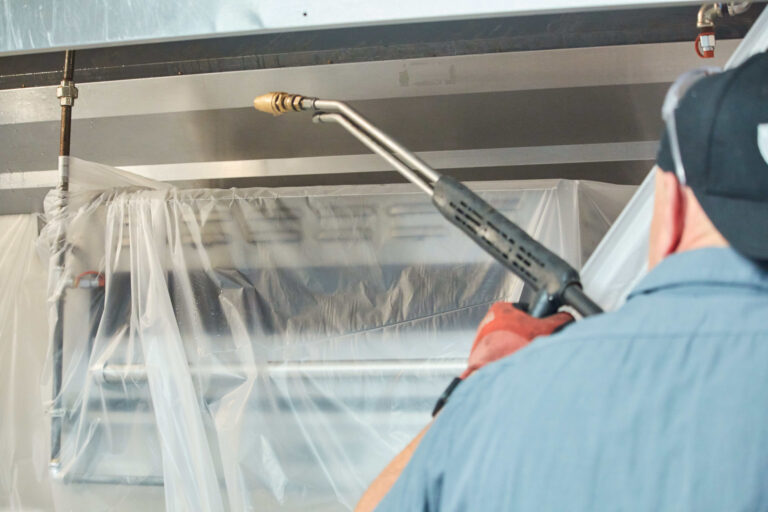
Canopy, plenum, the full horizontal and vertical duct run, and the exhaust fan on the roof. A cleaning that stops where the light stops is how a system passes a glance and fails an inspection.

NFPA 96 — adopted in California through the state Fire Code — sets how often your system is inspected and requires cleaning when that inspection finds grease. How the cleaning itself is done is governed by ANSI/IKECA C10-2021, and that is the standard our crews work to.

Scrapers, commercial-grade hot-water pressure washing, and hand work where equipment cannot reach. Access panels opened, and new ones cut and fitted where a duct run has none.

Our technicians are trained by instructors holding IKECA’s Certified Exhaust Cleaning Specialist credential, and you get a dated report with photographs of every section going in and coming out, on site, before we leave.

Getting Ready to Blast_Back

Safe and Clean Kitchens for Every Industry

From fast food to 5-star full service restaurants and stadiums – we cover it all.

Restaurant Kitchens

Restaurants

From a single storefront to a group running eight locations across the county, from the taquerias of Santa Ana to the wok and Korean BBQ kitchens of Garden Grove and Westminster. Multi-unit operators get one schedule and one point of contact rather than six invoices arriving in different weeks.


Corporate-Cafeteria

Corporate
Cafeterias

The campuses along the 405 and in the Irvine business parks cook hard from seven to two and go quiet after. That afternoon gap is the easiest cleaning window in the county, and it is the one most vendors won’t use.

Sports-Venues

Sports Venues

Dozens of concession galleys that all cook at once for four hours and then sit cold. Fryer banks and short duct runs, cleaned between event dates rather than on a monthly calendar.

Hospital-Kitchen

Hospitals &
Assisted Living

Kitchens that cannot close, serving people who cannot skip a meal. Work is staged line by line so production never stops, and the documentation is written for a facilities file rather than a shoebox.

Educational-Institution

Educational
Institutions

Summer and winter breaks are when this work belongs, and the calendar fills early. Districts and campuses that book the break ahead get the slot; the ones that call in August get what is left.

Hotel-Kitchen

Hotel Chains

Anaheim’s resort corridor runs breakfast service at a volume most standalone restaurants never see, seven days a week, with no closed day to clean around. We work the overnight window.

Proof in the Pictures

See the Results

Artboard-8beforeandafter

Hood Canopy & Plenum

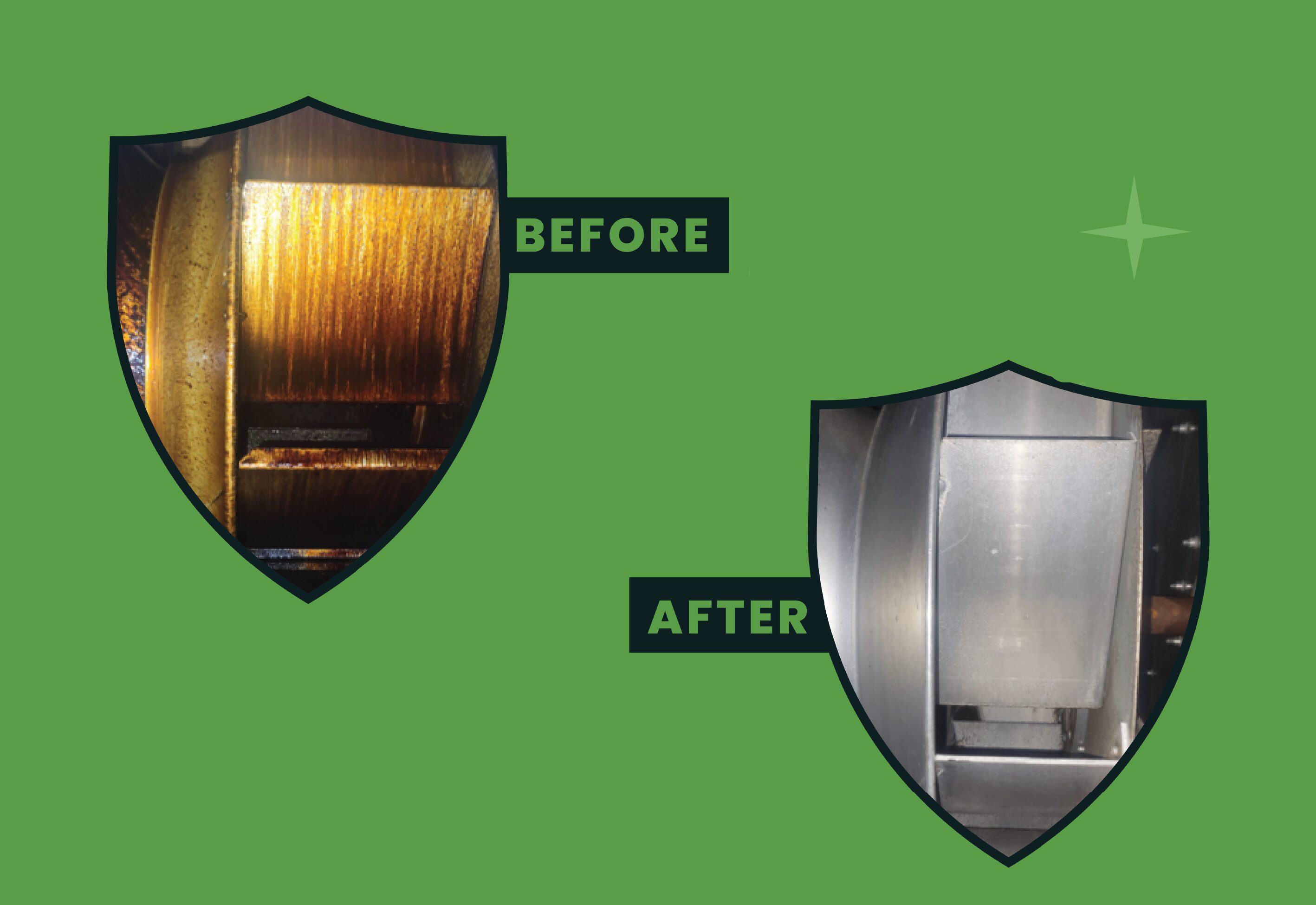
Grease-loaded canopy interior taken back to bare stainless.

Artboard-5beforeandafter

Duct Run

Horizontal duct cleaned through its length, not just the visible canopy.

BandA_Web_1

Rooftop Exhaust Fan

Fan housing and blades degreased down to clean metal.

Screenshot 2024-05-21 234132

Hood Interior & Baffle Track

Track and trough cleared so grease drains where it should.