
"*" indicates required fields
The Restaurant Filter Exchange Program That Stops Grease Fires Before They Start
Grease-clogged hood filters stop trapping grease, choke off airflow, and turn your exhaust system into fuel for a fire that can shut your restaurant down for weeks. Most restaurant kitchen fires start exactly this way — and a filter on a real cleaning schedule is what prevents it.
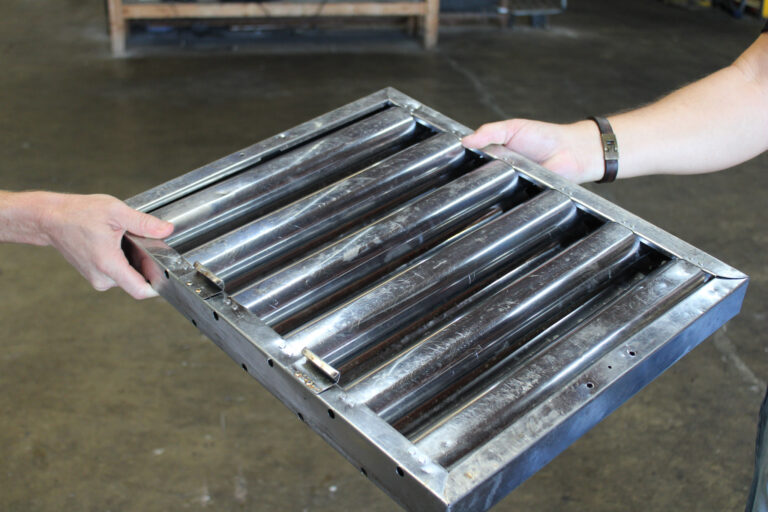
Kitchen Guard of Greenville runs a scheduled Filter Exchange Program built for restaurants and commercial kitchens across Greenville, Spartanburg, Greer, and the Upstate. We set your exchange cadence around your kitchen’s actual volume, inspect every filter at each visit, deep-clean what’s still serviceable, and swap in a professionally cleaned replacement set the moment a filter’s past saving — same visit, no back-order wait, no gap in protection.
We work after hours, so the exchange never slows down service, and every visit is photo-documented so you’re covered the moment an inspector, insurer, or fire marshal comes asking. Every job is priced upfront with no long-term contracts — you deal directly with the same local technician who knows your kitchen, not a call center or a corporate account portal. Running more than one location? We’ll put every restaurant on one shared schedule with a single point of contact.
What Our Filter Exchange Program Includes
- Filter Inspection & Grading – every filter checked at each visit and graded against NFPA 96 grease-buildup thresholds.
- Deep-Cleaning of Serviceable Filters – filters that still have life left are professionally degreased, not just rinsed.
- Same-Visit Replacement – filters past saving are swapped for a cleaned set on the spot, so there is no gap in protection.
- Photo Documentation & Compliance Reports – every exchange logged with before-and-after photos for inspectors, insurers, and fire marshals.
- Volume-Based Scheduling – your exchange cadence is set around your kitchen’s actual cooking volume, not a generic calendar.
Areas We Serve
Kitchen Guard proudly provides restaurant hood filter exchange and cleaning services to restaurants and commercial kitchens throughout Greenville, Greer, Simpsonville, Taylors, Mauldin, Easley, Travelers Rest, Fountain Inn, Spartanburg, Landrum, Gaffney, Cowpens, Union, Pickens, Liberty, Piedmont, and Anderson.
Related Services
Explore more of what Kitchen Guard offers: Hood Cleaning, Repairs, and Pressure Washing.
Kitchen Guard of Greenville Answers Your Restaurant Filter Exchange Questions
Keeping your restaurant’s exhaust filters on a regular exchange schedule is essential for fire prevention and ventilation efficiency. Here’s what restaurant owners ask us most:
In a busy restaurant kitchen, grease builds up fast — dirty hood filters restrict airflow, which leads to poor ventilation, overheating, and a real fire risk. That’s exactly why our Filter Exchange Program exists: regular exchanges keep your kitchen operating safely and keep you compliant with fire codes, without your staff ever having to think about it.
According to the National Fire Protection Association (NFPA) Standard 96, Section 12.6.2:
“Hoods, grease removal devices (filters), fans, ducts, and other appurtenances shall be cleaned to remove combustible contaminants prior to surfaces becoming heavily contaminated with grease or oily sludge.”
“Heavily contaminated” is defined as grease buildup greater than 0.078 inches (5/64”). Staying under that threshold is what keeps your restaurant fire-safe and inspection-ready.
Grease-clogged filters don’t just get dirtier — they become a fire hazard. Restricted airflow makes your exhaust system overheat, setting the stage for a fire that can spread straight into the ductwork. Long before that happens, poor airflow also makes your kitchen hotter and more miserable to work in, shift after shift. Staying on a regular exchange program shuts that risk down and keeps your restaurant compliant with local fire codes.
No. We exchange your filters after hours, so there’s zero disruption to service — your line keeps cooking, and we keep your kitchen compliant. No closures, no schedule changes, nothing for your staff to work around.
There’s no generic answer — it depends on your kitchen’s volume. High-volume line cooking builds grease faster than a lower-volume kitchen, so we set your exchange cadence during your first visit and adjust it as needed. Either way, your filters are inspected and refreshed on a schedule built around your actual usage.
Yes. If you operate more than one restaurant in the Upstate, we’ll put every location on one coordinated exchange schedule with a single point of contact — so you get one consistent standard of service and one set of documentation to hand to corporate, insurance, or an inspector, instead of juggling separate vendors per location.