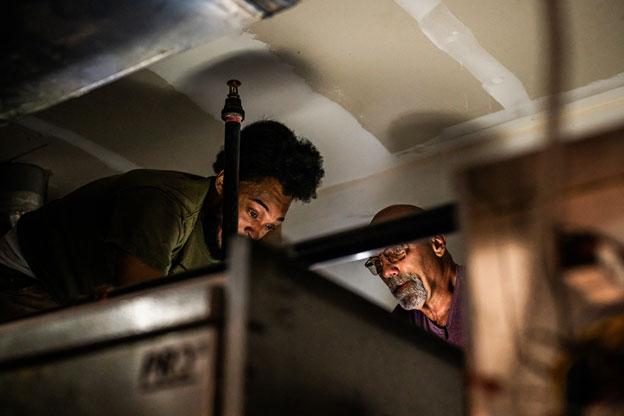
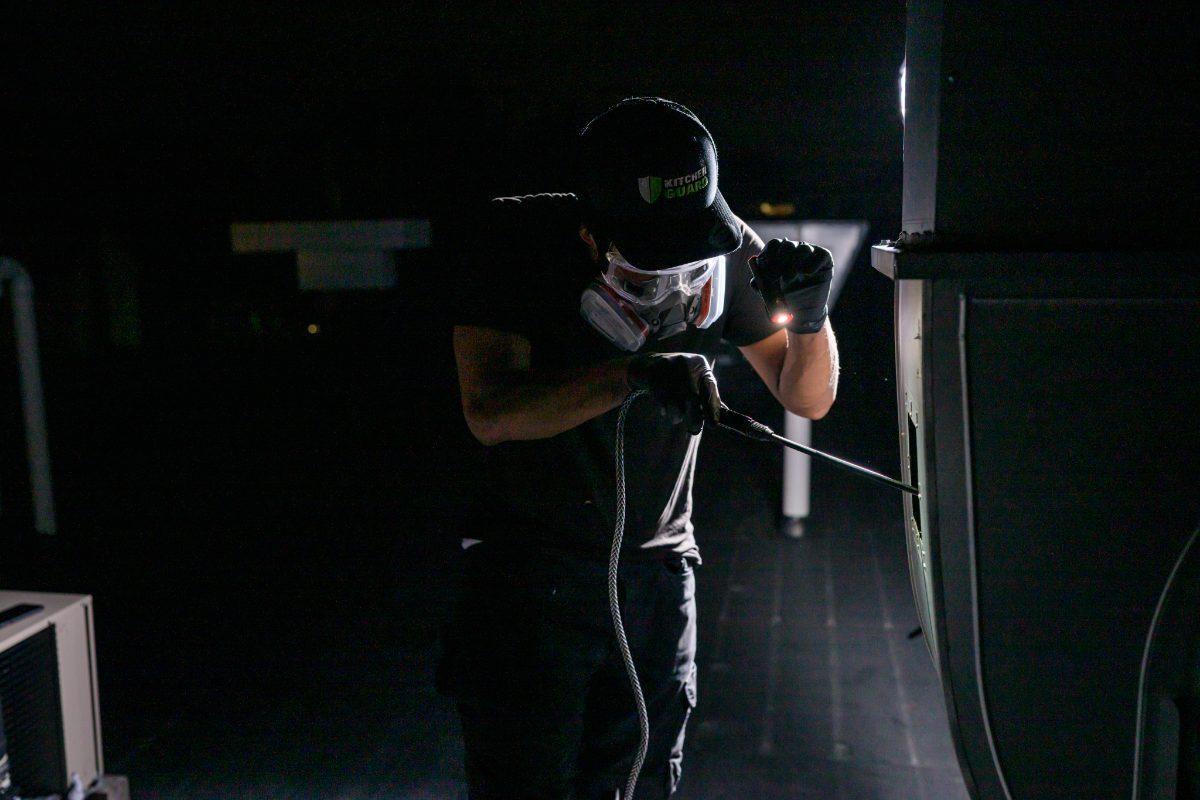
Kitchen Exhaust Fan Cleaning: Why The Fan Matters More Than You Think
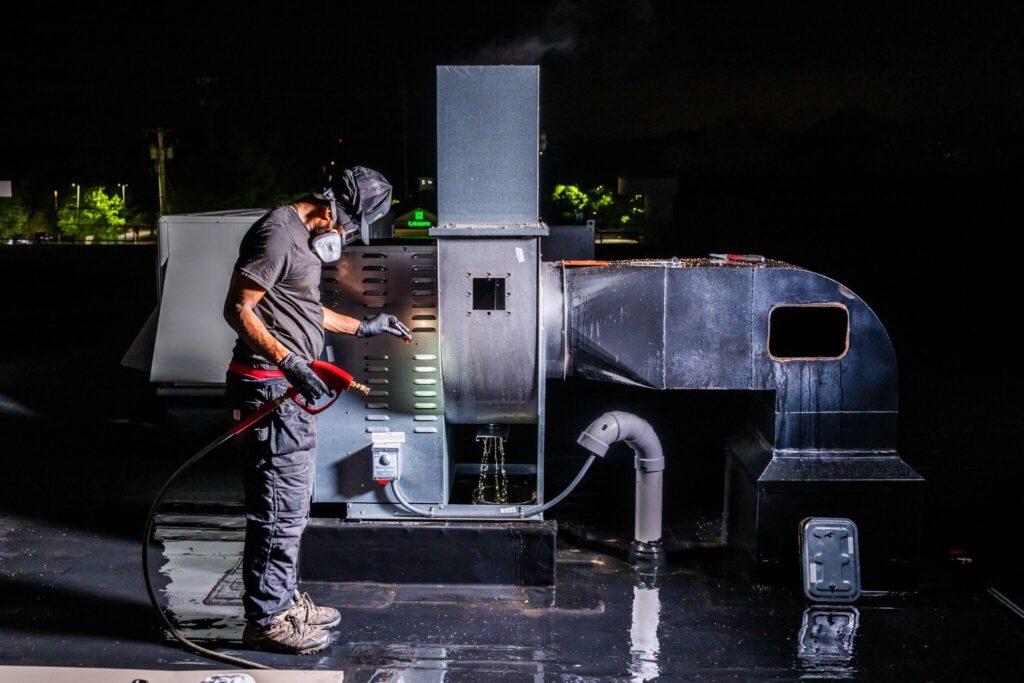
A commercial kitchen can remain smoky, hot, or filled with cooking odors even when the visible hood looks clean. The problem may be farther along the exhaust path. Grease on the rooftop fan, restricted ductwork, damaged filters, poor makeup air, or a mechanical fault can all weaken the kitchen exhaust system’s ability to capture cooking exhaust.
The rooftop fan creates the pull that moves air from the cooking line through the hood, filters, plenum, and ductwork. At the end of the grease-bearing path, the blades and housing can collect grease passing through the filters and ducts.
Restaurant owners should know what the fan does, how to recognize signs that it needs attention, and what proof shows that it was opened and serviced during the last cleaning.
This article covers fan operation, warning signs, cleaning scope, safe access, service documentation, and NFPA 96 expectations in the states of Connecticut and New York.
What Does A Commercial Kitchen Exhaust Fan Do?
The commercial kitchen exhaust fan is commonly installed on the roof above the grease duct connected to the commercial kitchen hood. Its rotating blades remove air from the ductwork. That movement creates the pull that draws heat, smoke, steam, odors, and grease-laden vapor into the hood.
The airflow follows a connected path:
- Cooking emissions rise from the cook line.
- The hood canopy captures the rising plume.
- Grease filters remove part of the airborne grease.
- The remaining air enters the plenum, which is the chamber behind the filters.
- The air travels through horizontal or vertical ductwork.
- The rooftop fan draws the exhaust through the final duct section and discharges it above the roof.
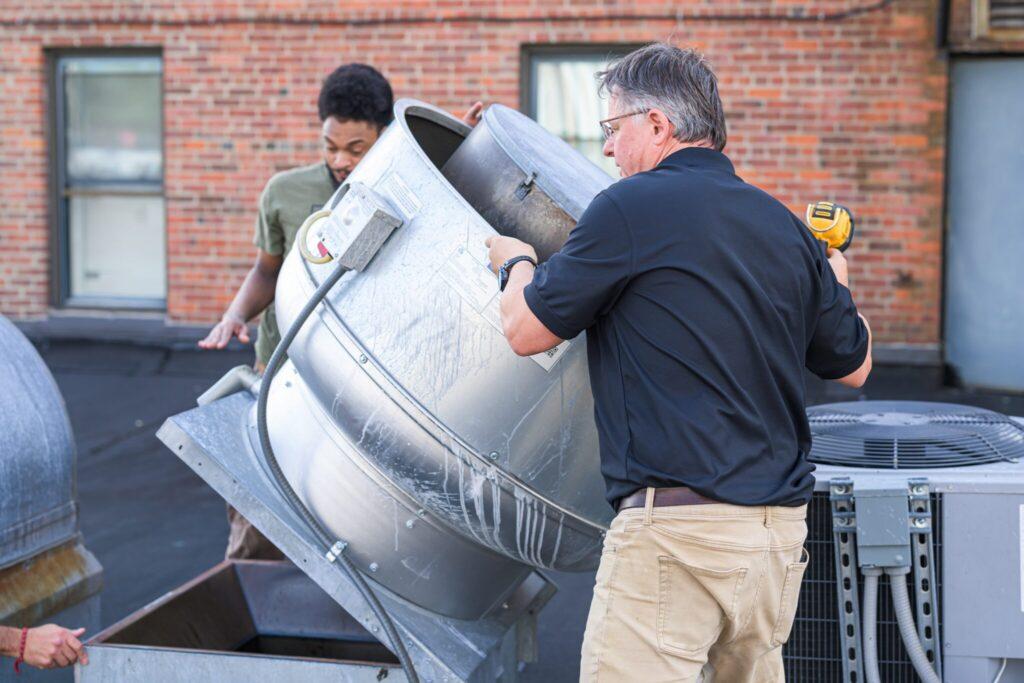
Many commercial kitchens use an upblast fan, a type of fan that directs exhaust upward and can tilt away from the duct opening when it has an appropriate access method.
The fan is one part of an integrated system. Filters, duct condition, cooking equipment, system design, and adequate replacement or makeup air also affect capture. A fan that spins may still be dirty, imbalanced, damaged, or unable to deliver the airflow the kitchen requires. For a broader explanation of the full exhaust path, read our article on restaurant vent hood cleaning beyond basic hood maintenance.
How Grease Reaches The Rooftop Exhaust Fan
Heated cooking oils and fats produce grease-laden vapor. Baffle filters capture a portion of that grease, while smaller droplets continue into the plenum and ductwork. As the exhaust moves away from the cooking line and cools, grease deposits form along interior surfaces.
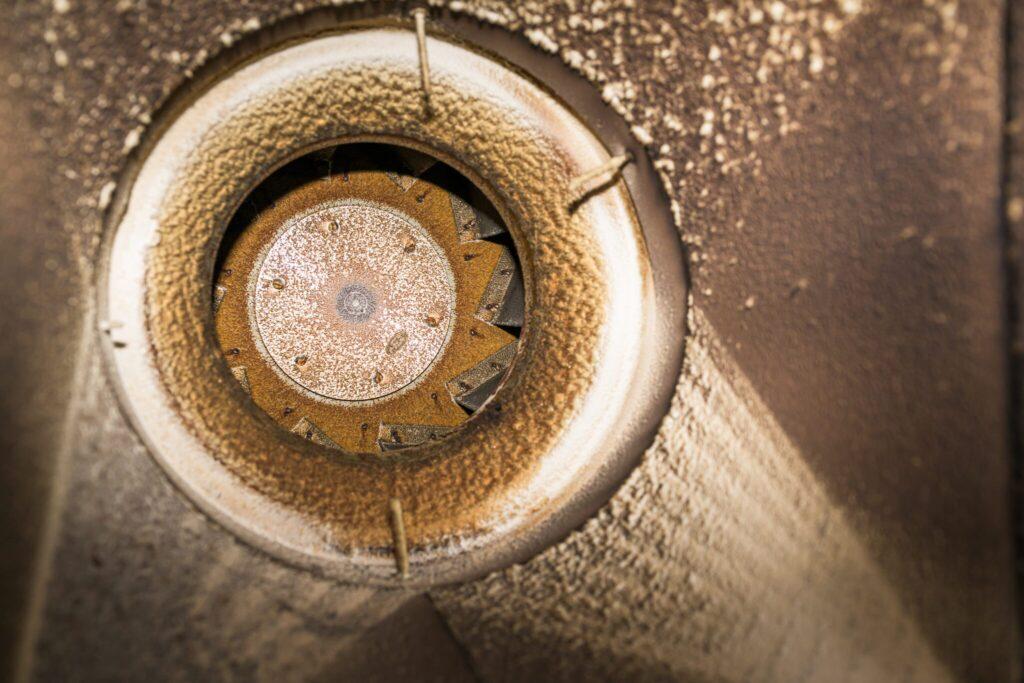
Filter condition affects how much grease moves farther into the system. Warped, damaged, saturated, or poorly maintained filters allow more grease to reach the plenum, ductwork, and fan. Grease can collect on several fan components:
- Blade surfaces and hub
- Interior fan housing
- Fan bowl and lower interior surfaces
- Fan base and roof-curb interface
- Grease discharge or collection points
- Upper duct termination below the fan
- Rooftop grease containment/grease catch
The deposits do not always form evenly. One blade may carry more grease than another. That uneven weight can affect fan balance and is one reason vibration or noise deserves inspection.
Warning Signs Your Kitchen Exhaust Fan Needs Attention
The signs below indicate a need for inspection, but they are not sufficient to diagnose the cause from the kitchen floor.
| Warning Sign | What It Could Point To | Best Next Step |
|---|---|---|
| Smoke or steam escaping the hood | Dirty filters, duct restriction, fan problem, or inadequate makeup air | Request a full-system inspection |
| Persistent odors or excess kitchen heat | Weak capture or ventilation imbalance | Check the filters, fan, ducts, and makeup air |
| Rattling, vibration, scraping, or squealing | Grease imbalance, loose parts, mechanical wear, or other damage | Arrange a qualified inspection |
| Grease stains or pooling around the fan | Dirty housing, failed containment, seal problem, or drainage issue | Inspect the fan, containment, curb, and roof condition |
| Fan shutdowns or repeated breaker trips | Motor, electrical overload, or mechanical problem | Escalate to qualified service |
| No fan photographs in the last report | Fan service cannot be verified from the record | Ask for fan-specific proof and written scope |
A kitchen with inadequate makeup air can also have weak capture even when the exhaust fan is operating correctly. The fan removes air from the building, and replacement air must enter. If the two are out of balance, smoke and heat can remain in the kitchen even when the fan itself is clean.
Restaurant staff should not climb onto the roof or open energized fan equipment to investigate these symptoms. Rooftop access and electrical inspection require qualified personnel and proper safety procedures. For related warning signs across the complete system, read our article on signs a restaurant hood needs immediate cleaning.
How A Dirty Exhaust Fan Affects Kitchen Performance
Fan blades are shaped to move a designed volume of air. Grease changes the blade surface and adds weight. Heavy or uneven deposits can interfere with airflow and balance.
Inside the kitchen, the result can appear as weaker smoke capture, more steam or heat around the cooking line, or cooking odors reaching dining and neighboring areas. These kitchen ventilation problems affect staff comfort and make service harder, especially during busy periods.
Fan grease is one possible cause. Dirty filters, restricted ducts, inadequate makeup air, equipment changes, and mechanical faults also affect capture. A proper inspection should determine which parts of the system need cleaning and which need repair or adjustment.
In our work across Fairfield and Westchester counties, we frequently find grease on fan blades and inside fan housings even when the hood and filters were serviced recently.
Mechanical Problems Linked To Fan Grease Buildup
Uneven grease deposits can cause the rotating fan assembly to lose balance. Continued vibration places additional stress on components such as bearings and motors that support or drive the fan. A qualified inspection should include inspecting the condition of:
- Fan blades and hub
- Belts and pulleys on belt-driven fans
- Bearings
- Mounts and fasteners
- Motor and electrical connections
- Housing, seals, and fan base
Cleaning removes grease from accessible fan surfaces. It does not repair a worn bearing, damaged belt, cracked housing, strained electrical connection, failed motor, or leaking seal. A service report should distinguish completed cleaning from mechanical deficiencies that require separate follow-up.
Unusual noise, fan shutdowns, or repeated electrical trips should be treated as inspection and repair issues until qualified personnel determine the cause. Cleaning may be part of the solution, but it should not be presented as a universal mechanical fix.
Why Grease On The Fan Creates A Fire Risk
Grease inside the fan and upper duct adds combustible material at the roof end of the exhaust system. A cooking-line grease fire can reach deposits in the hood or plenum, then move through contaminated ductwork toward the fan housing.
The fire-suppression system is designed to control fires in defined cooking and hood areas. It does not reduce the dangers created by excessive grease accumulation in the ductwork or fan housing, and it does not address mechanical problems caused by imbalanced fan blades. Exhaust cleaning reduces the grease fuel load, while blade imbalance and other mechanical deficiencies require separate repair.
This section of the system deserves attention because it sits beyond the visible cooking line and near the roof. Removing accumulated grease helps prevent fires from spreading through the exhaust path. For a fuller explanation, read our article on how hood cleaning helps prevent restaurant kitchen fires.
Rooftop Grease, Containment, And Property Damage
Grease can drain or discharge from the fan housing onto the surrounding roof. A grease-containment system is designed to collect grease before it spreads across the roof. However, it still needs inspection and servicing. Saturated, damaged, or missing containment allows grease to reach the roof surface.
Grease exposure can damage some roofing materials, create slippery working conditions, and complicate roof maintenance. The consequences depend on the roof system, exposure, maintenance history, and manufacturer requirements. Whether grease-related roof damage is covered depends on the roofing manufacturer’s warranty terms, exclusions, and maintenance requirements.
Responsibility also varies. The lease, building ownership, property-management agreement, and service scope determine whether the restaurant operator, landlord, or another party must address the fan and surrounding roof condition. Clear photographs and written records give everyone a better basis for that conversation.
Why Fan Access And Hinge Kits Matter
Technicians need safe access to the fan blades, interior housing, and upper duct termination. On many upblast fans, a hinge kit provides that access by allowing the fan to tilt away from the duct opening while remaining supported.
Safe access also depends on the electrical connection, a method of holding the fan open, the fan’s physical condition, and the roof configuration. Lifting a fan without proper support can strain wiring, damage seals, bend the base, or harm the curb and roof surface.
If the fan cannot be opened safely, the vendor should document the limitation and recommend an access correction. The owner should not receive a report that silently treats an inaccessible fan as completed work.
Not every fan requires the same hinge-kit configuration. The practical requirement is an approved access method that allows qualified personnel to inspect and clean the fan and upper duct safely.
What Proper Kitchen Exhaust Fan Cleaning Should Include
The exact cleaning procedure depends on the fan, manufacturer instructions, equipment condition, and vendor qualifications. From the owner’s perspective, the completed scope should address:
- Safe access to the fan
- Fan exterior and discharge area
- Accessible blade surfaces and hub
- Interior housing, bowl, and inlet area
- Upper duct termination below the fan
- Grease collection and containment components
- Observed condition of the curb, base, seals, and nearby roof
- Visible wear, leakage, damage, vibration concerns, or access deficiencies
- Proper reassembly and an operational check within the vendor’s scope
- Before-and-after photographs and written findings
Kitchen staff can wipe visible hood surfaces and maintain filters between professional services. Complete commercial hood cleaning includes the accessible grease-bearing path. Kitchen duct cleaning and rooftop fan cleaning require specialized equipment, safe access, and trained personnel.
At Kitchen Guard, we offer full commercial kitchen exhaust cleaning in Fairfield and Westchester with the rooftop fan included in the documented grease-bearing path.
What The Fan Cleaning Report Should Prove
A fan-cleaning record should answer one question immediately: can the owner see proof that the fan was opened and serviced?
| Record Item | What It Should Show | Why It Matters |
|---|---|---|
| GPS-tagged & time-stamped fan photographs | Exterior plus blades and housing when opened | Verifies fan-specific scope and location |
| Upper-duct photograph | Accessible termination below the fan | Shows that the top of the duct was inspected |
| Containment and roof photographs | Grease-control condition and surrounding area | Documents rooftop conditions |
| Deficiency notes | Access, damage, leakage, or mechanical concerns | Creates clear follow-up actions |
The written kitchen exhaust cleaning report should also include the service date, vendor identification, areas cleaned, inaccessible areas, repair recommendations, and the next inspection or service recommendation. A sticker confirms that a service date was marked. It does not show what happened inside the fan.
For a broader documentation checklist, read our article on how to document hood cleaning for inspections in Connecticut and New York.
Red Flags That Your Vendor May Be Skipping The Fan
Review the last proposal, report, and photo set for these red flags:
- The proposal said “hood” but never listed the fan or ductwork. The written scope did not establish full-system service.
- The report contained no fan-interior photographs. A hood photo or fan-exterior photo did not prove that the fan was opened.
- The vendor said the fan did not need cleaning without showing its condition. The conclusion lacked inspection evidence.
- The report identified no inaccessible areas or deficiencies. A report without exceptions deserves closer review when access was limited.
- The service record did not explain how the fan was accessed. The owner cannot tell how the blades, housing, or upper duct were reached.
- The report said “cleaned to code” without documenting scope or condition. Generic compliance language is not proof of completed work.
- The quoted scope or service window did not explain rooftop access and documentation. Price or duration alone does not prove incomplete work, but the vendor should explain how the fan will be reached, cleaned, and photographed.
These red flags are reasons to ask for clarification. They do not prove that the vendor acted improperly.
For a broader vendor-screening checklist, read our article on choosing a restaurant hood cleaning vendor in CT and NY.
Questions To Ask Your Kitchen Exhaust Cleaning Vendor
Before the next service, ask the vendor what it will commit to in writing:
- Does the scope include the hood, plenum, accessible ducts, rooftop fan, and grease containment?
- Will the crew open the fan and photograph the blades and housing before and after cleaning?
- How will the crew access and support the fan safely?
- Will the report identify inaccessible areas and missing access?
- Will visible belt, bearing, seal, wiring, housing, or leakage concerns be documented separately from completed cleaning?
- Will the report show the roof and containment area around the fan?
- How will the next inspection or cleaning interval be determined for this kitchen?
- Will the vendor’s own trained crew perform the work, or will it be subcontracted?
Small restaurant groups and institutional operators should use the same scope, photo checklist, and deficiency-reporting standard across every location. That makes service quality easier to compare and records easier to retrieve.
NFPA 96 And Exhaust Fan Cleaning In Connecticut And New York
NFPA 96, published by the National Fire Protection Association, is the national fire-safety standard for commercial cooking operations. Connecticut and New York use its requirements through their adopted state and local fire-code frameworks. The applicable edition and local enforcement details depend on the jurisdiction.
The fan is part of the full grease exhaust system. It must remain accessible for inspection and cleaning under the applicable code framework. Current NFPA language focuses on removing combustible contaminants before surfaces become heavily contaminated.
In Connecticut, the state fire-prevention framework uses NFPA 96, and local fire marshals are the practical enforcement point. Operators should confirm the applicable inspection, cleaning, access, and record expectations with the local authority having jurisdiction (AHJ).
In New York State outside New York City, the state fire code addresses commercial kitchen exhaust inspection, cleaning, records, and tags. Inspection categories reflect cooking type and volume, while cleaning is driven by observed grease deposits and applicable code requirements. New York City has a separate FDNY layer that includes approved servicing vendors, technician credentials, decals, and more prescriptive intervals.
How Often Should A Commercial Kitchen Exhaust Fan Be Cleaned?
The rooftop fan should be inspected and cleaned as part of the full grease exhaust system. It does not follow a separate universal fan-only schedule.
Inspection and cleaning frequency depends on cooking type, volume, operating hours, grease production, filter condition, observed deposits, adopted code, and local AHJ expectations.
| Kitchen Operation | NFPA 96 Baseline Interval |
|---|---|
| Solid fuel cooking operations, including wood or charcoal | Monthly |
| High-volume cooking, including charbroiling, wok cooking, or 24-hour operations | Quarterly |
| Moderate volume cooking operations | Semiannually |
| Low-volume cooking operations, including seasonal kitchens | Annually |
These intervals reflect common baseline expectations drawn from NFPA 96 guidance and adopted state/local codes (such as New York State Fire Code Section 607). Your local Authority Having Jurisdiction (AHJ) may require more frequent service based on inspection findings.
Filter maintenance also affects the grease load farther along the system. Our field experience shows that damaged, warped, or grease-loaded filters allow more grease to migrate into the plenum, ducts, and fan.
For schedule details by cooking operation, read our article on NFPA 96 hood cleaning frequency in Connecticut and New York.
What This Means For The Next Service
A clean hood does not confirm a clean fan. Grease in the fan and upper duct adds to the fire load, affects balance and mechanical wear, and can reach the roof. The owner’s only reliable evidence is a report and photo set that show the fan itself, not just the hood.
Kitchen Guard’s full-system cleaning for Fairfield and Westchester restaurants includes the rooftop fan in the documented, photographed scope, a standard every owner should expect from any vendor, not just from Kitchen Guard.
Frequently Asked Questions
Does restaurant hood cleaning include the rooftop exhaust fan?
A full commercial kitchen exhaust cleaning should address the accessible grease-bearing path, including the hood, plenum, ducts, and rooftop fan. The written scope and before-and-after photos should show whether the fan was included. If you can’t verify that your current service provider covers all of these areas, schedule a complimentary full system inspection with us today.
Why is my kitchen still smoky after hood cleaning?
Smoke remaining in the kitchen can result from dirty filters, duct restriction, fan performance, inadequate makeup air, equipment changes, or mechanical problems. A full-system inspection should identify the cause before another cleaning or repair is recommended.
Can grease buildup make an exhaust fan vibrate or rattle?
Uneven grease deposits can affect fan balance and contribute to vibration or noise. Loose parts, worn belts, bearings, mounts, or other mechanical faults can produce similar symptoms.
Can a dirty rooftop exhaust fan become a fire hazard?
Yes. Grease inside the fan housing and upper duct adds combustible material to the exhaust path.
Does fire-suppression service clean the exhaust fan?
No. Fire-suppression service addresses the suppression equipment protecting defined cooking and hood areas. Exhaust cleaning is the service that removes grease deposits from the ductwork and rooftop fan.
How can I verify that the rooftop fan was cleaned?
Ask for before-and-after photographs showing the fan opened, including the blades and interior housing. The written report should list the fan in the completed scope and disclose any inaccessible areas or deficiencies.
Does my commercial kitchen exhaust fan need a hinge kit?
The fan needs an approved method of safe access for inspection and cleaning. A hinge kit is a required solution for upblast fans, but the correct access method depends on the type of fan, installation, manufacturer requirements, and local AHJ expectations.
Is the rooftop exhaust fan the tenant’s or landlord’s responsibility?
Responsibility depends on the lease, ownership arrangement, and property-management agreement. The restaurant operator and landlord should confirm who is responsible for cleaning, repairs, containment, and roof damage before a problem occurs.
Can cleaning fix every noisy or poorly performing fan?
No. Cleaning removes grease, but it does not repair damaged belts, bearings, wiring, motors, housings, seals, or system-design problems. The inspection report should separate cleaning needs from repair recommendations.